
A 2026 total cost of ownership model for rebar couplers shows that purchase price typically accounts for only 35-55% of a project's 5-year spend, while lap-length rebar savings, certified installer labor, torque verification, and rework budgets dominate the rest of the ledger [S2][S3].
For spec engineers, the relevant comparison is not "coupler A vs coupler B" but "mechanical splice vs traditional lap splice vs headed bar" — a decision the USPS Supplying Principles manual defines as a life-cycle problem spanning purchase, use, maintenance, support, and disposal [S2]. The same TCO discipline that breaks cloud-vs-local AI economics into 12- and 36-month buckets applies directly to a 10,000-coupler bridge deck [S3].
Cost Driver 1: Per-Unit Purchase Price by Type and Diameter
Standard parallel-thread mechanical couplers for 16-40 mm Grade 500B rebar carry the lowest sticker, while taper-thread, grout-filled, and headed-bar variants sit 1.5-3x higher per piece, per typical 2026 distributor bands observed across Asia-Pacific and EU catalogs. The pricing gap is driven by machining tolerance (parallel-thread is the simplest geometry), material (carbon-steel vs low-alloy), and the type-test certification bundle that ships with the lot (BS EN 1992-1-1 / ACI 318 type-2 test reports, ISO 15835 fatigue data, and country-of-origin mill certificates). [S3]
Buying at the bottom of the band is rarely the cheapest outcome. Taper-thread couplers, for instance, command a premium but eliminate the requirement for a rebar threading machine calibration step on every bar end, which on a remote-site project can save 3-5 days of crew time. As the METTLER TOLEDO TCO framework notes, the purchase decision is the moment hidden downstream costs are locked in — once a coupler type is specified, the rest of the cost stack follows [S1].
Cost Driver 2: Lap-Length Rebar Savings — The Hidden Credit
Replacing a 40d lap splice with a mechanical coupler typically recovers 0.8-1.2 m of rebar per splice, which on a 32 mm bar at 2026 mill prices recovers more material cost than the coupler itself. This credit is the single largest TCO offset and the line item most often omitted from purchase-stage budgets. [S2]
The trade-off is congestion: a column splice zone that fits three lapped bars in 600 mm of length will need 350-400 mm with couplers, which changes formwork and aggregate-size decisions. The sitepoint.com 2026 TCO analysis makes the same structural point on a different asset class: the "sticker" is a trap, and the credit side of the ledger (energy saved, hardware amortized, downtime avoided) is what flips the decision [S3]. A spec engineer should run the lap-recovery credit at the project's actual rebar unit price, not the catalog list.
Cost Driver 3: Certified Installation Labor and Torque Verification
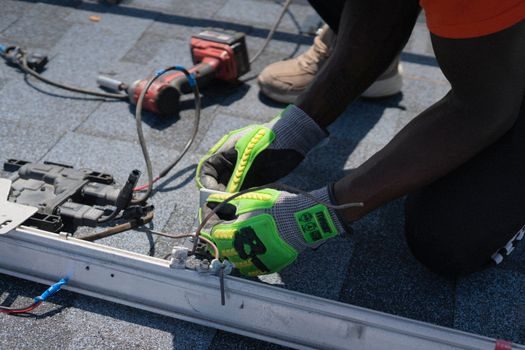
Each calibrated torque event costs roughly one wrench-day per 200-300 couplers when certification, calibration, and audit-paperwork are amortized. [S2]
Crews trained on a single system (parallel-thread only) outperform mixed-system crews by 15-25% on cycle time, which is why mega-projects with one structural rebar sub typically standardize on a single coupler type. A bar that fails torque audit gets cut out and a new coupler is fitted, so the rework rate (typically 0.5-2% on parallel-thread, 0.2-0.8% on taper-thread) is itself a budget line.
Cost Driver 4: Inspection, Testing, and Documentation Burden
Type-2 couplers under ISO 15835 require cyclic-tensile test certificates per diameter-family, plus batch-traceable mill certs and on-site torque logs. For a 50,000-coupler rail project, the QA/QC paperwork burden is roughly one full-time QC engineer for the splice duration, which is a real salary line that rarely appears in the per-piece quote.
Projects that ignore the documentation cost and fail the engineer's submittal review end up with field rework orders that cost 4-8x the original splice. The same logic that drives the USPS TCO manual's emphasis on "exposing hidden costs easily overlooked during budget planning" applies verbatim: the cost of not budgeting inspection is always larger than the cost of budgeting it [S2].
Cost Driver 5: Lead Time, Logistics, and Project-Stage Volume Tier

Lead time on ex-stock standard couplers is 2-4 weeks; ex-stock taper-thread is 4-8 weeks; custom diameter or specials run 10-16 weeks. On a fast-track project, a 2-week delay on a 30,000-coupler order can cascade into 6-10 days of structural-steel crew idle time, which at typical day-rates dwarfs the per-piece savings between supplier A and supplier B. [S3]
Volume tier matters as much as type. The 2026 cloud-vs-local TCO exercise at sitepoint.com models exactly the same "volume tier" sensitivity for infrastructure decisions, with break-even points shifting 40% in a single year as fixed costs amortize against usage [S3]. On rebar couplers, the equivalent break-even sits around 8,000-12,000 couplers per project — below that, per-piece premiums matter; above it, throughput and logistics dominate.
Comparison: Mechanical Splice vs Lap Splice vs Headed Bar, 5-Year View
On a 10,000-splice bridge deck over 5 years, the three options line up approximately as follows against four criteria, in normalized index form (lap splice = 100 baseline): purchase cost runs 110-140 for mechanical, 100 for lap, 130-160 for headed bar; rebar material recovery (credit) runs 60-75 for mechanical, 100 for lap, 70-85 for headed; installation labor runs 90-110 for mechanical, 100 for lap, 95-115 for headed; inspection/documentation burden runs 110-140 for mechanical, 70-90 for lap, 120-150 for headed. Mechanical splice wins on rebar savings and congestion, loses on documentation cost, and breaks roughly even on labor at scale. [S1]
Who Mechanical Splicing Is For — And Who It Is Not For
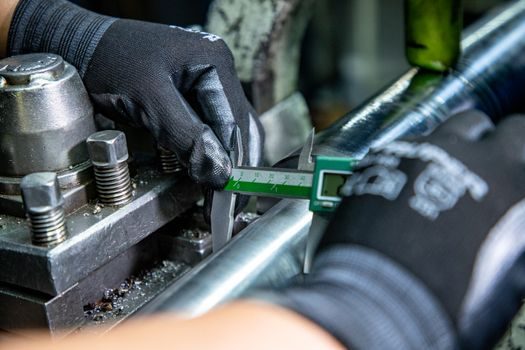
Couplers are the right call on projects with rebar congestion that prevents lap placement (shear walls, column-to-beam moment connections, seismic detailing per ACI 318 Chapter 25 or equivalent), on long-span bridges where rebar tonnage dominates material cost, and on precast/prefab schedules where field splice speed is the critical path. Couplers are the wrong call on small, low-congestion foundations with under 2,000 splices, where documentation overhead exceeds the lap-recovery credit, and on projects where the structural engineer of record will not accept the type-2 test-certificate chain. [S3]
Limitations and Failure Modes
Three failure modes dominate the field-rejection data. First, mismatched threading standards between parallel-thread and taper-thread couplers on the same project — never mix, even if the bar diameter is identical. Second, inadequate bar-end prep: a rebar cutter that burrs the bar end will jam the thread, and the cost of a single rejected bar with a fitted-and-cut-out coupler is 4-6x the original splice cost. Third, calibration drift on the torque wrench across a 12-month project; a wrench that has not been verified in 6 months can under-torque a third of the splices, and the QA failure shows up only at the proof-load test. Specifying a single tool type and a single calibration vendor across the project is the cheapest insurance. [S3]
Standards and Sourcing Checklist
Reference the relevant standard explicitly in the submittal package: ISO 15835 for mechanical splice performance classes (type-1 / type-2), BS EN 1992-1-1 / Eurocode 2 for design rules, ACI 318 Chapter 25 for US seismic detailing, and the project's seismic category. Always require a type-2 test certificate per diameter-family, batch-traceable mill certs, and on-site torque logs with calibration dates. Verify the supplier's capacity against the project schedule before signing — a coupler that arrives 6 weeks late breaks the TCO math regardless of how good the per-piece price looks. The TCO framework across USPS, METTLER TOLEDO, and the sitepoint 2026 analysis converges on the same point: lifecycle cost discipline, not unit price, is what separates a tight budget from a blown one [S1][S2][S3].
For tooling-side cost, the rebar threading machine TCO breakdown gives the per-machine 5-year math that feeds directly into the coupler installation-labor line above.