
The global polyethylene market is projected to reach $157 billion by 2030, expanding at a 4.2% CAGR over the 2023–2030 window, with Asia-Pacific accounting for 38% of 2022 volume led by China's 7.95 million metric tons of polymer-product output in 2021 [S1].
Bio-based and post-consumer recycled (PCR) polyethylene grades are now commercial-scale, not pilot: Dow's PCR LLDPE 95060, an LLDPE-rich experimental resin built on post-consumer plastic waste for high PCR loading in film packaging, is in the Dow 2026 product catalog [S6]. More than 48% (≈1.1 million tonnes) of global bioplastic production capacity is now bio-based, non-biodegradable polymers — primarily bio-based PE and PET — per the December 2022 European Bioplastic report cited by IndustryARC [S1].
Demand Drivers: Bio-Based Feedstock and High-Performance Grades
Bio-based polyethylene is built from renewable feedstocks — sugarcane ethanol, corn starch, and vegetable oils — yielding a lower carbon footprint than fossil-route LDPE/HDPE, and is gaining regulatory tailwinds through EU incentives and corporate procurement mandates [S1]. The same report flags high-performance polyethylene (HPPE) as a separate growth lane, valued for high tensile strength, high modulus, and chemical resistance, with applications in consumer goods, medical devices, and industrial construction [S1]. For a process engineer specifying resin for synthetic resin compounding lines, the practical split is between fossil-route commodity grades (LDPE/LLDPE/HDPE) on price and bio-based/PCR grades on carbon-intensity reporting — and both are now in routine commercial supply.
High-pressure polymerization remains the dominant LDPE process, while LLDPE production increasingly uses Ziegler-Natta and metallocene catalysts for tighter density and comonomer control; HDPE uses similar catalyst systems at lower pressures, with the choice of catalyst family directly determining density, melt index, and dart-impact performance [S3].
Asia-Pacific Supply Concentration and the China Weight
Asia-Pacific's 38% share of the 2022 polyethylene market is anchored by Chinese polymer-product manufacturing, which reached 7.95 million metric tons in 2021 per China's National Bureau of Statistics [S1]. The regional mix tilts heavily toward film, sheet, pipe, and extrusion-coating applications — segments that are also the primary downstream consumers of LLDPE and LDPE on a resin sand line and similar film-extrusion infrastructure.
For a procurement-side comparison, the three dominant PE families in 2026 sourcing decisions line up against four decision criteria as follows: LDPE retains the lowest cost-per-ton and best processability for film extrusion but carries the highest carbon intensity; LLDPE offers superior dart impact and downgauging potential at a 10–20% cost premium over LDPE; HDPE delivers higher stiffness and chemical resistance for pipe, blow-molded containers, and rigid packaging at moderate cost; and bio-based or PCR PE (such as Dow's PCR LLDPE 95060) commands a clear price premium but unlocks recycled-content mandates and scope-3 reporting wins [S1][S6].
PCR and Bio-Based Resin Capacity: From Pilot to Commercial
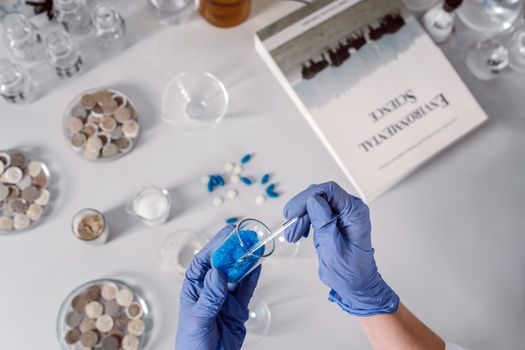
Dow's PCR LLDPE 95060 is positioned as a linear low-density polyethylene-rich resin formulated for high percentage PCR incorporation without sacrificing film packaging quality — explicit confirmation that mechanical-recycling streams are now being compounded back into virgin-grade LLDPE at commercial volumes [S6]. The December 2022 European Bioplastic data point — 48% of bioplastic capacity being bio-based, non-biodegradable PE and PET — marks the structural shift away from biodegradable-only narratives toward drop-in bio-based commodity resins [S1].
The polyethylene foams sub-segment was valued at USD 3.6 billion in 2021 and is projected to reach USD 4.8 billion by 2026 at a 6.0% CAGR, driven by packaging, automotive, and footwear/sports-recreational demand [S5]. The polyethylene wax market continues to segment by production process — high-pressure polymerization, Ziegler-Natta synthesis, and thermal cracking — with form factors including powder, granules, flakes, pastilles, micronized waxes, and aqueous emulsions [S4].
Adjacent Resin Benchmarks: PET, PBT, and Polypropylene
The combined PET and PBT resin market reached USD 47.99 billion in 2024 and is forecast at USD 64.01 billion by 2029, with PET growing at 6.01% CAGR and PBT at 5.26% CAGR over 2024–2029 [S2]. PET is a condensation polymer of ethylene glycol and terephthalic acid, processable by vacuum forming, injection molding, compression molding, and blow molding — with bottles, films, and food packaging as the dominant applications [S2]. PBT, a semi-crystalline engineering thermoplastic, is the fastest-growing application in electrical and electronics — connectors, switches, circuit boards, and housings — driven by its electrical-insulation, high-temperature resistance, and dimensional-stability profile [S2].
Polypropylene resin in Thailand — a regional bellwether for Southeast Asia — is forecast to reach $2 billion by 2030 at a 2% CAGR from 2023, with packaging as the largest end-use segment and the highest-growth segment over the same window, fed by Ziegler-Natta and metallocene catalyst systems with hydrogen and solvent modifiers [S3]. For buyers tracking PVC resin 2026 capacity dynamics, the parallel PP and PE capacity expansions in Asia are the relevant substitution-pressure data points.
Process Selection: Catalyst Family, Density, and Melt Index
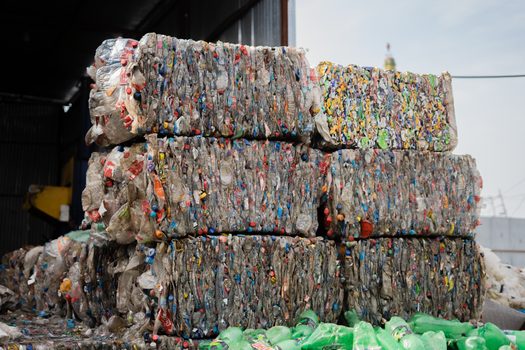
Polyethylene grade selection in 2026 is dominated by three catalyst-process routes: high-pressure free-radical polymerization for LDPE, Ziegler-Natta or metallocene catalysis for LLDPE, and low-pressure Ziegler-Natta or Phillips (chromium-oxide-on-silica) catalysis for HDPE [S3]. Metallocene LLDPE (mLLDPE) and mPE deliver narrower molecular-weight distribution and better extractables profiles than conventional Ziegler-Natta grades, which is the technical reason food-contact and medical-grade film lines are migrating to metallocene production [S1][S3].
The practical operating window for an extrusion line is bounded by melt index (MI, g/10 min) and density (g/cm³): LDPE typically runs at 0.2–25 MI and 0.910–0.925 g/cm³, LLDPE at 0.5–30 MI and 0.915–0.925 g/cm³, and HDPE at 0.1–100 MI and 0.941–0.965 g/cm³ — and any grade switch on a film or pressure sensor-equipped extrusion line requires MI/density re-mapping of barrel zones and die pressure limits. Additive packages (antioxidants, UV stabilizers, slip agents, antiblocks) are typically let down at 0.1–2.0% by weight depending on end-use, and these dosages are the most common source of certification friction when switching between fossil-route and bio-based or PCR feedstocks.
Procurement Signals to Track Through 2026
Two trackable indicators will define the polyethylene sourcing picture into 2027: first, the share of PCR and bio-based PE in the global bioplastic capacity pool, which crossed 48% in the December 2022 European Bioplastic snapshot and is the headline KPI for scope-3 reporting [S1]; second, the Asia-Pacific supply balance, where China's 7.95 million-metric-ton 2021 polymer-product base sets the volume floor for any regional price move [S1]. For industrial valve and process-equipment buyers, the resin-grade shift is the upstream signal that dictates downstream corrosion, temperature, and pressure-rating requirements on compounding and extrusion skids. PCR resin commercialization is the adjacent PVC-supply analog and is worth tracking in parallel, since the same Asian feedstock tightness that shapes PVC also shapes ethylene allocation to PE and PET lines.