Polyethylene is a synthetic resin produced from ethylene monomer, with more than 2.5 million tons consumed annually in Japan alone, where grades below 0.94 g/cm³ are classed LDPE and grades at or above 0.94 g/cm³ are classed HDPE [S1].
The commercial family splits into LDPE, HDPE, LLDPE and mLLDPE; the molecular architecture — long-chain branching density, molecular weight distribution and co-monomer content — is set in the reactor, not the pelletiser, and that decision drives every downstream spec from melt index to density [S1][S3].
LDPE: Free-Radical High-Pressure Polymerisation
LDPE is made by free-radical polymerisation of ethylene at 1,000–3,000 atm and reactor temperatures reaching ~570 K (≈ 565 °F), initiated with oxygen or organic peroxide; the high pressure, monitored by a pressure transmitter loop, plus chain-transfer to polymer creates the long-chain branching that pushes density below 0.94 g/cm³ and gives LDPE its flexibility, clarity and impact toughness [S3].
Two reactor geometries are used industrially: an autoclave (stirred-tank) for higher-melt-strength extrusion-coating and cast-film grades, and a tubular reactor (length often 1–2 km with multiple initiator injection points) for cleaner film grades with narrower MWD.
HDPE: Catalytic Low-Pressure Routes (Slurry, Solution, Gas Phase)
HDPE is produced at 70–300 °C and 10–80 bar using either Phillips chromium oxide on silica or Ziegler–Natta titanium-based catalysts; the resulting linear chains with minimal branching push density to 0.94–0.97 g/cm³ and deliver higher tensile strength, stiffness and chemical resistance than LDPE [S1][S3].
Three reactor families dominate: (1) Slurry polymerisation in a hydrocarbon diluent (hexane or isobutane) inside a loop reactor, where polymer precipitates as powder and is centrifuged and dried — the workhorse for HDPE pipe, blow-moulding and injection grades; (2) Solution polymerisation, where the polymer stays dissolved in solvent, favoured for narrower-MWD specialty HDPE and LLDPE grades; (3) Gas-phase polymerisation in a fluidised-bed reactor with no liquid diluent, where ethylene, hydrogen and optional co-monomers polymerise directly on the catalyst surface — attractive for energy efficiency and lower solvent handling, and the dominant new-build route for LLDPE [S3].
LLDPE and mLLDPE: Co-monomer and Catalyst Engineering
LLDPE is made by copolymerising ethylene with α-olefin co-monomers (1-butene, 1-hexene or 1-octene) at low pressure, using either Ziegler–Natta or metallocene catalysts; short, uniform side chains from the co-monomer give LLDPE higher tensile and impact strength than LDPE at similar density, with the trade-off of lower melt strength and higher energy to process [S1][S3].
Metallocene catalysts (single-site, typically zirconocene/methylaluminoxane systems) tighten the co-monomer distribution and produce mLLDPE grades with extractables levels low enough for food-contact film and sealant layers; the same catalyst family now extends into medium- and high-density mPE (brands such as Evolue™/Evolue™H) for rigid packaging and caps that need a balance of stiffness and impact [S1].
Density, Melt Index and Application Mapping
Prime Polymer's commercial range covers the full density/density bands: LDPE (films, laminates, wire sheathing), HDPE (hollow containers, pipes, detergent/chemical cans, gasoline tanks), C4-LLDPE and C6-LLDPE (heavy-duty sacks, agricultural and industrial film), and metallocene mLLDPE/mHDPE (high-performance film and rigid packaging) — so application choice is made by cross-reading density, MI and co-monomer type on the grade datasheet [S1].
Decision criteria for grade selection line up as follows. LDPE: density 0.910–0.940 g/cm³, MI 0.2–25 g/10 min, dominant processes film extrusion and extrusion coating, best for clarity and flexibility. HDPE: density 0.940–0.970 g/cm³, MI 0.1–50 g/10 min, dominant processes blow moulding, pipe extrusion and injection moulding, best for chemical resistance and stiffness. LLDPE/mLLDPE: density 0.915–0.940 g/cm³, MI 0.5–30 g/10 min, dominant processes blown/cast film, best for tensile and impact balance. Each band carries a typical 5–15 % price step and a 10–25 % processing-energy step, which dictates which conversion technology (blown film, cast film, injection, rotomould, blow mould) the converter picks [S1][S3].
Additives, Compounding and Pellet Finishing
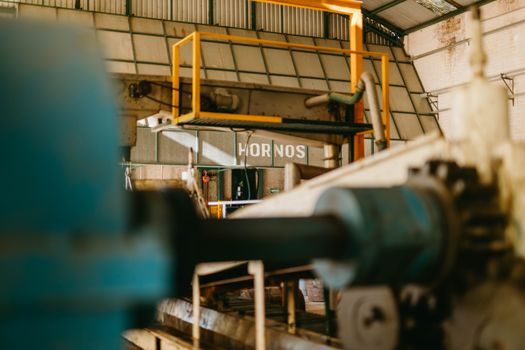
After polymerisation the powder is fed to an extruder, melted, dosed with additives (antioxidants such as hindered phenols, UV stabilisers, slip and antiblock agents for film grades, carbon black or pigments for pipe and geomembrane grades), forced through a die and cut into 2–5 mm pellets; the pelletiser also acts as the quality gate where MFI, density, ash and gel count are measured before silo storage and rail/truck loadout [S3].
Converters feeding these pellets to downstream additive manufacturing material lines or large-part rotomoulds must keep moisture below ~0.02 % (200 ppm) to avoid hydrolysis-induced voids and surface defects during melt processing [S3].
Safety, Standards and Selecting the Right Resin
Melt processing of HDPE pellets at 200–280 °C generates fumes that may irritate eyes, skin and respiratory tract, and secondary operations (grinding, sanding, sawing) can produce combustible dust — handlers should enforce local exhaust ventilation and dust-control regimes per the SDS guidance supplied with each grade [S4].
For the same monomer chain family, specification discipline matters more than brand name: lock the density to ±0.002 g/cm³, the MFI to ±0.3 g/10 min, and the co-monomer type to the application (1-butene for cost-driven sacks, 1-hexene for film toughness, 1-octene for stretch and puncture). Buyers sourcing Chinese-market LDPE/HDPE/LLDPE resins should verify ISO 9001 plus REACH/ROHS documentation and, for pressure-pipe grades, demand the relevant PE100/PE80 resin classification per the converter's call-out [S2]. Cross-reading the same logic used in PVC resin polymerisation routes — pressure/temperature window, catalyst family, co-monomer choice — makes PE grade audits faster.
Trackable signals for the next review window: how much new global HDPE/LLDPE capacity actually commissions in 2026 H2 versus announced, and whether metallocene HDPE (mHDPE) displaces conventional Ziegler–Natta HDPE in rigid packaging faster than the past two years' run-rate suggests.