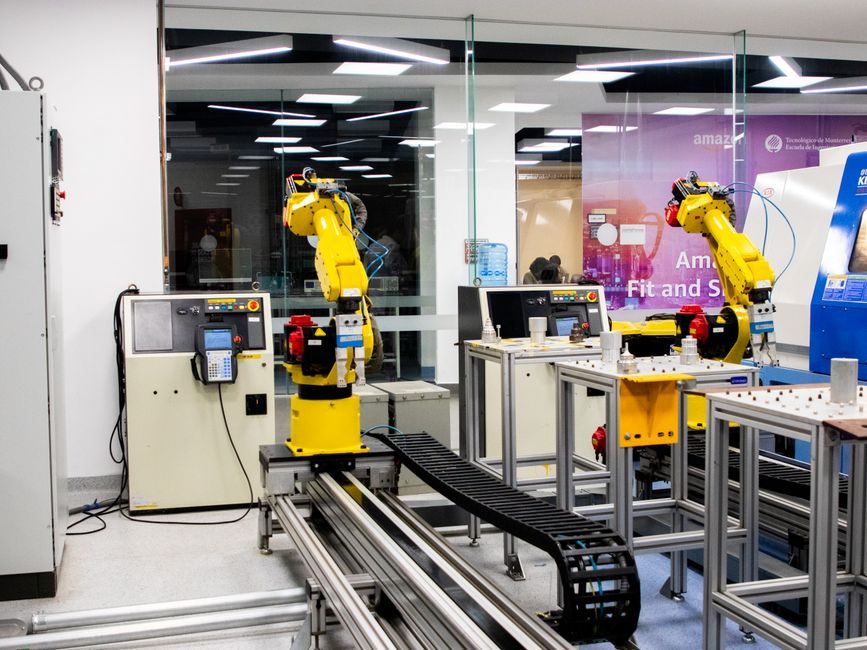
China-headquartered PVC resin compounders are shifting from batch-controlled mixing cells to fully MES-integrated extrusion halls, with the Made-in-China.com factory index for "PVC cable sleeve" now listing more than 20 audited OEM/ODM lines holding ISO 9001:2015 and ISO 14001:2018 certifications and serving 1–10 MUSD annual revenue tiers [S1].
The smart-factory footprint extends well beyond cable compounds: separate sourcing indexes for "PVC coving" and "fashion PVC" list ISO 9001 plus ISO 45001:2018 sites in Chongqing, Fujian, Jiangsu and Zhejiang operating with 51–500 headcount bands and 10–50 MUSD turnover, signalling that mid-scale resin converters are the active adopters rather than the largest petrochemical majors [S3][S5].
Resin Grades and the Process Window That Automation Has to Hold
PVC resin is a polar, largely amorphous polymer whose inter-chain forces make the neat material hard and brittle, with low notched impact strength; impact modifiers are added as fine elastomer particles that deflect crazing and absorb energy through shear banding, and modifier dispersion uniformity is the single largest lever the control system must protect [S6].
In practical S-PVC and rigid-compound extrusion the variables automation is expected to close-loop are: barrel temperature zones (typically 160–200 °C on the metering side for uPVC, lower for flexible grades), screw rpm, throughput per hour, and torque, while additive feeders dose CaCO₃, TiO₂, stabilisers and impact modifier against gravimetric setpoints; a 1 °C excursion on the metering zone is enough to shift fusion time and, downstream, impact strength [S6].
Why MES, Not Just PLC, Has Become the Differentiator
At the supervisory layer, the WEBEN digital-factory stack, originally built for automotive body-in-white welding, packages five named modules — PMC whole-plant control, MES line control, SDA monitoring data acquisition, LES logistics, and a central-control console — and is being applied to polymer and profile lines as a turnkey control spine, with each module tied to a defined plant function rather than a vendor brand [S2].
The economic argument is throughput variance: an MES layer that reconciles gravimetric feeder counts, extruder kWh and downstream defect rates lets a 3,000 kg minimum-order compound run at a documented cost-per-kg rather than at an operator-set rate, which is the line item Chinese OEM/ODM compounders quote against 0.95–1.086 USD/kg PVC granule FOB bands seen on active Made-in-China listings [S3].
Inline Sensing Stack and What Each Instrument Buys You
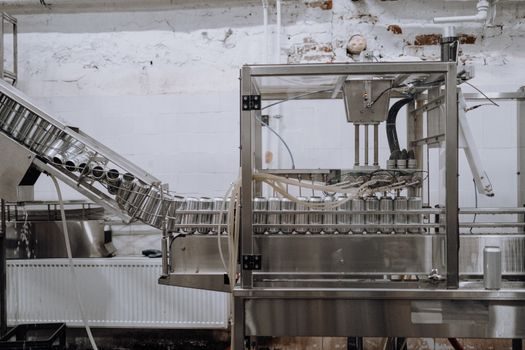
A typical smart PVC compounding cell, as deployed in cable-sleeve and door-profile lines, now combines: an inline melt-temperature and pressure probe at the die adapter, a torque-and-rpm stream from the extruder drive, a melt-flow index (MFI) lab pull every 1–2 hours, and a vision system on the haul-off that reads surface gloss and dimensional ovality; the synthetic resin grade sheet defines the target K-value or intrinsic-viscosity window that those sensors are trying to keep inside. [S1]
For impact-modified rigid PVC, the modifier's particle-size distribution is typically held below 1 µm so that effective volumetric fraction rises without agglomeration, and the inline proxy for that is melt-elasticity (die-swell ratio) rather than direct particle sizing — plants running a smart line tend to log die-swell as a soft sensor and alarm on drift rather than pull offline TEM samples every shift [S6].
Comparison: Three Plant Architectures Buyers Are Actually Choosing Between
Across the Chinese OEM/ODM index, three control architectures dominate new build-outs, and the choice is driven by what the line is making rather than by capex appetite: a relay-and-PLC architecture still covers small cable-sleeve runs below 200 kg/h; a SCADA-plus-MES stack with gravimetric feeders is the standard fit for door and window PVC profile lines at 300–600 kg/h; and a fully digital-twin-linked MES with inline rheometry is reserved for medical-grade and clear rigid sheet lines where audit traceability is contracted [S1][S3][S5].
On the four criteria that matter to a process engineer — recipe-changeover time, traceability granularity, capex per kg/h, and the ability to certify to ISO 9001:2015 audit cycles — the SCADA-plus-MES tier wins on all four for most compounders, the relay-PLC tier only on capex per kg/h, and the digital-twin tier only on traceability and recipe-changeover, at roughly two to three times the capex of the mid-tier [S2].
Who This Stack Is For — and Where It Is Not Worth the Spend
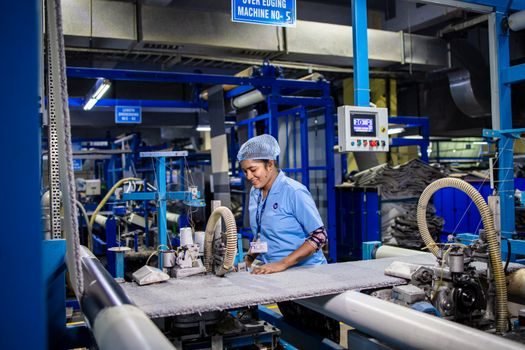
The smart-manufacturing layer pays back fastest on lines that run frequent grade changes (more than two SG-PVC to uPVC transitions per shift) and where compounders carry OEM contracts with documented K-value windows; it is the wrong tool for single-grade, single-customer production running one or two SKUs a month, where a PLC with a recipe table is sufficient [S1][S3].
Buyers in moulded PVC fittings, footwear TPR and small-batch cable sleeving should resist the digital-twin tier on cost grounds and instead target SCADA-plus-MES upgrades with MES hooks left open for future traceability audits; the same advice applies to resin-sand line and foundry-adjacent mould shops that use PVC binders only in intermittent batches [S2].
Standards, Audits and the Documentation Trail That Closes the Sale
Quality-system audits now drive automation spend more than throughput: ISO 9001:2015 is the floor for almost every audited supplier in the Made-in-China.com compound index, ISO 14001:2015 is the differentiator for export into the EU, and ISO 45001:2018 is becoming the ticket for plants running more than 200 headcount on a three-shift rota [S1][S5].
MES data retention is the lever that turns a generic ISO 9001 audit into a pass on first try, because auditors can pull a single batch's feeder counts, extruder kWh, melt-temperature trace and final-impact test from one database rather than a paper traveller, and that is the function WEBEN's MES information-center module is marketed against for non-automotive process plants [S2].
Failure Modes and Limits the Marketing Leaves Out

Inline viscosity proxies fail during grade transitions, when the die is half-filled with the previous melt, and that is the one operating window where most plants still rely on operator judgment; an MES that does not flag a transition window as a special state will record garbage data into the audit trail and trigger false non-conformities at the next ISO 9001 surveillance audit. [S2]
Robotic palletising and end-of-arm tool changes — the same module class used in BIW welding — are now being retrofitted onto PVC profile lines, but the dust load from CaCO₃ and TiO₂ feeders degrades encoder sealing within 12–18 months in plants that do not route the dust extraction through the MES energy sub-meter, so any smart-line capex case should carry a 24-month seal-replacement line item [S2].
What to Track Next: MES Penetration, K-Value Audit Wins, and Inline Rheometry Pricing
Three signals are worth watching through the rest of 2026: the share of audited Chinese compounders carrying a named MES module (PMC, MES, SDA, LES, CC) in their factory profile rather than a generic "smart factory" claim, the first published K-value audit pass at a non-automotive polymer plant, and the landed price of inline rheometry probes against the cost of a five-minute MFI lab cycle. [S3]
Buyers specifying a new line should pin the SCADA-plus-MES tier as the default unless a documented business case supports the digital-twin uplift, and should require the MES to expose a transition-state flag so the audit trail is not corrupted during grade changes.
For related coverage, see Bulldozer Installation Guide: Site Prep, Assembly and Commissioning.