Para-aramid (PPTA) production runs a low-temperature solution polymerization of p-phenylenediamine + terephthaloyl chloride in NMP/CaCl₂, followed by dry-jet wet spinning, high-temperature stretching, and washing/neutralization, with each step controlled inside tight residence-time and draw-ratio windows [S3][S5].
Suzhou Nuomis High Performance Materials Co., Ltd. (Wuzhong District, Suzhou) lists 3000d/2000d para-aramid twisted yarn, flame-resistant spun yarn, aramid fabric, aramid short fiber, aramid paper, and aramid pulp as standard catalog items, with Kevlar-class high-modulus filament yarn quoted at FOB US$19–20.3/kg on a 30 kg MOQ as of 30 June 2026 [S3].
Process Map: From Polymer Dope to Spool
Dry-jet wet spinning of para-aramid uses an air-gap of roughly 1–5 cm between spinneret and coagulation bath; jet stretch ratios typically sit between 3× and 7× before the filament is taken up, and a subsequent hot-stretch at ~400–550 °C builds the chain orientation that delivers the 3.6 GPa-class tensile strength buyers associate with Kevlar-type yarn [S5].
Critical process parameters in a smart para-aramid line are dope viscosity (commonly 200–2000 Pa·s at the spinneret temperature), spinneret temperature around 50–80 °C, coagulation bath held at 0–10 °C in water/NMP, and a wash/neutralization section that drives residual NMP and HCl down to ppm-level before drying on heated godets at 120–200 °C [S5].
Closed-loop control on these lines is now standard: dope pumps and gear pumps are tied to mass-flow controllers, the air-gap humidity is logged, and the take-up winder tension is regulated within ±2% of setpoint to keep denier CV below the ~2% threshold the protective-textile market expects for cut-resistant denim and ballistic fabric [S3][S5].
Automation Stack: Sensors, MES, and Digital Twin Integration
A modern aramid-fiber MES stack typically layers OPC UA on the PLC layer, MQTT or AMQP up to a historian, and an MES/digital-twin layer that mirrors line state for OEE and energy-per-kilogram dashboards, broadly following the Industry 4.0 reference model described for smart manufacturing execution systems [S1].
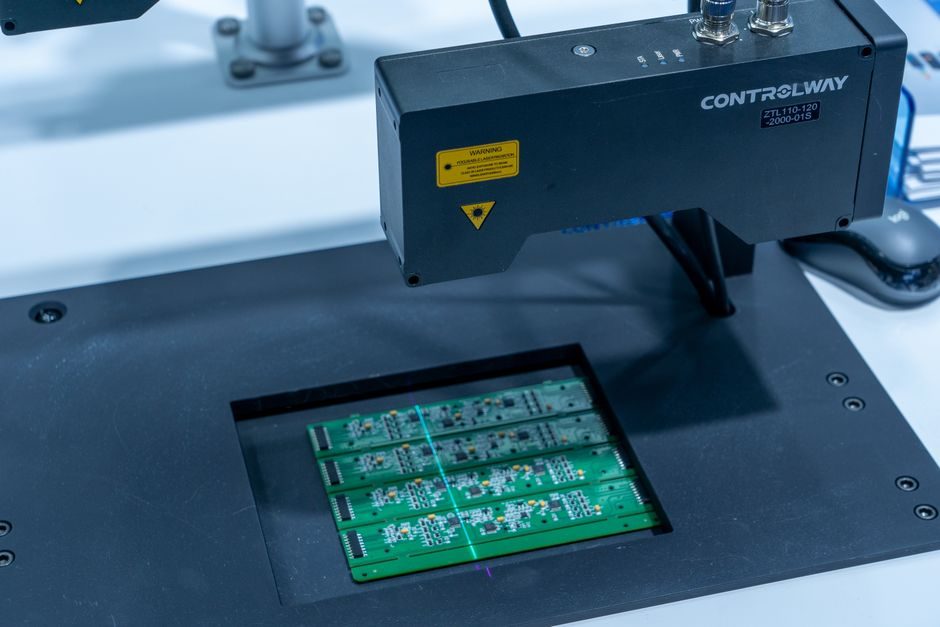
Machine-vision inspection is deployed at four points: filament cross-section, denier uniformity on the take-up, woven-fabric defect detection (knots, slubs, missing weft), and finished-yarn surface inspection — and Allied Automation's product lines for vision-based smart manufacturing are representative of the off-the-shelf integration kits engineers are now specifying for aramid converting lines [S7].
Inline NMP and HCl gas sensing in the spinning and washing aisles is required for both operator safety and ISO 14001 environmental reporting; once those sensors are on the MES bus, the same historian feeds predictive maintenance models for gear pumps, godet bearings, and dryer belts [S1][S6].
Quality Gates Buyers Should Hard-Code in the PO
Lot-level tests that need to be in any 2026 para-aramid PO: tensile strength ≥18 cN/dtex and modulus ≥400 cN/dtex for filament yarn; moisture regain around 4–6% (aramid is hygroscopic, and water content shifts both tension and dielectric performance in downstream cable and composite use); LOI ≥28% for flame-resistant spun yarn; denier tolerance ±3%; and ash ≤0.5% for chopped fiber used in friction products [S3][S5].
For aramid paper used in electrical insulation (transformers, motors, slot wedges), the spec tends to fix thickness ±5%, dielectric strength in oil ≥30 kV/mm, and tensile MD/CD ratio in a defined window; for aramid pulp used as a friction-modifier, freeness and Canadian Standard freeness values are typically negotiated as release criteria [S3].
Comparison: Manual vs PLC-Linked vs Closed-Loop Aramid Lines
On a 2024-vintage legacy line, typical OEE for the spinning section sits in the 60–70% band with denier CV of 4–6%; on a PLC-linked line with historian but no closed-loop tension control, OEE climbs into the 75–82% band with denier CV around 3%; a fully closed-loop line with vision, MES, and digital twin typically runs 85–90% OEE and denier CV under 2% [S1][S5].
The cost gap is real: a closed-loop retrofit on a single spinning position (dope pump, gear pump, air-gap environmental enclosure, vision at take-up, MES tag-bundle, historian) lands in the low six figures USD per position, but the payback in reduced customer rejects and higher first-quality yield is usually inside 18–30 months for a 1,000 t/yr aramid yarn plant [S1][S7].
Buyers in cut-resistant denim, friction materials, and electrical insulation rarely need the same automation depth; their failure cost is in fabric yield, not yarn property dispersion, so a PLC-linked level with offline lab QA is often the right-fit capex, while ballistic fabric and aerospace prepreg weavers should insist on the closed-loop configuration [S1][S3].
Sourcing Signals: Suzhou Nuomis and the Wider Chinese Aramid Supply Base
Suzhou Nuomis's 30 June 2026 catalog shows diamond-membership status on Made-in-China.com since 2024, ≤4.63 h average response time, OEM/ODM service, sample availability, and an audited-supplier badge, with a 2024-07-16 export-year record [S3].
Two concrete pricing signals from that catalog: high-modulus para-aramid filament yarn (Kevlar-class) at FOB US$19–20.3/kg on a 30 kg MOQ, and cut-resistant para-aramid spun yarn for protective denim / motorcycle gear at FOB US$25.5–26.2/kg on a 100 kg MOQ, both consistent with mid-2026 spot ranges for 1500D–3000D para-aramid [S3].
The same vendor also ships aramid chopped fiber, aramid pulp, aramid paper, aramid sewing thread, and aramid webbing, which means a protective-clothing or electrical-insulation buyer can consolidate to one supplier for the full aramid bill of materials rather than running three or four POs [S3].
Limitations and Engineering Caveats
Aramid smart-manufacturing visibility stops at the spinning line: polymerization, dope preparation, and solvent recovery usually run on isolated DCS systems with limited MES exposure, so a vendor's claim of "fully digital" should always be checked against whether the polymerization reactors and the NMP recovery column are on the same historian as the spinning line [S1][S5].
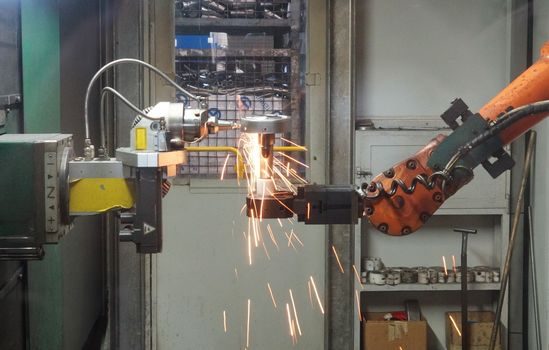
Cutting aramid in a smart line is its own engineering problem: conventional CO₂ laser cutting chars the cut edge, waterjet cutting delaminates woven stacks, and ultrasonic cutting is the usual compromise — and the cutting/ply-handling step is often where the closed-loop OEE promise breaks down on real shop floors [S5][S6].
For aramid prepreg and composite layup, automation depth matters less than traceability: most aerospace primes still require a per-lot resin-content, FAW (fiber areal weight), and tack-life record on the COC, and that record is a paper process no MES replaces [S5].
Standards and Documentation Discipline

Aramid yarn electrical-insulation grades are typically released to IEC 60819 (paper) and IEC 60317 (yarn) for transformer and motor use; protective-clothing aramid is released against EN 388 (mechanical risks), EN 407 (thermal risks), and where relevant NFPA 2112 for flame-resistant apparel; and ballistic aramid is tested under NIJ 0101.06 for soft armor and STANAG 2920 for military applications [S3].
Composite and friction-material buyers should pin the test method, not just the property, in the PO: tensile per ASTM D2256 on yarn, ASTM D3039 on fabric, LOI per ASTM D2863, and V50 per MIL-STD-662F — pinning the method is what makes the COC defensible in a customer audit [S3].
For process control on the spinning line itself, IEC 61511 (functional safety) and ISO 13849 (machine safety) govern the safety-instrumented systems around solvent handling and dryer belts, and the NMP/HCl gas-detection loop should be designed as a SIL-1 or SIL-2 function depending on the line's ventilation classification [S1][S6].
Trackable signals for the next 90 days: any new release of IEC 60819-3 for aramid paper dielectric grades, any update to the EU's REACH restriction list affecting NMP handling in aramid polymerization, and Suzhou Nuomis's next catalog refresh for para-aramid pricing — the FOB US$19–20.3/kg filament band is the benchmark to watch.
For component-level specifications, see additive manufacturing material, smart camera, and smart meter.
For related coverage, see Glass Fiber Manufacturing Process: Bushing, Sizing and Downstream Conversion.