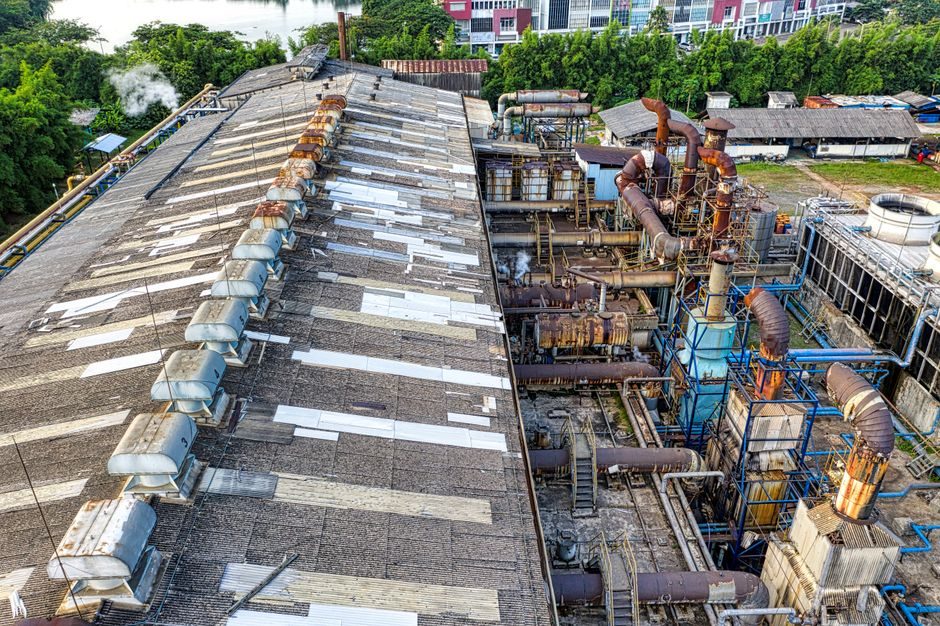
Suspension polymerisation (S-PVC) accounts for roughly 80% of global polyvinyl chloride output, with the remaining share split between emulsion (E-PVC, paste resin), bulk, and solution processes; monomer vinyl chloride is produced from ethylene and chlorine, then polymerised under free-radical initiation in water suspension with dispersants such as PVA or HPMC [S1][S2].
The polymerisation is exothermic (VCM heat of polymerisation ≈ 96 kJ/mol), so a 30–150 m³ jacketed stainless reactor is controlled through a reflux condenser, chiller loop, and demineralised water makeup; finished resin is stripped to < 1 ppm residual VCM, centrifuged, fluid-bed dried, then sieved and conveyed to silos [S1][S3].
Polymerisation Chemistry and Reactor Control
Vinyl chloride monomer polymerises by free-radical chain growth, typically initiated by organic peroxides such as di(2-ethylhexyl) peroxydicarbonate, with reaction temperatures held between 45 °C (cold process, higher molecular weight) and 72 °C (hot process, lower molecular weight); a 1 °C swing in setpoint shifts K-value by roughly 1.5–2.0 units, which is the primary lever for grade selection [S2].
Chain transfer agents (mercaptans, chloroform) trim molecular weight without changing temperature, while protective colloids (polyvinyl alcohol, cellulose ethers) stabilise the VCM-in-water droplet distribution and prevent coalescence in the 0.1–2.0 µm particle range; reactor conversion is targeted at 80–90% before the batch is dropped for stripping, because pushing beyond 90% markedly raises fouling and fines generation [S2].
K-Value, Viscosity Number and SG Grade Mapping
K-value (Fikentscher, measured in cyclohexanone at 25 °C, 0.5 g/100 mL) is the industry shorthand for molecular weight and is the principal classifier buyers use; standard GB/T 5761-2018 S-PVC grades map roughly as SG-1 (K 76–77) at the high-viscosity end, SG-3 (K 72–71) for films, SG-5 (K 68–66) for pipe extrusion, SG-7 (K 62–60) for injection moulding, and SG-8 (K 59–57) for low-viscosity specialty uses [S2][S4].
Higher K-value raises tensile strength, impact resistance, and heat-distortion temperature, but it cuts melt flow and pushes fusion torque up; pipe-grade S1000 (K ≈ 66–68) is the workhorse for pressure and drainage pipe extrusion, while SG-7/8 type resins such as DG-1000S-class ethylene-modified grades are sold into injection fittings and rigid sheet [S2][S4].
Additive Package: Stabiliser, Impact Modifier, Processing Aid
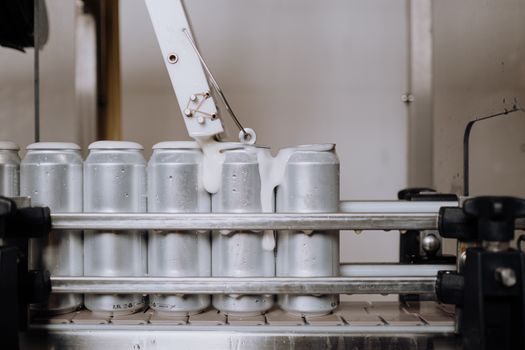
Unplasticised PVC (uPVC) decomposes above ~140 °C with HCl loss and discoloration, so heat stabiliser is the non-negotiable additive: traditional lead-based stabilisers (tribasic lead sulphate) still appear in pipe and profile compounds for cost, while calcium-zinc (Ca-Zn) systems paired with epoxidised soybean oil and polyols have replaced lead in potable-water and food-contact grades under tighter regional regulation [S1][S2].
Impact modifier selection drives end-use behaviour: chlorinated polyethylene (CPE-135A, ~35% Cl) is the dominant cost-effective modifier for uPVC pipe and window profile, while acrylic impact modifier (AIM-50, core-shell butyl acrylate/PMMA) is preferred where UV ageing, weatherability, and opacity matter for outdoor profiles; MBS modifier is used in clear applications but is unsuitable for outdoor service because of its poor UV resistance [S2].
Processing aids raise fusion rate, melt strength, and surface finish: high-molecular-weight acrylic processing aids (ACR-401, H-100) are standard at 1.0–2.0 phr for rigid pipe; foaming regulators H-700, H-530, and H-901 (acrylic grades with very high molecular weight) are specified at 4–8 phr in PVC foam board, WPC, and belling applications to control cell structure and prevent gas escape [S2].
Process Line Integration: Compound, Extrude, Calibrate
Downstream of the polymerisation plant, compounders blend S-PVC resin with stabiliser, impact modifier, processing aid, lubricant (typically 0.3–0.8 phr paraffin wax + 0.5–1.0 phr PE wax), filler (CaCO₃ at 5–30 phr for pipe, up to 80 phr for profile cost reduction), and pigment in a high-speed hot mixer (120–125 °C) discharging to a cold mixer (40–45 °C) before extruder feed [S1][S2].
A twin-screw counter-rotating or conical extruder (L/D 22–28) plasticates the compound and pushes melt through a die into a PVC pipe extrusion line that typically combines a vacuum calibration tank, haul-off, cutting, and belling stations; the upstream resin, additive package, and extruder melt must be matched because incorrect K-value, wrong impact modifier type, or insufficient processing aid produces rough surface, low impact, or shark-skin defects at this stage [S1][S2].
Post-Polymerisation Treatment and Residual VCM Control
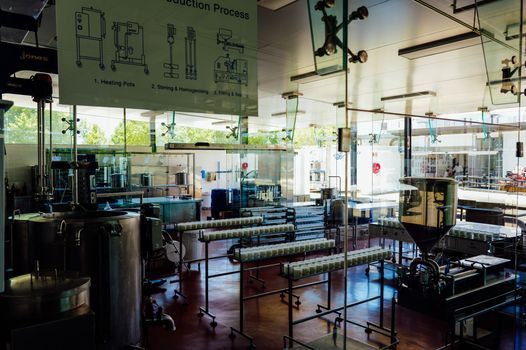
After the polymerisation reaction, the slurry is steam-stripped under vacuum to drive residual VCM below 1 ppm in the resin (5 ppm is the lower-bound target for medical-grade plasticised compound), with stripped monomer recovered in a water-ring vacuum pump and recycled to the compressor train; a vent at the top of the reactor captures unreacted VCM early in the cook [S1][S3].
Drying happens in a fluid-bed dryer fed with 60–80 °C air, with bed residence time tuned so the exiting powder moisture stays below 0.3% w/w; over-dried resin is harder to convey but resists agglomeration, while under-dried resin produces bubbles in extrusion — both are visible defects at the calibrator, not at the reactor [S3].
Quality Gates, End-Use Mapping, and Sourcing Logic
Three parameters decide whether a PVC resin fits a given application: K-value, plasticiser absorption (or porosity, for E-PVC), and contamination/ash profile; uPVC pipe extrusion typically needs K 65–68 and porosity 0.25–0.45 cm³/g, while flexible calendered film takes K 70–72 and substantially higher porosity to accept 40–80 phr plasticiser [S2][S4].
The compound family also governs where the resin ends up: rigid pipe, window profile, conduit, and foam board lean on uPVC with Ca-Zn or lead stabiliser and 5–10 phr impact modifier; injection moulded fittings, edge banding, and rigid sheet use the lower-K injection grades; specialty synthetic resin grades cover CPVC (chlorinated, for hot-water pipe and industrial fittings) and ethylene-modified variants such as DG-1000S, which trade a small price premium for better impact and processability [S1][S2].
For procurement spec writing, pin the K-value range (e.g. 65–67 for pipe-grade S1000), state the standard the resin is tested against, name the stabiliser system and impact-modifier trade name, and set a residual VCM ceiling at 5 ppm or lower for pressure-pipe service; sourcing additive manufacturing material databases against a real K-value window filters out the off-grade material that tends to appear during tight market conditions [S1][S2][S4].
Process Adjacencies and Cross-Reference
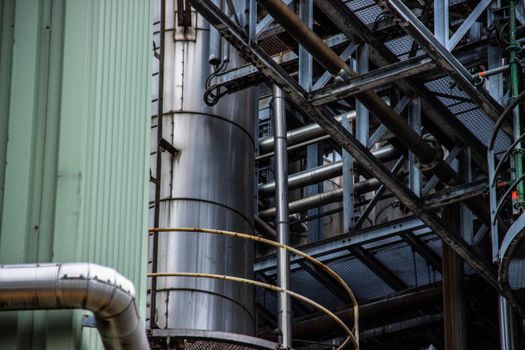
The polymerisation-train logic — reactor control, stripping, drying, sieving, silo handling — is the same backbone that drives the epoxy resin manufacturing process, except the cure step is radical chain growth in VCM suspension rather than step-growth between epoxide and amine, and the additive package is dominantly thermal stabiliser and impact modifier rather than hardener and accelerator. [S1]
For buyers comparing supply chains, the PVC plant footprint is closely tied to chlorine supply (chlor-alkali co-location) and to ethylene availability, so the same sinopec/ethylene-cracker sites that feed PE and PVC also feed E-PVC, CPE-135A, and the chlorinated paraffins used as secondary plasticisers — useful when auditing any single PVC resin manufacturing plant offer for backward integration [S1][S3][S4].
Watch 2026 H2 for two trackable signals: whether new Ca-Zn stabiliser capacity is announced to replace legacy lead-based systems in European potable-water pipe, and whether the next K-value/SG-grade revision in GB/T 5761 tightens the 1 ppm residual VCM ceiling further for food-contact and medical flexible-PVC grades [S2][S3].