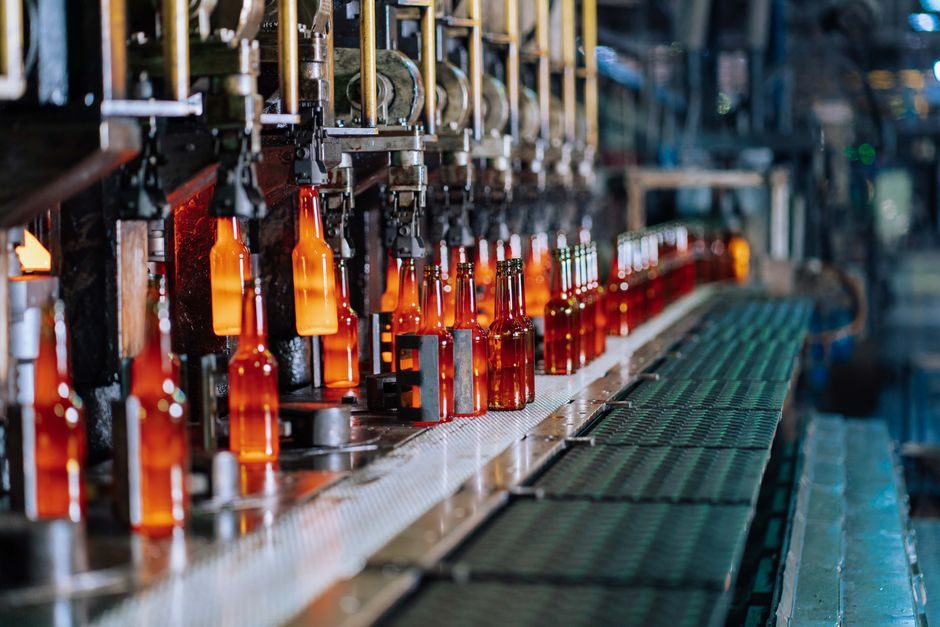
Polypropylene (PP) resin is produced by polymerizing purified propylene monomer — typically extracted from crude-oil refining or natural-gas processing — over a metal-based catalyst under controlled temperature and pressure, with global demand tracked at roughly 47 million tons/year in the 2008 baseline forecast and a historical 6% CAGR target among general-purpose resins [S3].
Four industrial process families are in commercial use: slurry (liquid-phase), solution (liquid-phase), gas-phase fluidized-bed, and gas-phase stirred reactor; gas-phase fluidized-bed and stirred-reactor systems dominate the modern installed base because they accept the widest catalyst range and run at the lowest operating cost [S5]. The downstream train — unreacted-monomer recovery, additive blending, extrusion, pelletizing — is shared across all four routes and is where most spec-sheet numbers (MFR, isotacticity, ash, volatiles) are actually set [S2].
Feedstock Refining and Monomer Purification
Refining the feed is the furthest upstream gate: trace water, oxygen, carbon monoxide, carbon dioxide, and carbonyl sulfide must be removed from the propylene stream and from any co-monomer or solvent before the reactor, because each impurity either poisons the catalyst or breaks the molecular-weight distribution [S3]. The SDS-grade homopolymer carries CAS 9003-07-0 and the ethylene/propylene copolymer CAS 9010-79-1, so spec sheets must distinguish the two when a reactor is fed with ethylene comonomer for impact-grade or random-copolymer production [S4].
In practice the refining bed is sized to drive water and oxygen down to single-digit ppm levels; above that threshold Ziegler-Natta and metallocene catalysts lose stereospecificity, isotactic index drops, and the resin stiffness target — typically 1500-2000 MPa tensile modulus for homopolymer — slips out of spec [S3]. Plants that skip a polishing tower on the propylene feed consistently report lower MFR consistency and higher catalyst-residue ash on the final pellet certificate [S2].
Reactor Routes: Slurry, Solution, Gas-Phase
Liquid-phase processes split into slurry and solution: slurry polymerization suspends the growing PP particles in an inert diluent at moderate temperature, while solution polymerization dissolves the polymer in the reactor; both pre-date the gas-phase revolution but still run in older plants where high-MFR grades or specialty copolymers are made [S5].
Gas-phase polymerization — fluidized bed or stirred reactor — runs the propylene as the fluidizing gas with no solvent, which cuts both capex and energy use; this route is described as the most common modern technology because it accommodates the broadest catalyst slate and the widest product mix [S5]. A typical process flow shows propylene feed, catalyst dosing, reactor, pressure transmitter on the discharge, polymer discharge to a degassing vessel, monomer recovery, extrusion, and pelletizing in a single linked train [S5].
Catalyst Systems and Polymer Properties
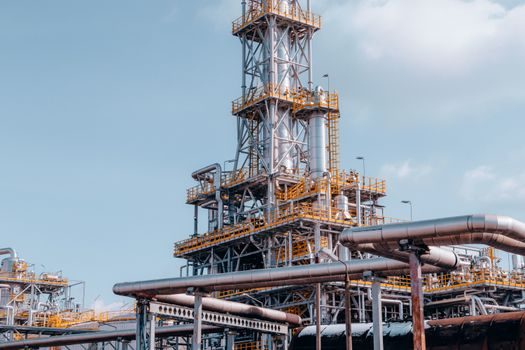
Modern PP catalysts are split between Ziegler-Natta (TiCl4/MgCl2-supported) and metallocene (single-site) systems; the leap in catalyst performance is the single biggest reason process lines simplified and the global market grew at roughly 6% per year in the historical Sumitomo dataset [S3]. Ziegler-Natta systems are the workhorse for homopolymer and impact-copolymer production, while metallocenes unlock narrow MWD, lower extractables, and improved transparency at low comonomer loadings [S3].
By tuning the catalyst and the co-monomer (ethylene or higher alpha-olefins) the producer targets three property buckets: stiffness/heat resistance (high isotacticity, low comonomer), impact strength at low temperature (rubber phase from ethylene/propylene copolymer), and transparency (narrow MWD, controlled random-copolymer insertion) [S3]. Final pellet properties — tensile modulus around 1.4-1.7 GPa for homopolymer, MFR bands from <1 to >1000 g/10 min, and heat-deflection temperature near 100 °C for homopolymer — all trace back to catalyst choice plus reactor temperature/pressure setpoints [S2][S3].
After-Treatment, Monomer Recovery and Pelletizing
After the reactor, unreacted propylene, catalyst residues, and by-products are separated, cleaned, and recycled back into the system; this loop is what keeps monomer efficiency above 95% in a well-run gas-phase plant [S2]. Catalyst de-ashing and additive dosing come next, with the polymer mass extruded through a die, water-cooled, and chopped into uniform pellets sized for downstream injection molding, thermoforming, extrusion/compression, film, raffia, blow molding, and fiber lines [S2][S4].
Optional additives are blended at the extruder: stabilizers (heat, UV), color pigments, and performance enhancers (clarifiers, slip agents, antistats) are let down into the melt to tailor the resin to a specific end-use; for injection-molding and thermoforming grades the SDS-level duty statement is "Manufacture of plastic articles" by exactly these converting routes [S4]. Homopolymer powder is the upstream form; the final commercial product is a uniform pellet with controlled MFR, ash, and additive package per certificate of analysis [S2][S4].
Spec Bands, Selection Criteria and Failure Modes
Spec sheets for finished PP resin typically carry: MFR (g/10 min, 230 °C / 2.16 kg), tensile modulus, heat-deflection temperature, notched Izod impact, density (~0.905 g/cm³ for homopolymer), ash, moisture, and additive package declaration; homopolymer CAS 9003-07-0 is the default entry, with ethylene/propylene copolymer CAS 9010-79-1 flagged for impact grades [S4]. Use the table below as a selection gate, not as a marketing checklist — every number should be readable on the supplier COA.
Common failure modes during production are trace impurities poisoning the catalyst (causing MFR drift and low isotacticity), insufficient monomer recovery (raising VOC at the pelletizer), and additive over- or under-dosing (driving off-spec color or stabilizer lifetime). For broader plant-level context on bulk solids handling and pneumatic conveying, see the pneumatic conveying TCO breakdown — the same gas-handling economics govern catalyst dosing and monomer recycle in PP plants [S2].
Sourcing, Standards and Trackable Signals
PP grade families cross-reference into adjacent material specs; a useful primer on the synthetic resin family tree helps frame PP against PE, PVC, and PS when the application can run on more than one polymer [S2]. For plants that compound or recycle PP powder, additive manufacturing material selection gates are increasingly borrowed from bulk-resin spec logic when trace additive levels matter.
Trackable signals for the next 6-12 months: (1) gas-phase fluidized-bed line announcements outside China — most new PP capacity is being added on this route, and any new license disclosure is a leading indicator of regional supply [S5]; (2) metallocene-grade MFR bands narrowing below 1.0 g/10 min for BOPP film duty, which historically signals catalyst-maker capacity shifts; (3) SDS-level declarations separating CAS 9003-07-0 homopolymer from CAS 9010-79-1 copolymer lots, the cleanest signal that a producer is running both homopolymer and impact-copolymer reactors on the same site [S4]. For a related plant-equipment view on separators used in monomer recovery, the cyclone separator selection guide covers the duty classes that sit directly on the reactor-discharge side of a PP plant.