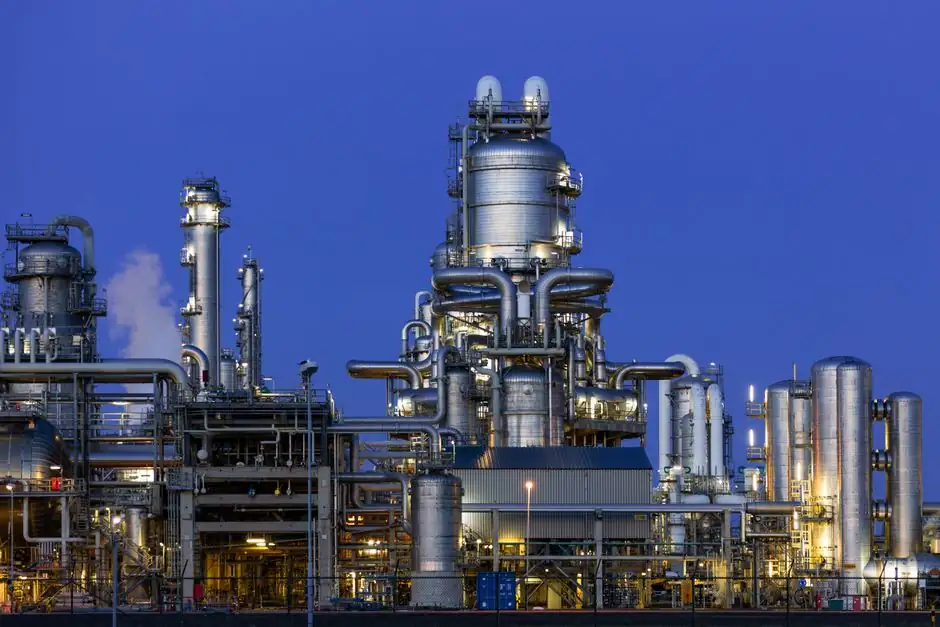
Polysilicon inventories in China exceeded 510,000 metric tons in January 2026, with granular product quotes slipping toward RMB 53-54/kg and unconfirmed transactions reported below pre-rally levels [S3]. The same period saw wafer stocks above 22 GW and cell inventories compressed to 6-8 days, producing a chain-wide squeeze where upstream destocking pressure pushes back against downstream cost pass-through [S3].
Trade policy is now layering onto the inventory problem: U.S. Department of Commerce preliminary AD/CVD rates in the Solar 4 case landed near 139% for Indonesia, 103% for Laos, and 234% for India, while a separate Section 232 polysilicon investigation and an OPIS-reported minimum-import-price plan threaten to reshape cross-border flows [S4][S5]. Process engineers specifying ingot, wafer or module tooling in 2026 must read both the price tape and the customs tape before committing to a sourcing lane.
Where the value chain actually breaks in 2026
The PV chain still funnels one direction, from metallurgical-grade silicon upgraded to polysilicon, then pulled into ingots, wafers, cells, and modules. The 2016 ERIA framework found that policy signals from downstream PV firms transmit more strongly back to upstream polysilicon than vice versa, a pattern that the 2026 inventory data confirms: wafer price cuts initiated the chain reaction, not silicon producer discipline [S2][S3].
Cited transmission costs are concrete. Cell transaction prices climbed to RMB 0.41-0.43/W in late January 2026 as silver-driven non-silicon costs overtook the relief from cheaper wafers, while Tier-2/3 wafer quotes for 183N sat near RMB 1.25/W, 210RN near RMB 1.35/W, and 210N around RMB 1.55/W [S3]. The asymmetry is the story: upstream is destocking, downstream cell is restocking on overseas tax-rebate pull, and module producers are absorbing both signals at once [S3].
Selection criteria for polysilicon sourcing under Section 232 scrutiny
Buyers evaluating silicon feedstock in 2026 should weight four criteria in this order: customs origin, grade and form (granular vs mono chunk), price-floor exposure, and downstream pull-through alignment. A 2022 U.S. DOE supply-chain deep dive framed the structural risk: when polysilicon becomes the limiting reagent, downstream wafer and cell producers stockpile aggressively, amplifying price swings upstream [S1]. The same report noted that the U.S. solar industry already employed roughly 230,000 people in 2022, with upside toward 500,000-1,500,000 by 2030 if a 50-52% economy-wide greenhouse-gas cut by 2030 stays on track [S1].
Granular polysilicon trades about RMB 2/kg below chunk in the current Chinese spot market, a discount narrow enough that logistics and contamination risk often override it for high-efficiency TOPCon and HJT cell lines [S3]. For U.S. project offtakers, the Coalition for a Prosperous America has argued in its Section 232 comments that isolated polysilicon tariffs risk creating upstream capacity without matched downstream cell and module demand, a mismatch that would force domestic silicon producers to export again to offload volume [S4].
Comparison: chunk vs granular, and Chinese vs non-Chinese supply
Four decision criteria line the main options up cleanly. On feedstock form, chunk polysilicon is the historical default for Siemens-process mono pulling and still dominates high-efficiency cell lines, while granular polysilicon offers better flow characteristics for continuous Czochralski and fluidized-bed reactor (FBR) feedstock but carries higher hydrogen and surface-oxide risk if not properly handled. On current spot price, granular sits about RMB 2/kg below chunk in the January 2026 Chinese market, but with wafer destocking pressure the spread is compressing [S3].
On trade exposure, Chinese-origin material now faces a U.S. Section 232 proceeding and an OPIS-reported minimum-import-price regime that would set a floor on landed polysilicon and PV imports, layering onto the Solar 4 preliminary AD/CVD rates that already include 234% on India, 139% on Indonesia, and 103% on Laos [S4][S5]. On supply-chain fit, U.S. producers with matched domestic cell and module capacity are strategically preferred in CPA's framework because they close the loop and reduce the risk of stranded upstream capacity [S4].
Use cases: who benefits, who gets squeezed
Tier-1 integrated Chinese wafer-cell-module producers that can self-consume polysilicon in-house are best positioned to ride the inventory overhang, because they internalize the destocking cost rather than negotiating against wafer buyers [S3]. The lithium battery procurement workflow covers a similar destocking-vs-pull-through pattern in the adjacent battery chain, useful context for PV procurement teams modeling capacity utilization.
Overseas module assemblers relying on Chinese polysilicon face a 2026 risk that a Section 232 ruling or a minimum-import-price floor could sharply reprice their silicon feedstock mid-contract, with knock-on effects on cell and module quotes. Downstream cell and module buyers are already showing reduced tolerance for high-priced polysilicon, meaning any price-floor action that lifts the floor will hit buyer-seller renegotiations first [S3][S5]. Conversely, U.S. polysilicon producers without matched cell capacity remain exposed to the same 2026 inventory pressure that is depressing Chinese spot quotes, since their customer base is thin [S4].
Limitations, constraints and failure modes
Polysilicon chain data carries persistent noise. A 2018 system-dynamics study showed that between 2008 and 2014, polysilicon price volatility propagated downstream into wafer, cell and module manufacturing costs at variable lag, with the wafer stage absorbing the largest absolute cost swing [S7]. The same dynamic is replaying in 2026, but with the added complication that trade-policy actions, including AD/CVD rates of 103-234% and a possible U.S. minimum-import-price, can break the historical statistical relationships by rerouting supply rather than repricing it [S4][S5][S7].
Inventory numbers also lag. The 510,000-metric-ton polysilicon stockpile and the 22 GW wafer stockpile reported in January 2026 are point-in-time, and the marginal-effect fade of industry-led inventory absorption platforms means the destocking curve is steeper than it looks [S3]. Buyers and sellers should treat any single weekly price quote, including the RMB 53-54/kg range and the unconfirmed sub-pre-rally trades, as a sentiment reading rather than a contractual benchmark [S3].
Standards, sourcing and what to track next
No single ISO or IEC standard dictates polysilicon grade naming across the chain; trade relies on supplier datasheets, SEMI-grade conventions for electronic-grade offshoots, and customer-specific resistivity and minority-carrier-lifetime specs. The relevant 2022 DOE framing is structural rather than standards-based: it treats the U.S. share of PV manufacturing as a national-security and decarbonization variable, with the 40%-of-electricity-by-2035 solar scenario as the policy anchor [S1].
Trackable signals for the next two quarters include the U.S. Department of Commerce final AD/CVD determinations in the Solar 4 case, the Section 232 polysilicon ruling, and the OPIS-reported minimum-import-price floor mechanism, each of which can re-route the same physical volume through different customs lanes [S4][S5]. For related process-industry spec work, the immersion cooling upstream and downstream spec map and the liquid cooling O&G vs data center spec comparison use a similar upstream-downstream framework that PV sourcing teams can adapt. On the price tape, watch whether the granular-vs-chunk spread holds above RMB 1.5/kg and whether cell quotes stay above RMB 0.41/W once silver and polysilicon move together [S3].
For component-level specifications, see construction machinery and equipment, lamps and light fittings, and lighting equipment and electric lamps.