Utility-scale power cable procurement in 2026 is shaped by a projected $5.8 trillion in cumulative global grid investment between 2026 and 2035, with China, the EU, and the U.S. accounting for roughly two-thirds of that spending [S2].
U.S. utility capital expenditures alone are projected at $1.4 trillion from 2025 to 2030, double the prior decade, and U.S. data center power demand is forecast to climb from 61.8 GW in 2025 to 75.8 GW in 2026, then to 134.4 GW by 2030 [S2]. For procurement teams, that translates into longer lead times, stricter documentation, and a heavier weighting on specification compliance over price per foot.
How the 2026 Supplier Landscape Is Structured
The 2026 utility-scale shortlist includes Prysmian Group, Nexans, and LS Cable & System among the global tier-1 manufacturers, complemented by regional suppliers such as Nassau National Cable for North American T&D and Philatron Wire & Cable for flexible and insulated custom builds [S1][S2][S3]. In the solar segment, the 2026 shortlist is led by FRCABLE, Prysmian, LAPP, HELUKABEL, and Top Cable, with EN 50618, IEC 62930, and UL 4703 acting as the common certification benchmarks across the segment [S4].
The global power cables market was valued at $195.8 billion in 2025 and is projected to reach $296.7 billion by 2034 at a 4.73% CAGR, with utility T&D representing 28.2% of total application share, the largest single segment, spanning voltage from 69 kV transmission down to 240 V residential service [S2]. That spread explains why a single project can pull cable from 0.6/1 kV LV distribution all the way up to EHV transmission from the same supplier base.
Selection Criteria: What Utility Buyers Actually Score On
Procurement teams running T&D projects score suppliers on specification compliance, manufacturing lead time, phased-delivery logistics, documentation traceability, and the ability to supply hard-to-source medium- and high-voltage cable alongside commodity LV [S2]. For solar EPCs, the decision map adds TÜV, UL, IEC, and JET certification coverage, UV/ozone/water resistance ratings, and cross-border shipping reliability [S4].
Voltage class and armouring are the first hard filters. A 0.6/1 kV XLPE/PVC copper cable to IEC 60502-1 (NF C32-321 for the French XAV/RVFV pattern) solves building distribution, while STA or SWA armoured versions in LV, MV, and HV builds cover direct-burial and substation feeds [S5]. For overhead transmission, bare or messengered conductors are a separate supply chain with its own qualified-bidder list, and they are not interchangeable with the underground power cable categories on a single-line diagram.
Voltage Class and Build: A Side-by-Side Comparison
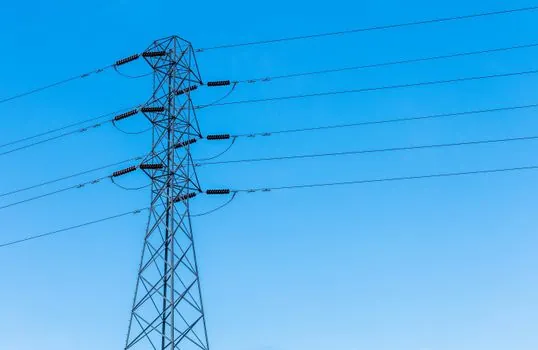
Across the supplier landscape, the main product families line up against four decision criteria: voltage class, armouring, certification stack, and typical deployment. Low-voltage 0.6/1 kV XLPE/PVC cables ship as unarmoured, STA armoured (steel tape), or SWA armoured (steel wire), in copper or aluminium, for distribution, switchgear feeders, and direct burial [S5]. Medium-voltage cables (typically 6–35 kV) follow the same unarmoured/STA/SWA split and feed ring-main units and utility substations. High-voltage cables (66 kV and up) are typically custom-engineered, with factory joints and terminations scoped into the supply contract, and they are the segment where lead time, not unit price, decides the award.
Solar PV cable sits in a parallel track: the H1Z2Z2-K designation under EN 50618 is the common European identifier, while UL 4703 governs the U.S. market, and IEC 62930 is referenced across both regions; double-insulation, halogen-free LSZH jackets, and UV/ozone resistance are baseline, not premium [S4][S5]. For power distribution downstream of the cable, the LV/MV switchgear lineup is rated against the same IEC 60502-1 and 60502-2 cable standards, so spec alignment across the cable-to-gear interface is non-negotiable.
Who This Market Is For, and Who It Is Not For
Global tier-1s (Prysmian, Nexans, LS Cable & System) fit utilities, EPCs, and large renewable developers running phased multi-year builds with strict documentation and traceability requirements [S2][S3][S6]. Regional and Chinese manufacturers (Nassau National Cable, Philatron, FRCABLE, Ruitian) fit distributors, mid-scale EPCs, and OEM/ODM buyers who need faster lead times, custom builds, or competitive cost-performance on standard builds [S1][S4][S5].
This market is not a fit for buyers chasing single-reel spot buys at rock-bottom unit price. Utility T&D procurement now treats specification compliance, phased delivery, and traceability as gating criteria, and any supplier that cannot produce utility-grade certifications and mill traceability records is screened out before price is even discussed [S2]. The same logic applies to solar EPCs: a cable without TÜV/UL/IEC/JET coverage for the destination market will fail the engineering submittal regardless of how cheap the reel is [S4].
Use Cases Pulling Volume in 2026

Three end-use segments are driving most of the 2026 pull. First, data-centre-driven T&D upgrades, with U.S. data center demand forecast at 75.8 GW in 2026, are pulling HV transmission cable, substation LV/MV feeders, and station service cable into long-cycle orders [S2]. Second, utility-scale solar EPCs are sourcing H1Z2Z2-K and UL 4703 PV cable in 12 AWG through 4/0 AWG ranges, with FRCABLE, Prysmian, LAPP, HELUKABEL, and Top Cable as the common shortlist names [S4]. Third, industrial electrification and brownfield expansion are pulling 0.6/1 kV armoured power cable, including SWA direct-burial runs, into short-cycle distributor orders.
Philatron Wire & Cable remains a North American reference for custom flexible and insulated cable, including bare copper and specialty power conductor builds, which fits the data-centre and industrial-electrification pull where off-the-shelf LV cable geometry is wrong [S1]. For overhead transmission specifically, power distribution upgrades pull AAC, AAAC, and ACSR conductor from a separate qualified supplier pool, and that pool does not overlap with the underground cable vendors one-for-one.
Limitations, Failure Modes, and Spec Pitfalls
The most common 2026 spec pitfall is mixing cable standards across regions: an EN 50618 solar cable is not a direct substitute for UL 4703 in a U.S. PV project, and an NF C32-321 XAV cable is not interchangeable with a generic IEC 60502-1 build on a U.S. utility bid, even if both are 0.6/1 kV [S4][S5]. The second pitfall is lead time: HV transmission cable routinely runs 12–24 months from order to delivery, and procurement teams that do not lock suppliers during FEED lose construction slots [S2].
A third failure mode is documentation. Utility T&D procurement now requires traceability records, factory acceptance test reports, and type-test certificates as part of the bid package, and any supplier that cannot produce them is deselected regardless of price [S2]. For a working spec map on the gear side of the cable-to-switchboard interface, see this ATEX-focused spec map for oil and gas power distribution. The cable is only one half of the equation; matching it to correctly rated distribution equipment is the other.
Standards and Sourcing Discipline
The standards stack to anchor against in 2026: IEC 60502-1 for LV extruded cable, IEC 60502-2 for MV, EN 50618 and IEC 62930 for solar PV cable, UL 4703 for the U.S. solar market, and UL / TÜV / JET as the common third-party certification marks across the supplier base [S4][S5]. For overhead transmission, separate conductor standards apply, and those pull from a different supplier pool than underground power cable.
Trackable signals through the rest of 2026: U.S. data center demand stepping from 75.8 GW in 2026 toward 134.4 GW by 2030, with transmission capex at 37% of U.S. grid spend and distribution at 63% [S2]; FRCABLE, Prysmian, LAPP, HELUKABEL, and Top Cable holding the solar shortlist as EN 50618 / IEC 62930 / UL 4703 enforcement tightens across the U.S. and EU [S4]; and Prysmian, Nexans, and LS Cable & System continuing to anchor the global tier-1 T&D supply base [S2][S3][S6].
For component-level specifications, see construction machinery and equipment.