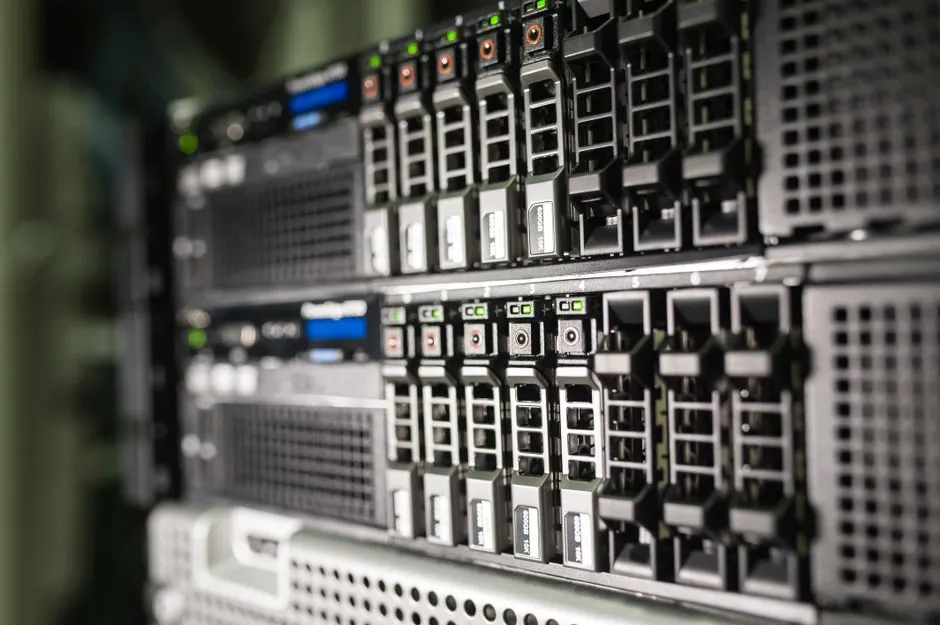
As of October 2026, the binding constraint on US data center construction is no longer chips, land, or capital, it is the high-voltage transformer, with delivery stretching from a pre-2020 baseline of 24-30 months to 4-5 years today [S2][S6].
Across 2026 announcements, Sightline Climate tracked 12 GW of US data center capacity spread over 140 projects, of which only 5 GW is physically under construction, while 11 GW sits in announced status with no site work and 25% of those projects have not disclosed a power strategy at all [S2]. Goldman Sachs, cited May 2026, expects only 50-60% of planned capacity to come online as scheduled over the next two years [S1].
Why the Bottleneck Migrated from Servers to Substations
Between 2021 and 2024, the dominant supply chain risk for data center builds was IT hardware, with server and switch delivery times ballooning to 52 weeks during the pandemic component crunch [S3]. From 2025 onward, the constraint migrated from the rack to the substation: IT hardware supply chains can scale in 12-24 months, but heavy electrical equipment manufacturing and grid upgrades operate on multi-year cycles [S3].
The Lawrence Berkeley National Laboratory data set, summarized in February 2026 reporting, shows US interconnection wait times have more than doubled over fifteen years, with projects now averaging five years in queue before commercial operation [S5]. For hyperscalers planning hundreds of megawatts of inference load, that queue length is the schedule [S2][S5].
High-Voltage Transformers, Switchgear, and Turbines: the Three Gating Items
Electrical equipment sits under 10% of total data center cost and acts as 100% of the near-term bottleneck, with the three tightest categories being HV transformers, MV/LV switchgear, and grid-tie battery energy storage [S2]. Pre-2020 lead time on a high-power transformer was 24-30 months; as of mid-2026, it stretches to roughly 5 years, and gas turbine slots at GE Vernova run into 2029 and 2030 [S2].
HSBC's AI bottleneck note, paraphrased February 2026, frames it bluntly: "Grid equipment lead times are rising with some shortages in medium voltage equipment, but the key bottleneck is in high voltage substations, where lead times are 3-5 years" [S2]. Battery energy storage system containers are far more available, typically 6-18 months, which is why BESS is the swing asset behind many behind-the-meter designs [S2].
Behind-the-Meter and the BYOP Workaround
To sidestep HV transformer queues, the Bring Your Own Power model has moved from edge case to mainstream design choice, with developers specifying on-site gas turbines, fuel cells, or solar-plus-storage sized to medium or low voltage so the facility never needs a grid-tie transformer at the substation level [S2]. One cited example is a Meta campus near Columbus, Ohio, where Williams received July 2025 approval to build on-site natural gas generation, bypassing the grid entirely [S2].
Oracle's Project Jupiter in Doña Ana County, New Mexico, illustrates the risk of the gas-turbine route: a 2.5 GW campus hit a state regulator block on the supporting gas pipeline, and Oracle moved in late September 2026 to financially protect itself from delay or cancellation [S1]. For spec work, the practical implication is that construction tools and on-site generation packages must be ordered on the same critical path as long-lead electrical gear, not sequenced after it.
How This Shows Up in 2026 Construction Schedules
CMiC's January 2026 construction trends brief flagged tighter schedules, higher power density, and unified controls as the dominant 2026 themes, with long-lead equipment shaping every critical-path drawing set [S4]. The practical schedule effect is that a developer who waits to order transformers until after a substation interconnect agreement is signed has already lost 3-5 years on the calendar [S2][S5].
Wood Mackenzie's Q1 2026 pipeline data shows 36 GW added to development, but that figure is down 19% from Q4 2025 as developers shift capital from speculative sites to existing pipeline projects where the power path is already secured [S1]. EPRI's February 2026 forecast puts data centers at up to 17% of US electricity demand by 2030 and as much as 20% by 2035, so the 2026 bottleneck decision is effectively the 2030 capacity decision [S1].
Comparison: Where Each Power Path Stands on Lead Time, Risk, and Cost
For procurement teams, the realistic options in 2026 line up as follows. Grid + HV transformer: 4-5 year lead time on the transformer alone, plus a 5-year average interconnection queue, lowest marginal cost, highest schedule risk [S2][S5]. On-site gas turbine BYOP: 3-year turbine lead time, independent of grid queue, but exposed to gas pipeline permitting as Project Jupiter showed [S1][S2]. Solar plus BESS behind the meter: 6-18 month BESS lead time, 12-24 month PV lead time, no HV transformer needed when sized to MV, but needs land and clear sky [S2].
Per the same Sightline data, the winners in this regime are operators who locked in power purchase agreements and transformer orders 3-4 years ago, before anyone was modeling hundreds of megawatts of inference load, while late entrants sit behind them in the same factory queue [S2]. Gartner's forecast, cited early 2026, expects power shortages to operationally constrain 40% of AI data centers by 2027, which is why control over the power source now matters more than the GPU allocation [S3].
Local Opposition, Permits, and the Other Half of the Schedule
Equipment lead time is only one of four compounding delays; the other three are utility study backlogs, transmission upgrade requirements, and permitting complexity, with environmental and zoning approvals alone adding 1-4 years depending on jurisdiction [S5]. Late 2024 interconnection data shows roughly 10,300 projects representing 1,400 GW of generation and 890 GW of storage in active queues, more capacity than the entire installed US power fleet [S5].
Specific 2026 setbacks include a Microsoft site near Grand Rapids, Michigan, stalled by Consumers Energy permitting, a Microsoft Vineland, New Jersey site fined $1 million in September 2026 for running dozens of gas generators without permits, and a Google site in Xcel's Minnesota territory under court-ordered work stoppage for environmental review [S1]. Geronimo Power's CEO, in a September 2026 interview, called the level of organized local opposition the highest he has seen in over twenty years of development, with a Nobles County, Minnesota 400 MW data park rejected in spring 2026 despite community outreach [S1].
What Spec and Procurement Teams Should Treat as Trackable Signals
Two trackable signals for the next two quarters: GE Vernova and Siemens Energy transformer and turbine booking disclosures (lead times and slot allocation for 2027-2029), and FERC and ISO interconnection queue withdrawal rates, which historically sit at 77% withdrawal for 2000-2019 vintage applications and now drive 50-60% expected on-time delivery per Goldman [S1][S2][S5].
For sourcing language, the practical spec-side implication is that data loggers and substation monitoring skids should be ordered with the same purchase order discipline as the transformer itself, since commissioning windows will slip on the long-lead electrical gear well before the IT scope is at risk.
For component-level specifications, see construction machinery and equipment.