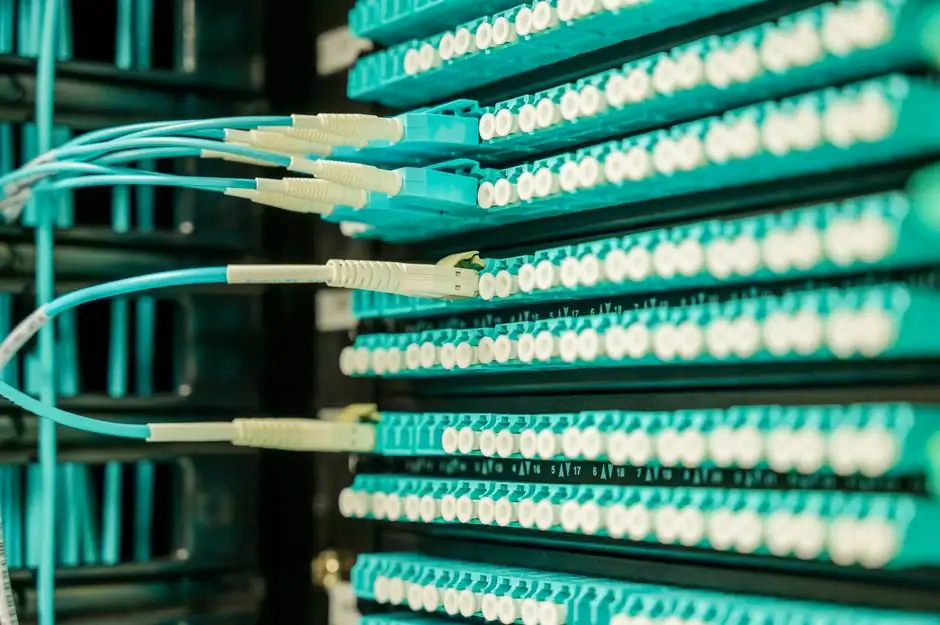
A dedicated data center BESS takes 6 to 18 months from order to commissioning, with most projects landing in the 9 to 14 month band once EPC and interconnect studies are included [S6].
That window sits against a 12 to 24 month data center shell build, while grid interconnect can run up to three times the construction timeline [S2]. Natural gas turbine lead times are around five years through 2030, which is why developers are pivoting to on-site batteries and flexible grid connections (FGCs) to bridge the gap [S3][S9].
Where the Lead-Time Gap Actually Sits in 2026
The 6-18 month BESS window is the published order-to-commissioning envelope, not a single OEM delivery figure [S6]. Burns & McDonnell EPC describes a compressed deployment cycle where on-site generation and behind-the-meter distribution are now standard considerations because utility interconnect is the bottleneck, not the building itself [S2]. The 2026 Data Center Energy Storage Industry Insights Report flags lead time as a notable increase versus 2025, while sustainability metrics slipped year over year, a signal that schedule pressure is overriding decarbonization scoring in procurement [S8].
For a process engineer sizing a project, the binding constraint is rarely the BESS itself: it is the EPC mobilization window, the high-voltage interconnect study (typically 6-9 months in PJM and ERCOT), and the fire-protection UL 9540A test report turnaround from the cell supplier. If any one of those slips, a 9 month nominal job drifts to 14-18 months.
Cell Allocation: LFP Holds the Line, Solid-State Waits in the Wings
Lithium Iron Phosphate (LFP) remains the most in-demand cell chemistry for data center BESS through 2032, on the strength of its thermal-runaway margin, long cycle life, and a cost curve that has continued to deflate through 2025 [S1]. North America took the largest share of 2025 demand, with hyperscale operators absorbing the majority of premium LFP allocation; solid-state is projected to grow fastest in the forecast period but is not yet a 2026 procurement option at scale [S1].
Allocation reality in 2026 is binary: if you are a hyperscaler or anchor colo with a multi-gigawatt pipeline, the cell makers will hold inventory for you. If you are an edge or enterprise buyer ordering a 2-10 MWh system, you are buying from integrator safety stock and paying 8-15% premium for it. The Duke 2026 study notes that high upfront cost remains one of the named barriers to broader BESS adoption, alongside land use and permitting [S3]. For reference, the load cell instrumentation stack on a BESS container is one of several subsystems where small-batch orders get deprioritized behind hyperscale frames.
BESS vs Gas Turbine vs Grid Interconnect: A 2026 Comparison
Three options face a developer who needs firm capacity for a new AI data center hall in 2026. The comparison below lines up the realistic envelope each one operates in. [S2]
On-site BESS: 6-18 month lead time, modular and relocatable, provides spinning reserve and black start, limited by cell allocation and UL 9540A testing [S6][S2]. Natural gas turbine: roughly 5 year lead time through 2030, dispatchable firm capacity, exposed to supply-chain bottlenecks on rotors and HRSG components [S3][S9]. Grid interconnect alone: 36-72+ months in contested PJM and ERCOT queues, zero capex on generation, but the longest path and the most uncertain delivery date [S2].
Selection logic in 2026: if your bottleneck is time-to-power and you can accept 1-4 hour duration, BESS plus flexible grid connection wins. If you need 24/7 firm capacity and can wait, the gas turbine still belongs in the mix, often paired with BESS for spinning reserve and peak shaving. The time relay coordination on a BESS-plus-turbine hybrid is one of the easier integration tasks; the harder one is the IEEE 1547 interconnect study at the POI.
What BESS Is, and Is Not, For in a Data Center
A BESS is an electrochemical device that stores one to two hours of energy and ramps to full output in seconds, complementing the 5-15 minute ride-through window of a UPS [S5]. It is not a replacement for a diesel rotary UPS on long-duration outages, and it is not a primary economic arbitrage play in regulated ratepayer markets where time-of-use spreads are thin [S3].
Four use cases dominate the 2026 procurement pattern: backup power, peak shaving, frequency regulation, and renewable energy time-shifting. Backup and power quality rarely drive the investment decision on their own because existing UPS and diesel assets already cover those functions; the investment case rides on load flexibility and time-to-power, especially for hyperscalers and colos in deregulated markets like ERCOT and PJM [S3]. Edge deployments value islanded operation, while enterprise facilities see the clearest payback in demand-charge reduction and time-of-use shifting [S3][S4].
Sourcing Signals and Failure Modes to Track
Three trackable signals will tell you whether the 2026 BESS lead-time story is loosening or tightening through year-end. First, UL 9540A test report turnaround: if cell makers push from 8 weeks to 12 weeks, the EPC critical path slips. Second, the data logger and BMS commissioning backlog, which is where smaller integrators lose weeks. Third, the lead screw and actuator supply on the PCS skid, a niche but recurring bottleneck on medium-voltage power conversion skids. [S2]
Failure modes to spec against: thermal runaway propagation between modules (mitigated by LFP cell selection and gas detection per NFPA 855 spacing rules), inverter IGBT derating above 40°C ambient, and SOC drift in cells sitting at high state of charge for long durations, a common pattern in backup-only systems that rarely cycle. BMS-level state estimation (SoC, SoH, SoE) using AI/ML models is moving from research to procurement spec in 2026, per the 2026 Safari et al. review [S4].
Standards, Topology, and What "Right" Looks Like in a Spec
The 2026 reference architecture for a behind-the-meter data center BESS couples a battery container (UL 9540, UL 9540A tested), a PCS skid (IEEE 1547 compliant), a BMS with MODBUS TCP or DNP3 to the site EMS, and a fire suppression panel mapped to NFPA 855 spacing. Hyperscalers are increasingly spec'ing DC-coupled topologies with the BESS on the same DC bus as the UPS, reducing conversion losses by 2-4% versus AC-coupled designs [S4].
Two procurement notes from the field. First, the C&I BESS market is forecast at a 17.4% CAGR from 2026 to 2036, with roughly 5x growth expected over that window, so integrator capacity is itself a constraint [S7]. Second, North America captured the largest 2025 share and the top 10 countries held more than 90% of 2025 demand, meaning a tight allocation is geographically concentrated and a delivery slip in any one cell maker cascades quickly [S1].
For a process engineer writing a spec in October 2026: budget 12 months nominal from PO to backfeed, hold a 6 month contingency, lock LFP cell allocation with a non-cancellable PO before breaking ground on the data hall, and treat the BESS and the interconnect study as parallel critical paths rather than sequential. The 2026-2032 cumulative sales opportunity sits at USD 311.8 billion, and most of that capacity is already spoken for under existing hyperscaler frames [S1].
Related analysis: DDR4 vs DDR5 Contract Prices in Q3 2026: A 50% Jump and the Chip-Module Inversion.