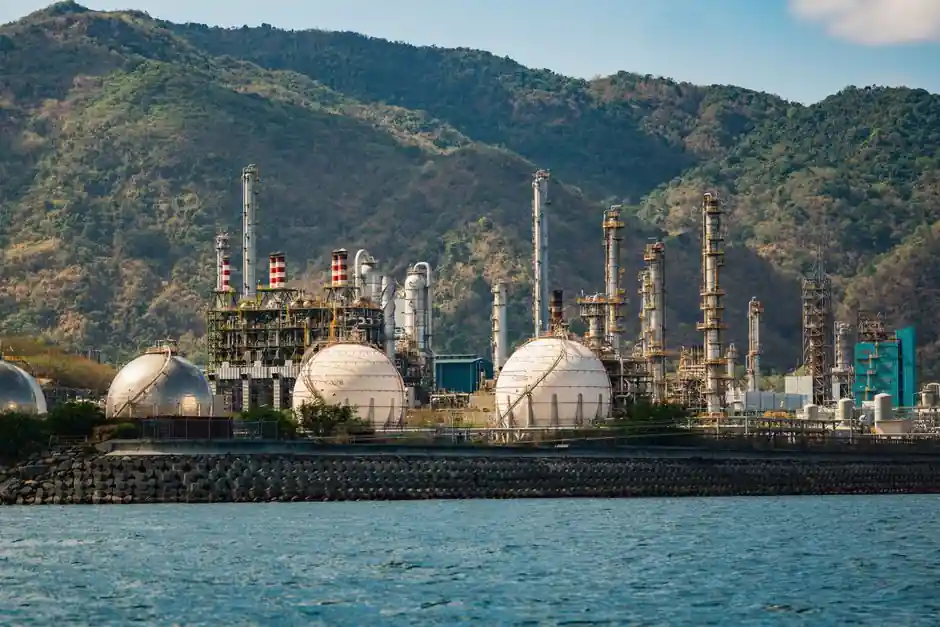
Over 70% of global LNG production depends on dedicated cryogenic valve trains, making the segment a procurement focal point for liquefaction trains, storage, and bunkering infrastructure [S1].
LNG itself exists at -162 °C, and the most demanding cryogenic valve ratings reach down to -196 °C, the boiling point of liquid nitrogen used for factory cold-box testing [S2][S4].
Operating envelope and material baseline for LNG cryogenic valves
LNG service demands austenitic stainless steel bodies, with the Rio Grande LNG supply using ASTM A182 F316/316L and R-PTFE (TFM) seats rated from -196 °C to +200 °C [S4].
Maverick Valves sources European gaskets and seals certified to SHELL MESC 85-103, 85-200, 85-203, 85-204, API 622, and ISO 15848, and limits body materials to austenitic stainless and corrosion-resistant alloys (CRAs) to preserve ductility below the ductile-to-brittle transition [S2].
Cryogenic ball valves on that same project use combined PTFE, graphite, and silicone sealing stacks, with anti-blowout stems and double external sealing, a layout that survives thermal cycling between cooldown and warm purge without seat creep [S4].
Four valve types versus LNG service duty
Globe valves, floating ball valves (top-entry and side-entry), trunnion ball valves, and top-entry trunnion ball valves cover nearly all LNG bunkering and process isolation duties, with each geometry matched to a specific maintenance and pressure class [S5].
Top-entry trunnion ball valves are the default cryogenic pick for harsh, salt-laden ship-deck service because the body can be serviced in line; side-entry floating balls remain a cost-effective option where environmental loading is mild and the bore stays small [S5].
Globe valves still dominate throttling and cryogenic control service because the seat geometry handles large temperature gradients and delivers tighter shutoff for modulating duty than a ball [S6][S3].
The same envelope shows up in generic ball valve and ball valves product families, where the same trunnion, top-entry, and side-entry variants get re-engineered with extended bonnets and cryogenic stem extensions for LNG [S3].
Qualification stack: API 607 8th Ed., ISO 10497:2022, BS6364
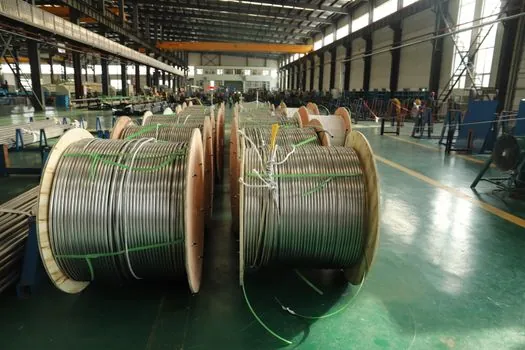
Fire-safe and cryogenic qualification for the Rio Grande LNG shipment was demonstrated by combined API 607 8th Ed., ISO 10497:2022, and BS6364 testing, with double independent DIB-style seat verification on every unit [S4].
BS6364 remains the benchmark for valves on LNG/LPG carriers and shore terminals, while ISO 10497:2022 covers fire-type-testing for soft-seated quarter-turn valves, and API 607 8th Ed. addresses the same fire test in the API series used by most US-based EPCs [S4].
Cavity pressure relief is a separate engineering decision: for soft-seated gate and ball valves on LNG, the standard practice is an external relief line with a check valve, or a drilled disc relief that sacrifices bi-directional shutoff in exchange for trapped-liquid safety [S2].
Project cycle and 2025-2026 supply signals
Ribel Valvole's June 2025 delivery of model C1 wafer and C4 three-piece cryogenic ball valves to the Rio Grande LNG HRV Residual Gas Compressor system, routed through Fluidomatic, is one of the more traceable 2025 supply events for a US Gulf Coast project [S4].
Neway publishes a dedicated cryogenic product line covering gate, globe, check, ball, offset butterfly, and control valves, evidence that the supplier base has moved beyond a single specialist into a competitive multi-vendor market since 2023 [S3].
A November 2025 buyer's-guide update continues to position cryogenic valves as engineered products with documented leakage class, material traceability, and long-term reliability testing rather than commodity catalog items [S7].
Where cryogenic valves fail and how to engineer around it
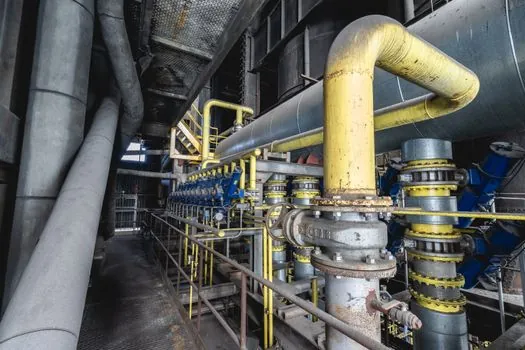
The dominant failure mode on LNG service is seat degradation from thermal cycling, not body fracture, which is why the conservative approach pairs austenitic stainless bodies with PTFE-based seat materials that remain elastic at LNG temperature [S2][S4].
Body-cavity overpressure caused by trapped cold liquid expanding during warm-up is the textbook cause of cracking in soft-seated gate and ball valves, and is mitigated with relief holes, external routing, or double-block-and-bleed configurations [S2].
External leakage paths at the stem and bonnet get a layered seal stack: a primary PTFE seal, a graphite secondary, and a silicone weather seal, with double independent sealing and anti-blowout stems to keep the process inside the body even if a single seal fails [S4].
Standards map and engineering references for procurement
The reference set for any LNG cryogenic valve package typically pulls from API 607 8th Ed. (fire test), ISO 10497:2022 (fire-type-test for soft-seated quarter-turn), BS6364 (LNG/LPG valves), API 622 (low-emission packing), and ISO 15848 ( fugitive emission classes), with ASTM A182 covering the body forging grades [S2][S4].
LNG reduces natural gas volume by a factor of 600 versus its gaseous state, which is the underlying driver for transporting fuel in insulated tanks and for fitting every transfer point with a cryogenically qualified isolation valve rather than a standard pipeline valve [S2].
Tank storage, liquefaction trains, and bunker ships each pull a different valve mix, including cryogenic fill, drain, isolation, and over-pressure relief valves, and the procurement team has to track which of those four roles is being specified before locking a model code [S8].
For a deeper look at the materials side of cryogenic valve selection, the ball valve encyclopedia page covers seat and seal choices that are reused across LNG and air-separation plants, while the ball valves catalog entry lists the trunnion and floating variants that get cryogenic conversion [S3].
Process-side throttling and isolation share geometry with general ball valve product families, which is why procurement can re-use tooling and seat inventory from hydrocarbon service once the cryogenic extended bonnet and stem extension are factored in [S3].
Side-by-side: which valve geometry for which LNG duty
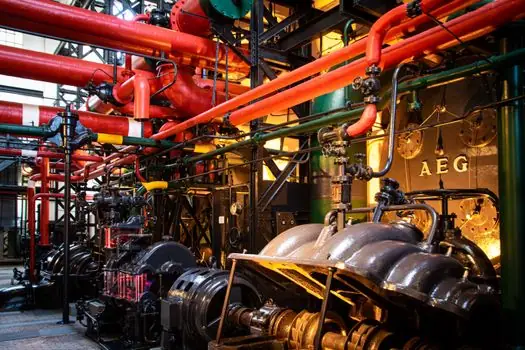
Top-entry trunnion ball valves: best for in-line maintenance, harsh marine environment, large bore; higher unit cost [S5].
Side-entry floating ball valves: cost-effective for small-bore, mild environment service; limited to lower pressure classes [S5].
Globe valves: best for cryogenic control and throttling service, tight shutoff across wide temperature swings [S6].
Offset butterfly valves: used for large-bore low-pressure LNG storage and vapor return lines where weight and footprint matter, with extended bonnet and cryogenic seat as standard [S3].
Trackable signals for the next procurement cycle
Watch the next round of US Gulf Coast FID announcements, since each new LNG train (Rio Grande, Plaquemines, Corpus Christi III) tends to publish a cryogenic valve supplier list within 6-12 months of FID, giving a clear demand pulse [S4].
Track any ISO 10497 revision notices, since the 2022 edition is the current cited version and a fresh revision would reset fire-test data on existing model codes [S4].
Follow the LNG bunkering infrastructure roll-out at European and Asian ports, because the four-valve-type mix (globe, floating ball, trunnion, top-entry trunnion) used there tends to bleed back into US land-based terminal specifications within 12-18 months [S5].
For adjacent reference work, the related selection note on Rubber Lined vs PFA Lined Butterfly Valve for HCl shares the same seat-versus-lining trade-off logic that applies when picking cryogenic seat materials for LNG [S7].
On the supply-chain risk side, the Critical mineral stockpiling shifts buyer risk in 2026 note is worth reading alongside any LNG valve package, because 316L/CRAs and graphite seal supply both sit downstream of the same mineral flows [S9].
For the relevant spec sheets and selection criteria, see power supply, and dc power supply.