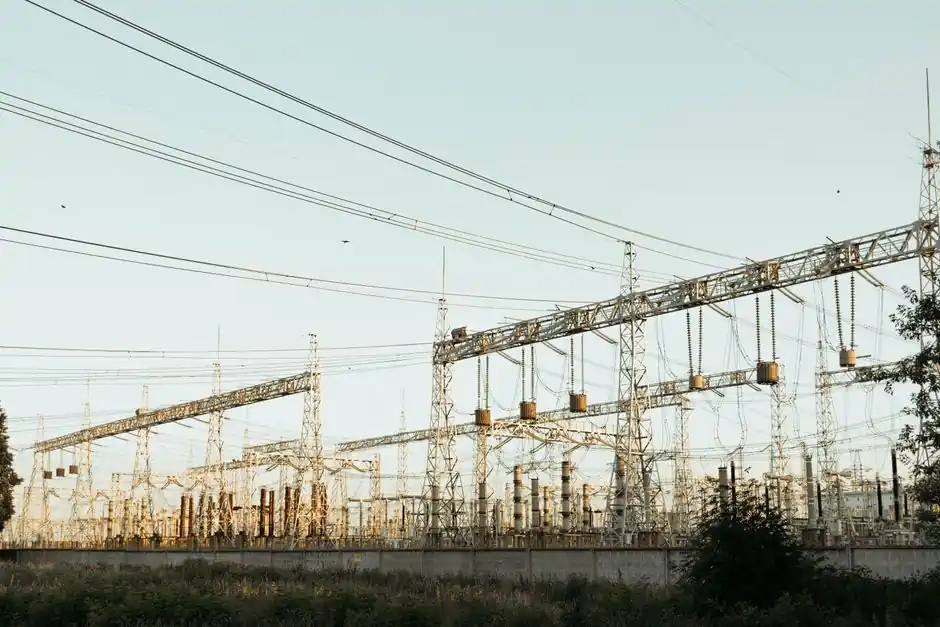
Copper and aluminium are the two dominant conductive materials in grid-scale wire and cable, with the IEA critical-minerals report identifying them as the primary mineral inputs for the huge expansion of electricity grids required by clean-energy transitions [S2]. For any 2026 procurement programme touching transmission lines, distribution cable, transformer windings, or substation busbar, the material mix decisions start with these two conductors and the steel that mechanically supports them.
The sourcing landscape is bounded by three regulatory frames: the U.S. three-interconnection structure (Eastern, Western, and ERCOT) overseen by NERC under FERC authority [S1]; the EU's strategic critical-raw-materials regime, which singles out cobalt, copper, lithium, graphite, nickel, and rare earth elements as essential to grid and storage build-out [S4]; and the demand split between energy-transition uses and general industrial/consumer uses, which determines competing bid pressure on every kilogram [S3].
Conductor Materials: Copper Versus Aluminium Selection Criteria
Aluminium's lower density (roughly 2.7 g/cm³ versus copper's 8.96 g/cm³) makes it the default for overhead transmission conductors where span weight and sag govern line design, while copper's higher conductivity (approximately 61% IACS for standard conductor aluminium versus 100% IACS for copper) keeps it specified for compact substation busbar, transformer windings, and any run where cross-section must be minimised [S2]. The IEA's grid-mineral assessment treats both as fungible at the system level, but the engineering trade-off is conductor area for a given ampacity: an aluminium conductor of equivalent resistance to a copper one typically needs 1.5 to 2 times the cross-section, a factor that drives tower loading and easement width on new transmission builds.
Sourcing teams should weight four criteria before choosing: ampacity per kilogram, joint and termination compatibility with existing substation hardware, recycled-content availability (both metals have mature secondary supply chains), and price volatility exposed through the London Metal Exchange. A power cable specification written only on copper-equivalent resistance, without naming the conductor material, leaves the bid open to an aluminium substitution that may not fit existing connectors.
Structural and Magnetic Steels: Transformer Cores and Tower Members
Steel demand in grid construction splits into two functional categories: grain-oriented electrical steel (GOES) for transformer cores, where silicon content typically sits in the 3% range to reduce hysteresis loss, and structural steel grades (ASTM A36, A572, or equivalents) for transmission towers, substation gantries, and switchgear frames. ETC's materials chart places steel alongside copper, nickel, and aluminium as one of the four materials in high demand across clean-energy technologies and other industrial uses, a dual-demand pattern that exposes tower steel pricing to non-grid construction cycles [S3].
For transformer-grade GOES, the procurement specification should pin core loss in W/kg at a defined induction (typically 1.5 T or 1.7 T) and frequency (50 Hz or 60 Hz), because vendor data sheets often quote at 1.5 T/50 Hz which overstates performance on 60 Hz North American grids. Nickel appears in stainless transformer-tank alloys and in battery storage attached to grid balancing, but its sourcing is tied to the stainless and EV supply chains rather than grid-specific contracts.
Critical and Strategic Materials: REE, Nickel, Cobalt, Lithium, Graphite
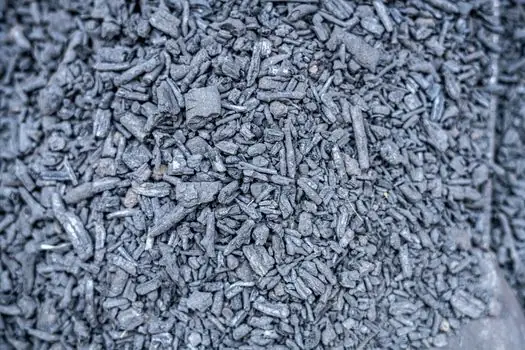
Arup's EU critical-raw-materials guide singles out six strategic materials for the energy transition: cobalt, copper, lithium, graphite, nickel, and rare earth elements, with the REE category covering the neodymium-iron-boron magnets used in wind turbine generators and the dysprosium additives that hold magnetic performance at operating temperature [S4]. Grid build-out is not the only consumer of these materials; EVs and battery storage compete directly, which means long-term grid sourcing contracts face allocation risk during battery-cell ramp cycles.
For procurement specifications touching switchgear, instrument transformers, or any substation equipment containing rare-earth magnets, the practical risk is single-source dependency rather than grade selection. The EU's 2024 strategic-materials framing treats this as a value-chain vulnerability, and the same logic applies to U.S. projects serving the three NERC interconnections where power distribution equipment on the Eastern and Western ties depends on the same global REE supply [S1][S4].
Recycled Content and Secondary Supply: Copper, Aluminium, and Steel
Both copper and aluminium have well-established recycled-content supply chains, with secondary aluminium typically requiring only about 5% of the energy of primary smelting and recycled copper retaining 95% or more of primary-grade conductivity. The ETC chart notes that demand for the four broad-use materials (copper, steel, nickel, aluminium) is driven not only by the energy transition but also by other industrial and consumer uses, so recycled-content sourcing competes with non-grid buyers for the same scrap stream [S3].
A practical procurement tactic is to specify minimum recycled content by mass (commonly 30% to 60% for cable-grade aluminium, 40% or higher for copper conductor, and 90%+ for structural rebar and plate) and to require mill test certificates that distinguish pre-consumer and post-consumer scrap, because the two carry different embodied-carbon accounting under most grid-decarbonisation reporting frameworks. Substation steel specified to a recycled-content minimum is one of the few places where power distribution sourcing can move a project-level carbon number by double-digit percent without changing equipment performance.
Standards, Reliability, and Qualification Anchors
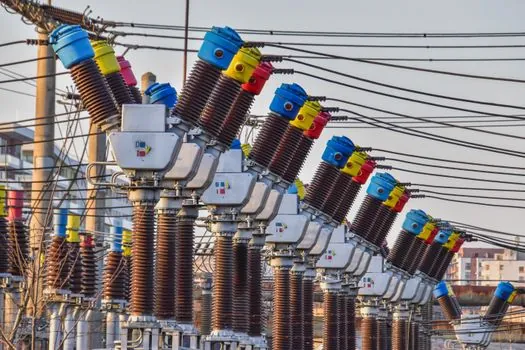
U.S. grid equipment qualification runs through NERC reliability standards, with FERC-authorised oversight since 2006 covering the contiguous U.S., Canada, and the northern portion of Baja California, Mexico [S1]. NERC's standards govern the reliability and security of the bulk electric system rather than per-material chemistry, but the equipment that lands in a NERC-regulated substation must still meet material specifications written by IEEE, ASTM, and UL, and the sourcing team needs to track which of those standards its vendor's mill certs satisfy.
For metering inside the substation boundary, the same reliability frame applies, and the choice between power meter families, whether socket-based revenue meters, CT/PT-powered survey meters, or power-quality instruments, drives secondary copper and magnetic-shield material demand differently. A 2026 procurement review for a new substation should map each line item on the bill of materials back to (a) the conductor or alloy grade, (b) the ASTM/IEEE/UL standard governing that grade, and (c) the NERC standard governing the equipment in which it is installed, so that a single substitution does not break the qualification chain.
Comparison of Primary Grid Materials Across Decision Criteria
For sourcing teams writing 2026 specifications, four materials dominate procurement value, and they line up against the same four decision criteria: copper, aluminium, transformer-grade GOES steel, and structural steel. On conductivity per kilogram, copper wins; on conductor cost per metre at equivalent ampacity, aluminium wins; on core loss per kilogram, GOES is the only viable choice; on tower and gantry cost per kilonewton, structural steel is the default. On recycled-content availability, all four have mature secondary supply, but copper and aluminium scrap markets are deeper than electrical-steel scrap. On supply-chain concentration risk, the four differ sharply: structural steel is broadly sourced, aluminium is concentrated in a few smelting regions, copper faces mid-tier concentration, and GOES production is concentrated in a small number of mills globally. [S4]
This comparison lets a procurement engineer decide which power cable conductor to specify, which transformer core grade to lock, and where dual-source qualification is mandatory. For teams sourcing broader energy-transition materials, the same selection logic maps onto the Metal Powder Suppliers and Manufacturers: 2026 Sourcing Map, and the policy frame parallels what is reshaping adjacent sectors such as the cement industry's compliance-driven sourcing shift described in Alternative Fuels, Compliance Pressure and Electrification: Five Signals Reshaping Cement Plant Sourcing.
Sourcing Limits, Failure Modes, and Trackable Signals
The most common failure in grid raw-material sourcing is grade substitution at the mill rather than at the vendor: a transformer delivered with non-oriented electrical steel in place of specified grain-oriented steel will pass a generic dimensional inspection but fail a core-loss test at 1.7 T. The second is aluminium conductor delivered to a copper-equivalent resistance spec but with a different thermal expansion profile, which then exceeds sag limits on the first hot summer. A third mode is recycled-content claim without chain-of-custody documentation, which survives procurement audit but fails embodied-carbon reporting at project close-out. [S3]
Trackable signals for the next sourcing cycle: NERC and FERC notices on bulk-system equipment qualification, EU critical-raw-materials list updates (the 2024 list runs through 2026 and is reviewed periodically), and LME copper and aluminium price bands against which long-term supply contracts are re-priced. Teams that anchor each line item to conductor grade, ASTM/IEEE standard, and NERC reliability standard before issuing a 2026 PO will catch substitution risk in the bid review rather than in the field.