Power meter accuracy has converged on a ±1% tolerance across crank-arm, pedal, and spider platforms in 2026 reviews, so the binding constraint is now material-grade and frame-fit compatibility, including Shimano 11/12-speed alloy arms, carbon-crank retrofit limits, bottom-bracket shell width, and pedal cleat interface [S1][S2][S4][S5].
Three form factors dominate: pedal-based (Favero Assioma PRO RS-2 at 124.8 g per pedal, 160 h rechargeable, IP67 sealed stainless spindle), crank-arm (4iiii PRECISION 3 strain-gauge pod, single or dual, ANT+/Bluetooth), and spider (SRAM AXS thread-mount). Each has a different compatibility envelope with stock Shimano, Rotor, Campagnolo, and FSA crank families [S1][S2][S4].
Crank-arm retrofit: alloy versus carbon limits
Crank-arm power meters require the host arm to be dimensionally and materially within the OEM's retrofit envelope, and 4iiii's Factory Install service confirms a much wider range of alloy and carbon cranks beyond Shimano can be retrofitted once the arm is shipped to the facility [S1]. The PRECISION 3 / 3 PRO strain-gauge pod is epoxied to the back of the drive-side arm, so the arm must be non-coated on the bonding face, free of existing strain instrumentation, and within the model's published thickness window [S1]. 4iiii's own compatibility list for pre-built "Ride Ready" cranks is narrower and concentrates on Shimano 105, Ultegra, Dura-Ace, XT, XTR, and GRX alloy arms plus selected carbon cranks, so riders on niche brands or older 10-speed arms typically have to use the mail-in path [S1].
Carbon arms add two extra checks before retrofit: the bonding-zone surface must be intact (no prior double-sided strain gauges, no metal-reinforcement insert in the gauge footprint), and the arm's layup must be stiff enough that lateral deflection under sprint torque stays inside the strain gauge's linear range, which 4iiii rates at ±1% on tested arms but does not guarantee on every layup [S1]. 4iiii publishes its accuracy at ±1% under the test conditions used during Factory Install, so a rider sending a third-party carbon arm should expect the meter to be calibrated against that specific arm rather than against a generic Shimano reference [S1]. Riders with entry-level bikes hit a hard wall here, because many low-tier alloy cranks do not have the dimensional family supported by major crank-meter vendors and have to fall back to pedal-based or hub-based options [S3].
Pedal-based meters: spindle, stack height, cleat, rider weight
Pedal-based meters are the most universal option because they bypass crank and bottom-bracket compatibility entirely, but they introduce their own material and interface constraints. The Favero Assioma PRO RS-2 uses a sealed stainless-steel axle with all electronics, strain gauges, and a rechargeable battery potted inside, rated IP67, and mates it to an SPD-SL-compatible pedal body, with a stack height matching Shimano Ultegra PD-R8000 [S2]. The Garmin Rally 210 family is modular: the same spindle accepts Look Keo, Shimano SPD (2-bolt), and Shimano SPD-SL (3-bolt) pedal bodies, so one spindle moves across road, gravel, and MTB shoes, with battery life rated at 90 h per charge and a proprietary USB-C clip charger [S2].
Weight is a published rider-side limit, not just a spec sheet item: Garmin specifies the Rally 200-series pedal accurate to roughly 240 lb (about 109 kg) of system rider weight, above which the gauge's zero-offset is less reliable [S3]. Stack height is the second often-missed check, since a taller pedal axle can alter Q-factor and cleat engagement, and the Assioma PRO RS-2 deliberately matches Ultegra's low stack to avoid this [S2][S4]. Riders on road-only cleats who want to swap to gravel or MTB have to commit to a pedal system that supports the second cleat type or carry a second pedal body, which is the value proposition Garmin built the modular Rally 210 around [S2].
Water-ingress rating matters when a power meter is mounted low on the bike, and both the Favero Assioma PRO RS-2 (IP67) and the Rally 210 carry sealed spindle designs to keep spray and rain out, whereas older external-pod Assiomas were a known failure point [S2][S4]. Magnetic puck charging on the Favero keeps the spindle port-free and is one of the cleaner answers to the water-ingress-vs-recharge debate, and the Garmin Rally 210 reaches the same sealed-spindle result with a clip-on magnetic USB-C adapter [S2].
Spider and bottom-bracket: BSA, BB86, BBright, T47
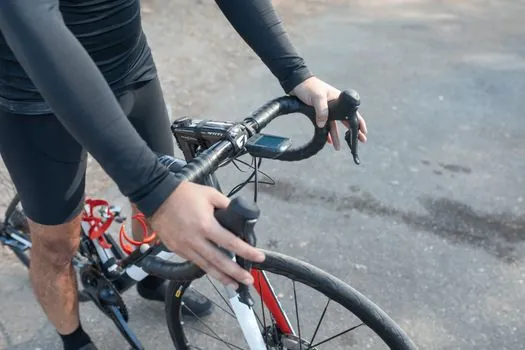
Spider-based meters such as the SRAM Force AXS Threaded-Mount Power Meter Spider sit in the chainring spider and inherit the bottom-bracket standard of the host frame, so compatibility is set by the BB shell width and type (BSA, BB86, BBright, T47, PF30) rather than the crank arm [S2][S5]. A quality bottom bracket from any of these families is enough to make the meter fit, and reviews note that "compatibility is rarely an issue when the right bottom bracket is chosen" across BSA, BB86, and the rest of the common road and gravel shells [S5].
The trade-off is chainring family: a SRAM AXS-thread-mount spider only takes SRAM 8-bolt chainrings, and a Quarq or 4iiii spider meter only takes its own generation of chainring bolt circle, so the rider commits to a chainring ecosystem at the same time as the meter [S2]. Riders running older 5-bolt 110 BCD or 5-bolt 130 BCD cranks have to budget a new crank or a spider-mount meter, since the meter vendors do not support legacy BCDs as a general rule. Service life on these units is rated in 5-10 year horizons provided the rechargeable cell is not deeply discharged, which is the same longevity envelope quoted for crank-arm and pedal options [S5].
Compatibility decision matrix across the three form factors
For a 4-axis comparison at a glance: pedal-based meters (Favero Assioma PRO RS-2, Garmin Rally 210) score high on cross-bike transfer and on cleat-system modularity, score medium on per-system cost ($999+), and need no bottom-bracket or crank-arm change. Crank-arm meters (4iiii PRECISION 3 / PRECISION 3 PRO) score high on per-side weight and on Shimano ecosystem depth, medium on cross-bike transfer (the arm has to move with the crank, or a second arm must be bought), and low on third-party carbon-crank coverage. Spider meters (SRAM Force AXS thread-mount) score high on dual-side accuracy and chainring integration, low on cross-bike transfer (one frame, one chainring family), and require a frame-compatible bottom-bracket standard [S1][S2][S4][S5].
Material-grade summary that drives each row: pedal meters are isolated from the crank material entirely and instead depend on pedal-spindle stainless alloy plus an IP67 seal; crank-arm meters depend on whether the host arm is Shimano-spec alloy, aftermarket alloy, or carbon with a clean bonding face; spider meters depend on the chainring bolt circle, the crank spider's alloy or carbon construction, and the BB shell standard of the frame [S1][S2][S4][S5]. A rider who already owns a current Shimano 11/12-speed alloy crank (105, Ultegra, Dura-Ace) is the easiest fit for a 4iiii Ride Ready or Factory Install path, while a rider on a 10-speed entry-level crank is steered to a pedal-based unit to avoid the material-coverage gap [S1][S3].
Protocol layer: ANT+, Bluetooth, and head-unit fit

All three form factors transmit over ANT+ and Bluetooth in 2026, so head-unit compatibility has converged, and the failure mode left is at the head-unit side rather than the meter side [S1][S2][S4]. A head unit that supports ANT+ Power or Bluetooth Smart Power profiles pairs with Favero Assioma PRO RS-2, 4iiii PRECISION 3, Garmin Rally 210, and SRAM AXS spider meters without a vendor-specific bridge [S2]. Garmin head units unlock extra metrics on the Rally 210, such as advanced cycling dynamics, but the basic watts display is universal across the protocol layer [S2].
Calibration differs by form factor: pedal-based meters auto-zero on every ride, crank-arm meters prompt a manual zero-offset via the head unit after a ride sit, and spider meters prompt a manual zero-offset after a torque-unload step, so the protocol story hides a workflow step that buyers should expect [S1][S2]. Battery chemistry is now dominated by rechargeable Li-ion cells in pedal and spider meters, with up to 160 h on the Favero Assioma PRO RS-2 and 90 h on the Rally 210, while legacy coin-cell designs (older Assiomas, older Rally 100/200) are being phased out across the 2026 model year [S2][S3][S4]. For buyers cross-shopping meter formats, the operational rule is to fix the protocol story first (any ANT+/Bluetooth head unit) and then pick the form factor whose material-grade and frame-fit envelope matches the host bike [S1][S2][S4].
Where the spec sheet passes but the install fails
Three on-site failure modes that a clean datasheet will not flag: (1) a Shimano 12-speed alloy arm that has a factory bonded two-sided strain gauge from a previous meter, which blocks a 4iiii Factory Install because the bonding face is no longer flat; (2) a frame with a BB86 shell paired to a spider meter that needs a 5-bolt 110 BCD chainring family the rider does not own, forcing a chainring purchase on top of the meter; (3) a pedal-based meter on a rider above the published weight limit, where the zero-offset drifts over a long ride and the rider reads a non-zero baseline at the cafe stop [S1][S2][S3].
Two more that the protocol sheet hides: a charge port on a pedal meter that uses a proprietary magnetic puck (Favero) or a clip-on adapter (Garmin), so losing the charger bricks the meter until a replacement ships, and a crank-arm meter whose host arm is replaced under warranty, which orphans the strain-gauge pod unless the rider re-runs Factory Install on the new arm [S1][S2]. For buyers reading our encyclopedia entry on power meters alongside this guide, the practical rule is to confirm frame shell standard, crank material and BCD, cleat type, and rider weight before locking the form factor. Riders sourcing from industrial supply catalogs that also list multifunction power meters for facility metering should keep the cycling-power-meter decision separate from industrial revenue-grade metering, since the protocols (ANT+/Bluetooth vs Modbus/4-20 mA) and accuracy classes (cycling ±1% vs IEC 62053-22 Class 0.5S) are unrelated [S1][S2][S4].
The next trackable signal for buyers is the Q3 2026 model-year refresh on Garmin Rally, Favero Assioma, and 4iiii PRECISION lines, with pedal and crank-arm options continuing to converge on sealed, rechargeable designs and with spider options moving toward wider chainring BCD coverage. The second signal is the 12-speed Shimano alloy arm coverage list from 4iiii, which expanded through 2025-2026 and is the single most useful compatibility table for any rider deciding between Factory Install and a pedal-meter detour. For readers cross-shopping measurement hardware more broadly, our encyclopedia entry on power supplies covers the industrial rail-side analogue, where ±1% is a luxury spec rather than a baseline.
See also our earlier report, Loop Impedance Tester Certification Checklist for Spare Part Sourcing.