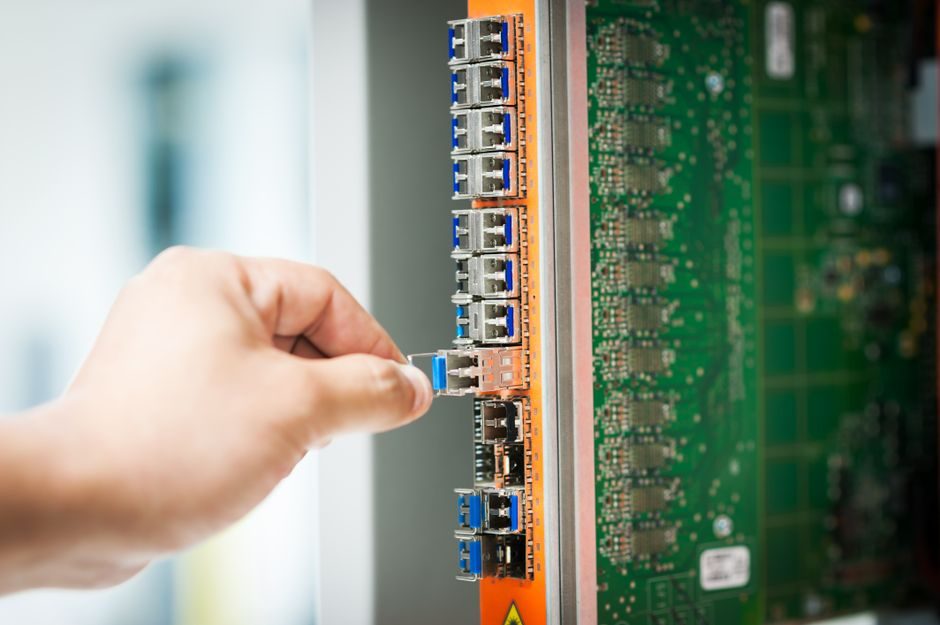
SEMI S2 and SEMI S8 are the recognised safety and ergonomics directives for semiconductor manufacturing equipment, and many buyers now include conformance clauses directly in their purchase contracts, per TÜV Rheinland guidance dated 2026-07-09 [S1].
The equipment scope that matters for power-device fabs spans wafer handling and inspection stations, precision temperature and power controllers, and supporting automation — three pillars that, taken together, decide throughput, yield, and auditable compliance [S2][S3][S4].
SEMI Compliance Stack: S2, S8, S14, S23, F47
The five SEMI documents a power-semiconductor tool builder must hold in mind are S2 (Equipment Safety Evaluation — electrical, ergonomic, radiation, environmental, fire, earthquake), S8 (Ergonomic Evaluation), S14 (risk assessment), S23 (energy/utility/material efficiency, current revision 2021), and SEMI F47 (immunity to voltage sag and line dips) [S1].
S23 is unusually quantitative: it specifies conversion factors for electrical consumption, exhaust air, vacuum, nitrogen and cooling media across production, idle and sleep modes, and rolls them into an annual performance indicator that can benchmark machines from different vendors on a like-for-like basis [S1]. F47 is the citation tool buyers ask for when a fab's grid is weak; it is a pass/fail immunity test, not a design guide [S1].
Wafer Handling and Inspection Stations: What the Spec Sheet Must Show
Semisyn's 2026 product line for wafer handling and inspection covers 6" and 8" wafers with automated loaders, free or map-driven inspection, bin-code re-classification, and TAIKO / through-hole / bonded-wafer support up to 200 mm silicon, glass and sapphire substrates [S2].
For power-device fabs running SiC, GaN or large-diameter silicon, the loaders must list substrate type, diameter, mapping capability and clean-compatibility up front; missing any one of those four is the most common reason a tool is bounced at vendor qualification. Carbon-fibre end effectors, rated for OEM replacement of ceramic and metal tips, are the default choice for thin-wafer handling because they cut particle adders and improve MTBA [S2].
Precision Temperature and Power Control: The Hot-Side Bottleneck
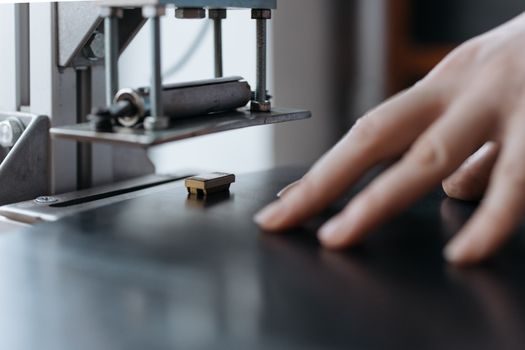
Power-device processes — ion implantation, CVD, PVD, RTP, RTA, post-exposure bake — depend on closed-loop temperature and power control with EtherCAT-class deterministic communication, per Eurotherm's 2026 semiconductor solution overview [S3].
The real selection criterion on the hot side is whether the controller and thyristor/SCR power stack are sold as an integrated, calibrated pair; mis-matched loops are why ramp-and-soak profiles drift and wafer-to-wafer uniformity suffers. For processes that push past 1000 °C, K or T type thermocouple instrumentation wafers are the standard verification method, with Semisyn offering instrumented substrates rated 250–1000 °C specifically for in-process temperature probing [S2][S3].
Automation Around the Tool: Where Most Yields Are Lost
PHD's 2026 positioning of semiconductor manufacturing equipment frames the build problem as high-precision, high-speed assembly, test and finishing — meaning the tool is only as good as the gripper, slide and linear module feeding it [S4].
For pick-and-place of power packages (TO-247, DFN, QFN), engineers typically spec linear guides sized for the package mass and the placement cycle, with a crossed-roller option where stiffness rather than speed dominates; this is exactly the trade-off covered in the crossed-roller guide reference. Anti-static guarding and ionised tooling are now default on lines handling bare die, and the rationale — and the residual risks when ESD is ignored — is laid out in the anti-static equipment entry.
Selection Criteria: A Direct Comparison

Four decision criteria separate the three main equipment categories for a power-semiconductor line: compliance scope, process envelope, automation fit, and data integrity. [S3]
On compliance, SEMI S2/S8/S14/F47 conformance with a written S23 efficiency statement beats a self-declared CE-only mark; TÜV Rheinland's full S2/S8 report is the deliverable most EU and US buyers now request [S1]. On process envelope, handling stations are judged by substrate/diameter/mapping, temperature/power controllers by closed-loop accuracy and EtherCAT integration, and automation by linear-guide stiffness versus cycle time [S2][S3][S4]. On data integrity, the controller side wins on built-in recorders and paperless audit trails, the handling side on wafer-map navigation and bin-code reclassification [S2][S3].
Use Cases and Failure Modes
UV-ozone cleaning and memory-erase stations are routine on power-device lines that re-use carriers; Semisyn's manual or automatic UV systems handle silicon wafer cleaning, dicing-tape deactivation and grinding-tape lift-off in a single platform [S2].
The three failure modes that keep showing up in 2026 fab audits are: voltage sag events on weak site power tripping tools without F47 immunity, S23 efficiency numbers that exist in marketing but not in the S2/S8 report, and ergonomic violations caught only when a buyer-side S8 review is run late in the project [S1]. For fabs scaling SiC and GaN, the related upstream issue is MEMS-based process sensor capacity, where wafer-start, qualification and die-trim bottlenecks are now the gating constraint — see the MEMS sensor capacity planning field note for the spec-side detail.
What to Verify Before Signing a PO

Three documents should be on the table before any power-semiconductor tool is ordered: a current SEMI S2/S8 conformance report naming S14 and F47, an S23 efficiency statement with measured production/idle/sleep consumption, and a substrate-handling matrix that lists diameter, mapping, TAIKO/thin-wafer and end-effector material [S1][S2].
Track these signals over the next quarter: how many vendors publish S23 numbers in their datasheets (still a minority as of 2026-07), whether S8 ergonomic review is being pushed to contract signature rather than design review, and whether controller vendors are bundling recorders and cybersecurity as standard rather than options [S1][S3].