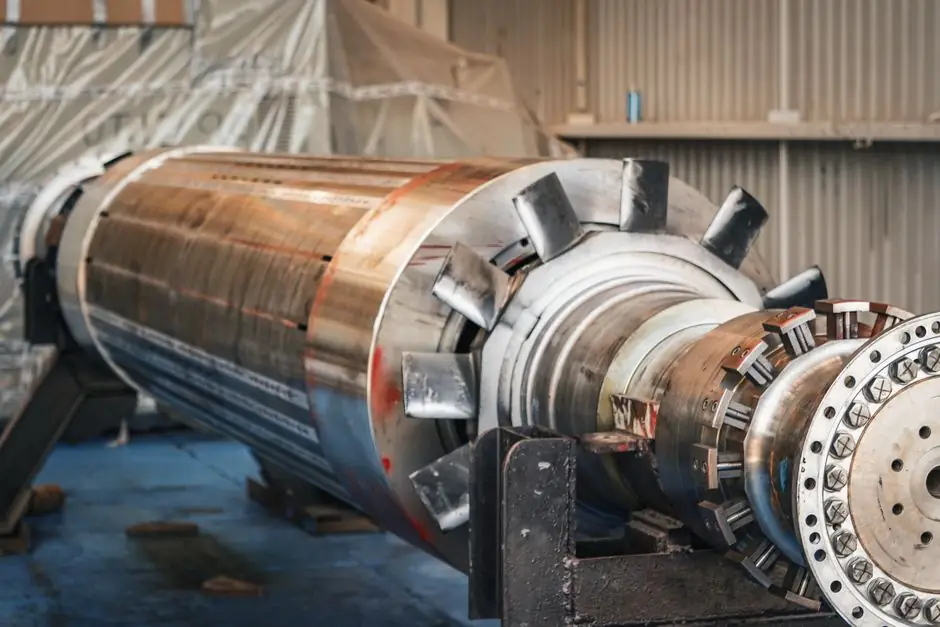
Standard power transformers in the U.S. now average 128 weeks of lead time, and generator step-up (GSU) units 144 weeks, with prices up 77% since 2019, per Wood Mackenzie's Q2 2025 survey [S1][S4].
Multiple manufacturers have broken ground or committed capital to new lines that will add hundreds of medium-power and EHV units per year, but the earliest production start dates fall in 2027 and Q1 2028, leaving a multi-year gap between announced capacity and delivered transformers [S2][S3][S5].
What is actually coming online, and when
GameChange Energy broke ground on a 300,000-square-foot EHV transformer factory in Mumbai on 18 August 2026, with a planned annual capacity of 150 medium-to-large power transformers rated up to 300 MVA and 500 kV, production starting Q1 2028, and ordering open immediately [S2]. The same site reserves footprint for a future medium-voltage expansion adding 500 pad-mount units per year, though that second phase has not been dated [S2].
Separately, an Industrial Info Resources project profile describes a U.S. medium-power transformer build designed to roughly double capacity to 420 units per year, with the new line and equipment installation underway as of mid-2026 [S3]. On the global side, WEG committed US$ 77 million to expand its U.S. transformer plant to serve AI and data-center load, and Siemens Energy stated it will begin U.S. production of large industrial power transformers in 2027, with a reported US$ 2 trillion U.S. grid investment expected through 2050 [S5].
What the new lines do not fix: 128-week lead times persist into 2026
Wood Mackenzie's Q2 2025 survey found standard power transformers averaging 128 weeks and GSUs averaging 144 weeks, with some orders extending to four years, while distribution transformer prices have climbed 78-95% since 2019 [S1][S4]. The same source estimates a 30% structural shortfall for power transformers and 10% for distribution units against the 2025 U.S. fleet, even after announced capacity adds [S4].
Demand is the other half of the equation. Generator step-up demand has grown 274% since 2019, substation power transformer demand is up 116%, and overall power transformer demand is up 119%, driven by data-center build-out, electrification, and end-of-life replacement on a fleet where more than half of the roughly 40 million U.S. distribution units are past expected service life [S1][S4]. For a deeper look at how these numbers tie back to grid-wide build, see our power transformer demand and capacity tracker.
Material bottleneck: one domestic GOES producer
The shortage is not purely a stamping-and-winding problem. Cleveland-Cliffs is the only domestic producer of grain-oriented electrical steel (GOES), the engineered core material that gives transformers their magnetic performance, and GOES prices have roughly doubled since 2020 while copper is up more than 50% [S1]. With about 80% of large U.S. power transformers imported, this single-source domestic GOES supply is a chokepoint for any new U.S. factory trying to scale cores in volume [S1].
For process engineers sizing equipment, that material reality shapes the procurement playbook as much as factory announcements do. Early equipment procurement is now treated as a competitive lever, with EPCs reordering work sequences and locking in long-lead items years ahead of energization, as documented in our long-lead procurement guide for fast-track industrial projects.
Product-class comparison: where the new capacity actually lands
Across the announced 2026-2028 capacity adds, three product classes are visible, and they map unevenly to today's demand pressure: [S1]
1. EHV/GSU-class (300 MVA at 500 kV) - GameChange's new Mumbai line targets 150 units per year at the top of the voltage stack, the same class where 144-week U.S. lead times are reported [S2][S1]. This is the highest-pressure segment in the U.S. but the new line is in India, so it adds global supply rather than domestic U.S. capacity.
2. Medium-power distribution and substation transformers - the IIR-tracked U.S. project aims to roughly double output to 420 units per year, and Siemens Energy's U.S. large industrial line begins in 2027 [S3][S5]. These adds address the 119% demand growth and the 30% power-transformer shortfall head-on, on a 2-3 year horizon.
3. Pad-mount and MV distribution - the second-phase GameChange expansion adds 500 pad-mount units per year on existing MV operations, supporting data-center and behind-the-meter load where distribution transformer prices have risen 78-95% since 2019 [S2][S1].
The honest read: EHV capacity is being added offshore, while domestic U.S. adds skew toward medium-power and MV. The 128-week standard and 144-week GSU averages are unlikely to drop materially before late 2028, when the first wave of these lines hits steady-state output.
Market size and regional weighting

The global power transformer market reached US$ 28.9 billion in 2025 and is projected to reach US$ 48.2 billion by 2033 at a 6.6% CAGR, with Asia-Pacific holding 38.1% market share in 2024 and three-phase designs at 74.2% of the phase split [S5]. The European power transformer market is forecast to grow at a 12.7% CAGR from 2024 to 2030, driven by HV grid expansion and aging fleet replacement [S6].
That regional split matters for buyers. New Indian EHV capacity (GameChange) and Asian supply chains will dominate incremental large-unit volume through 2028, while U.S. and European demand pressure is being answered primarily by domestic brownfield expansions, not greenfield megafactories. Buyers specifying equipment for projects energizing before 2029 should plan for the existing 120-144 week lead-time regime, not the announced future capacity. For background on the power transformer and its role in the power distribution chain, the encyclopedia entries cover the spec classes and cooling options referenced above.
Selection criteria under a constrained supply
When 128 weeks is the floor, spec choices are procurement decisions as much as engineering decisions. Three criteria are worth weighting more heavily than they would be in a normal market: [S1]
1. Voltage class and MVA fit - overspec'd transformers lengthen the queue; matching nameplate MVA to actual peak load (not future theoretical load) can move a buyer from the 144-week GSU line to the 128-week standard line.
2. Standardization vs customization - custom impedance, custom tap ranges, or non-standard bushing layouts add months of design review; standard footprints from the power transformer catalog cut both lead time and factory test time.
3. Supplier diversification - with about 80% of large U.S. units imported and one domestic GOES source, dual-sourcing across at least two of the announced capacity adds (GameChange EHV, Siemens Energy U.S., WEG U.S., and the IIR-tracked 420-unit-per-year project) is now standard risk practice [S1][S2][S3][S5].
Limitations of the announced capacity
Announced capacity is not delivered capacity. The GameChange Mumbai line is at groundbreaking stage with a Q1 2028 production start, meaning the first units ship roughly 18 months after the announcement date [S2]. The IIR-tracked U.S. medium-power expansion is described as under construction, but no commissioning date is given in the public profile [S3]. Siemens Energy's 2027 U.S. start is a stated plan, not a measured output figure [S5]. WEG's US$ 77 million U.S. expansion is funded but the ramp profile is not in the public source [S5].
For a buyer placing an order in Q4 2026, the realistic delivery window is still 2028 at earliest, and 2029-2030 for the higher-voltage GSU class. Engineers planning energization schedules should build the procurement calendar backward from the power distribution interface, not forward from the project groundbreaking.
Track the next nodes: the GameChange Mumbai factory first-power milestone, the IIR-tracked U.S. 420-unit-per-year line's commissioning announcement, and Siemens Energy's first U.S.-built large industrial power transformer shipment, all expected across 2027 and 2028.
For component-level specifications, see online water analyzer.