
Average lead time for a U.S. power transformer reached 128 weeks in 2026, with generator step-up (GSU) units at 144 weeks and specialty configurations stretching to roughly 4 years, per the May 2026 IndustrialSage synthesis of Wood Mackenzie Q2 2025 data [S1].
That figure is 156 percent above the 50-week baseline recorded in 2021, 7 percent above the 120-week average reported by Wood Mackenzie in 2024, and 71 percent above the 7-to-14 month pre-pandemic norm cited in the IEA's 2025 "Building the Future Transmission Grid" survey [S2][S4]. Demand has outrun that schedule: power-transformer demand is up 116 to 119 percent since 2019, distribution-transformer demand is up 34 to 41 percent, and GSU demand has grown 274 percent over the same period [S1][S3][S8].
Segmented Lead Times by Class and Voltage
Generator step-up transformers average 144 weeks in 2026, substation power transformers 128 weeks, and high-capacity or specialty units up to 208 weeks, according to GameChange Energy's October 2026 procurement guide [S3]. Large power transformers above 100 MVA sit in a 100 to 128 week window, while medium-voltage switchgear runs 90 to 100 weeks and backup generators 80 to 100 weeks per the April 2026 syaala equipment survey [S6].
Pre-pandemic, the same large power transformer category could be sourced in 12 to 14 months, so the 2026 figures represent roughly a 2.0x to 2.6x elongation in real lead time, with the worst-case North American LPT bands approaching 60 months versus 12 months in APAC [S4]. For a more granular breakdown by MVA class, the related spec reference MVA-class lead-time band 2026 lays out 30 to 160+ week ranges by voltage and rating.
Demand Drivers and the AI Data-Center Pull
Generator step-up transformer demand has grown 274 percent since 2019, the steepest segment-level jump in the Wood Mackenzie dataset, and is being driven by AI and hyperscale data-center builds rather than utility load growth alone [S1][S3]. Data-center operators are securing factory production slots years in advance or paying premium prices, which has effectively priced out solar developers, smaller utilities, and industrial planners, a dynamic the GameChange analysis labels the "AI Tax" [S3].
Power-transformer demand is up 116 to 119 percent and distribution-transformer demand up 34 to 41 percent over the same 2019 baseline, while Wood Mackenzie models a 30 percent national supply deficit for power transformers and a 6 percent deficit for distribution units [S3][S8]. Over half of North America's in-service distribution transformers have exceeded their 33-year expected service life, so fleet replacement competes with new renewable interconnections for the same constrained factory output [S3].
Raw-Material Bottlenecks: GOES, Copper, and Capacity
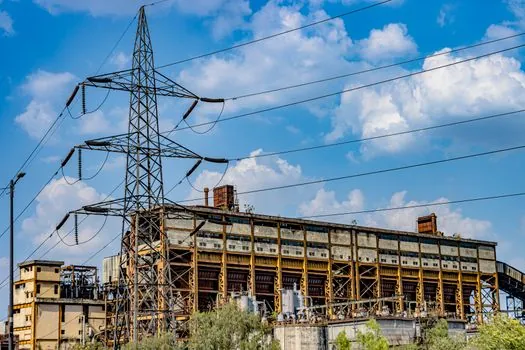
Large power transformer OEM facility utilization averages 70 percent globally in 2026 and is projected to reach 80 percent by 2030, leaving thin slack for new demand spikes [S4]. The upstream steel input is more concentrated: Cleveland-Cliffs remains the only domestic producer of grain-oriented electrical steel (GOES) in the United States, operating plants in Pennsylvania and Ohio, which means every U.S. transformer drawing domestic steel depends on a single supplier [S1].
GOES prices have roughly doubled since 2020, copper prices are up more than 50 percent over the same window, and Section 232 steel duties plus copper tariffs of up to 50 percent have flowed through to transformer unit prices, which are up 45 to 95 percent since 2019 across power, GSU, and distribution categories [S1][S3]. Roughly 80 percent of large power transformers used in the U.S. are imported, so tariff and currency exposure compounds the domestic GOES bottleneck [S1]. For a deeper look at how that import dependence interacts with domestic winding capacity, the related analysis on U.S. LPT import dependence and winding capacity in 2026 maps the supply mix by manufacturer origin.
Price Escalation and the Procurement Decision
Power transformer prices are up 77 percent since 2019, distribution transformer prices up 78 to 95 percent, and IEA-cited real-terms pricing has reached 2.6x pre-pandemic levels in the most stretched segments [S1][S4]. Lead time, not unit cost, is the binding constraint for most 2026 buyers, since a 128-week delivery window forces a 30-month project planning horizon regardless of the price a buyer is willing to pay.
Procurement teams should expect three tiers: standard power transformers at 128 weeks (2.4 years), GSUs at 144 weeks (2.8 years), and specialty or high-capacity units at up to 208 weeks (4 years), with 30 to 60 month stretches in extreme North American LPT cases [S3][S4]. For context on adjacent electrical-equipment bottlenecks, the related power transformer encyclopedia entry covers core construction, while power distribution covers downstream switchgear and feeder lead-time constraints. Buyers also need to plan power cable and power meter deliveries on parallel tracks, since pad-mount and substation energization requires the full equipment chain to clear, not just the transformer.
Mitigation Options and Sourcing Reality
OEMs are not running at 95 percent utilization, they are running at 70 percent globally with a path to 80 percent by 2030, which means the constraint is capital and skilled-labor expansion at the LPT scale, not a single bad quarter of output [S4]. Three operational levers actually move the needle: locking factory production slots 2 to 4 years ahead with non-cancelable purchase orders, accepting refurbished or re-conditioned large power transformers for non-critical service, and standardizing on fewer voltage/MVA combinations to drop into a shorter queue [S3][S4].
Specifying a less common impedance, noise, or BIL rating typically pushes delivery from 128 weeks into the 156 to 208 week band, so design freeze before order placement is the single biggest compression lever a buyer controls. Distribution transformer lead times, by contrast, have eased from their 100-plus-week 2023 peak and are no longer the binding constraint for new service connections in most U.S. utilities [S4]. The key trackable signals for the next two quarters: whether the 30 percent national LPT supply deficit narrows as new winding lines commission, whether Section 232 and copper tariff pass-through stabilizes, and whether GSU demand growth at 274 percent since 2019 decelerates as hyperscaler buildouts shift from grid interconnection to behind-the-meter generation [S1][S3][S4].