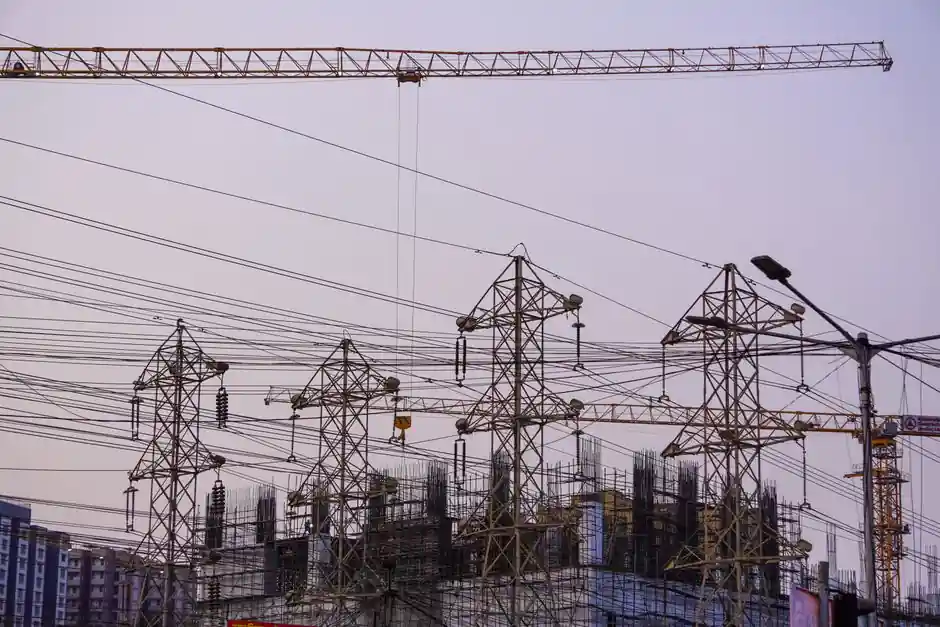
In 2026, U.S. large power transformer deliveries run 110-130 weeks for units above 100 MVA, 60-90 weeks for 30-100 MVA mid-size units, and 30-50 weeks for distribution-class pad-mounts, while generator step-up (GSU) transformers average 144 weeks and Tier 1 OEMs are quoting 48-60 months with 2028 slots closed [S3][S5].
Substation-class transformers in the 5-50 MVA range are quoted at 75-110 weeks, and GSU or auto-transformers above 50 MVA run 100-150+ weeks, with individual projects on the high end of those ranges pushing past 160 weeks [S1]. Industry tracker Electrical Equipment Lead Time Index places overall power transformer supply above 160 weeks for the largest units as of mid-2026 [S7].
Lead-time bands by MVA class in October 2026
The table below consolidates the 2026 quotes from active manufacturer slot reservations and EPC procurement data. Distribution units (typically under 2.5 MVA) sit in a stretched-but-workable band; everything above 30 MVA doubles pre-2020 norms. Substation units in the 5-50 MVA class, which is the segment that drives most utility and large industrial builds, run 75-110 weeks [S1].
Mid-size power transformers in the 30-100 MVA range run 60-90 weeks, with more factory options than the GSU tier but still 2x the pre-2020 baseline of 30 weeks [S3]. Large power transformers above 100 MVA are the most constrained segment at 110-130 weeks, and many individual quotes are past 160 weeks because Tier 1 manufacturers are effectively closed for 2028 delivery [S3]. GSU units average 144 weeks and have crossed 160 weeks by Q1 2026, the tightest market of all and driven by combined-cycle gas, utility-scale solar plus storage, and hyperscale data center campuses [S3][S5].
Pad-mount and cast-resin distribution transformers run 30-50 weeks and are typically ordered in bulk to secure factory slots [S3]. One outlier band shows up in some 2026 manufacturer literature: a "medium power transformer" 5-50 MVA category at 20-40 weeks, and a "large power" 50-300 MVA category at 40-70 weeks, which reflects slot availability at lower-tier Asian OEMs rather than Tier 1 U.S. and European capacity [S6].
Demand drivers: why 2026 is structurally tight, not a blip
U.S. power transformer demand has jumped 116% since 2019, distribution transformer demand 41%, and GSU demand 274%, with the supply base expanding far more slowly than that demand curve [S5]. Wood Mackenzie models a 30% national supply deficit for power transformers and 6% for distribution units through 2026, and over half of North America's in-service distribution transformers are now past their 33-year expected service life, so the fleet-replacement wave is still building [S5].
Data center electricity demand grew more than 18% in 2025, and hyperscalers (AWS, Google, Microsoft, Meta, Oracle) are locking factory slots years in advance [S1]. The same U.S. factories serve utility grid-modernization work for AEP, Duke, Dominion, Xcel, PG&E, and Southern Company, so a power distribution upgrade at a 1970s-era substation competes with a new AI campus for the same winding and steel capacity. EV charging build-out, building electrification, BESS deployment, and reshoring of semiconductor and battery plants all draw on the same production base [S1][S2].
Section 232 duties and copper tariffs of up to 50% have raised input costs, and transformer unit prices are up 77% for power units, 45% for GSU, and 45-95% for select distribution classes since 2019 [S5]. Copper on the London Metal Exchange is up roughly 35% since 2022, which adds an estimated $1.5-2.5M per MW of IT capacity on a data center build [S2]. The binding material constraint is grain-oriented electrical steel (GOES); new factory capacity lands mostly in 2027-2028, with Tier 1 delivery slots for the largest units targeting 2030-2031 [S3].
Who this market is for, and who it is not

This lead-time band is set up for buyers who can plan 24-48 months ahead, commit to a specification early, and accept that slot reservation is the gate, not the PO. Utilities like Roseville Electric in California are now ordering large substation transformers five years in advance, and data center developers are reserving factory slots before their designs are finalized [S3]. Buyers in that mode can compress post-permit timelines from roughly 48 months to 12-18 months by holding a reservation through the design phase [S3].
It is not workable for projects that need energization inside 12 months, or for buyers who treat the transformer as a commodity PO at the back end of procurement. Pad-mount and small distribution units still work in 30-50 weeks, so a project that can be served by 2.5 MVA or below at 15-25 kV can hold a normal schedule, but anything that crosses the 5 MVA line into substation-class is in a different queue. Mobile and skid-mounted substations in the 30-100 MVA range carry a 12-18 month queue and are the practical bridging option while a permanent unit is fabricated [S3].
Decision criteria: how to choose between Tier 1, Tier 2, and export slots
Three sourcing paths exist in October 2026, and the right one depends on what the buyer is optimizing. Tier 1 U.S. and European OEMs (Hitachi Energy, Siemens Energy, GE Vernova, Mitsubishi Electric, Toshiba) offer the shortest compliance and qualification path and the lowest technical risk, but Tier 1 is effectively closed for 2028 delivery on units above 100 MVA, and quotes of 48-60 months target 2030-2031 energization [S3].
Tier 2 domestic and qualified regional manufacturers can still hold 2027-2028 slots in many 110-220 kV classes and at lower cost, but qualification paperwork, type-test records, and utility acceptance add 8-16 weeks of engineering effort that Tier 1 buyers skip [S3]. Export manufacturers in China, South Korea, and India are the third path, with open 2027-2028 slots on 110-220 kV classes; qualification, freight, and customs are the real work, not unit price [S3]. The constraint that hits every path the same way is GOES, so the power cable and bus duct that lands weeks 90-110 of a project is the real schedule risk if the transformer slips past week 130 [S1][S2].
For procurement teams comparing options: a 100 MVA GSU from a Tier 1 OEM runs 110-160+ weeks and commands a premium of 30-50% over 2019 pricing; the same class from a Tier 2 domestic supplier runs 80-110 weeks at a 20-35% premium; an export-sourced unit runs 70-100 weeks but adds 8-16 weeks of qualification and 6-10 weeks of ocean freight plus customs [S3][S5]. Buyers who can accept a 2.4-3.0 year critical path and have an in-house type-test program typically pick Tier 2; buyers who need utility-grade acceptance with no additional qualification steps and can wait until 2030 stay on Tier 1.
Failure modes and constraints to plan around
The single most common failure mode is the mismatched-queue project: switchgear arrives at week 92 but the transformer does not show up until week 128, leaving 36 weeks of idle medium-voltage gear on a pad and a carrying cost that compounds monthly on a multi-million-dollar asset [S2]. The 2026 critical path is transformer-driven at 128 weeks, and the data center build-cost index puts electrical infrastructure (transformers, switchgear, generators, UPS, bus duct, PDUs, cabling) at 40-50% of total construction cost, so a 36-week mismatch on the critical path is not a schedule nuisance, it is a budget line [S2].
Other failure modes worth tracking: scope creep after the slot reservation (a 5% change to impedance or noise spec can reset the slot); GOES allocation cuts mid-build, which push Tier 1 deliveries by 12-24 weeks; and Section 232 / copper tariff escalations, which are already priced into the 77% / 45% / 45-95% unit-cost increase [S3][S5]. Specifying to a real, supported voltage class (e.g. 138 kV vs 230 kV) and to a standard impedance band materially shortens the wait, because the factory's standard design tooling is what holds the earliest slots.
Standards, sourcing, and the metrics worth tracking
Two industry standards govern the class boundaries that drive the lead-time bands: IEEE C57 for power and distribution transformer performance and testing, and IEC 60076 for the international equivalent that export manufacturers in China, Korea, and India typically build to. Efficiency compliance under DOE 10 CFR 431 (U.S. distribution) and the EU ecodesign Tier 2 (large transformers) is now a baseline spec, not an option, and buyers should expect Type-Tests, routine tests, and special tests to be quoted separately from the unit price. [S3]
Trackable signals for the rest of 2026 and into 2027: (1) Tier 1 OEM slot announcements for 2028 and 2029 delivery windows, which historically open in Q1 each year; (2) new GOES mill capacity announcements, since GOES is the binding material and the next wave of capacity lands in 2027-2028; (3) the U.S. Department of Energy transformer supply-chain assessment update, which is the reference document for federal procurement and grid funding tied to lead-time relief; (4) power meter and switchgear lead times, which the Electrical Equipment Lead Time Index tracks alongside transformers and which set the secondary critical path inside the 128-week transformer window [S1][S2][S7].
Related analysis: Digital Twin and PLM Integration for Engineering Changes: 2026 Stack and ECN Reality.