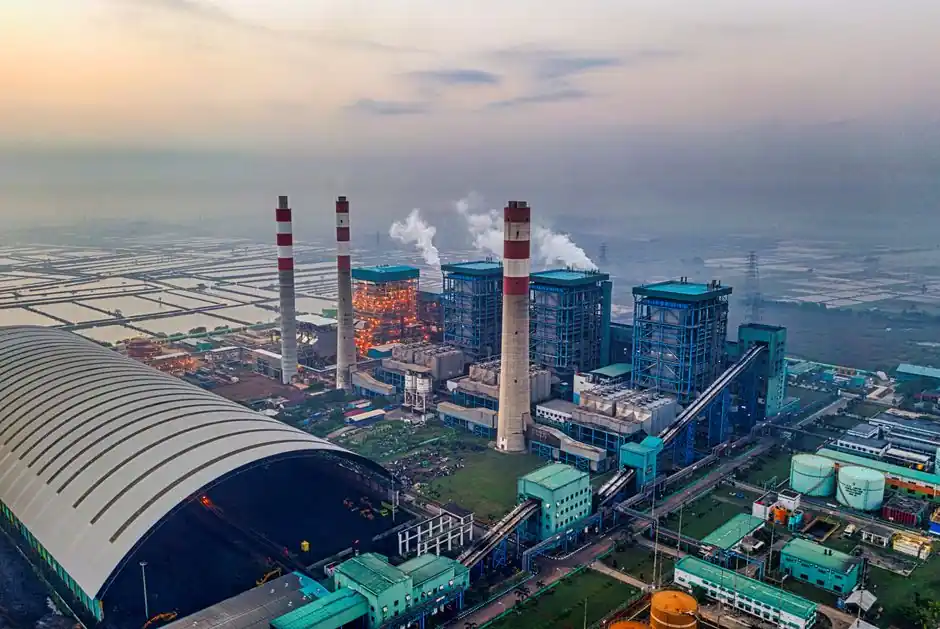
Global demand for power transformers has risen 25%–40% above pre-2020 baselines, while manufacturing capacity grew only 10%–15% over the same period, leaving order books at major OEMs booked out 36–48 months for large power transformers and 12–24 months for distribution units [S2].
In the U.S., Wood Mackenzie tracks a 119% rise in power-transformer demand and a 34% rise in distribution-transformer demand since 2019, with the firm modeling a 30% power-transformer shortfall and 10% distribution shortfall across the national fleet through 2025 [S1]. Generator step-up (GSU) demand has grown 274% over the same window, the steepest curve in the equipment class [S1].
How the Gap Is Measured: Demand, Capacity, and Lead Times
Wood Mackenzie's August 2025 survey puts U.S. power-transformer lead times at 128 weeks on average and GSU units at 144 weeks, while distribution-transformer availability has partially recovered from its 2024 peak [S1]. Independent reporting puts large power transformer lead times at 36–48 months globally, up from 12–18 months before 2020, and ties the stretch to concurrent constraints in grain-oriented electrical steel (GOES), copper, bushings, and on-load tap changers [S2]. U.S. imports covered an estimated 80% of power-transformer supply and 50% of distribution-transformer supply in 2025, a structural dependence that magnifies any tariff or shipping shock [S5].
Demand growth is anchored to three measurable drivers: IEA-projected global electricity demand growth of 3.3% in 2025 and 3.7% in 2026 [S4]; a U.S. fleet in which more than 70% of large power transformers are over 25 years old, with roughly 40 million distribution units past expected service life [S1][S2]; and a clean-energy pipeline that has reversed a 1% per-decade decline in U.S. electricity consumption into a 7% rise since 2020 [S5].
What Is Driving the Demand Side
Data-center buildouts, hyperscaler electrification, and EV charging loads are pulling substation power-transformer demand up 116% since 2019 in the U.S., outpacing the 119% jump in the broader power-transformer class because hyperscale campuses concentrate at single high-voltage interfaces [S1][S5].
Replacement of aging assets is not optional: roughly half of the 40 million installed U.S. distribution transformers are past their design service life, and end-of-life replacement alone now competes with new-build volumes for factory slots [S1]. Wood Mackenzie's Boucher frames the situation directly: "Supply shortage persists as demand growth remains robust," with the firm modeling constraints that "will persist well into the 2030s" without coordinated intervention [S5].
Where the Supply Side Is Bottlenecked
Three chokepoints dominate. First, GOES supply remains structurally tight, with prices running 50%–80% above pre-pandemic levels, capping how fast new core steel can be punched and annealed [S2]. Second, copper has stayed in a $8,500–$10,500/ton band, with a newly announced 50% U.S. copper tariff set to take effect in August 2025 adding a second-layer cost shock to imported and domestic windings alike [S2][S5]. Third, critical components, specifically bushings, on-load tap changers, and high-grade insulating pressboard, are themselves backlogged, so even a factory with free winding capacity cannot complete a unit on schedule [S2].
Hitachi Energy, Siemens Energy, and GE Vernova have each announced multi-billion-dollar capacity expansions, and the largest North American OEMs have committed roughly $1.8 billion in additional investment since 2023 [S2][S5]. Enlit's coverage of the U.S. supply gap documents that the investment is real but lagged: commissioning lead time for a new transformer line is 24–36 months, which means 2023 capital does not move the needle on 2026 delivery slots.
Decision Matrix: Power vs Distribution vs GSU vs Dry-Type
Specifiers should not treat "transformer lead time" as one number. As of 2026, the trade-off across the four main categories is concrete: large oil-immersed power transformers (LPTs) carry 36–48 month lead times globally and 128-week U.S. averages, with average price increases of 30%–60% since 2020 [S2]. GSU units are worst-in-class at 144 weeks and concentrate the highest voltage and MVA ratings, where the demand jump (274% since 2019) is steepest [S1][S5]. Distribution transformers, while still 12–24 months out globally, are the fastest recovering category and the largest installed base (~40 million units in the U.S.) [S1][S2]. Dry-type units, by contrast, lead the field on delivery: shorter winding stacks and no oil-impregnation step put most ratings at single-digit-month lead times, with the trade-off being a lower MVA ceiling and stricter noise/footprint constraints in indoor substations, as detailed in our dry-type vs oil-filled transformer 2026 lead-time and cost comparison.
The decision is therefore not "which technology is best" but "which constraint binds first." For a data-center substation above 100 MVA, oil-immersed LPT or GSU is the only option, and lead-time mitigation is the binding problem. For a building-side or indoor distribution upgrade under 5 MVA, dry-type can be specified to bypass the GOES-heavy queue. For a utility feeder replacement, distribution-class oil-immersed is the default, and early procurement (12+ months ahead) is now standard practice [S1][S2].
Who This Crisis Hits, and Who It Does Not
Buyers facing the tightest constraints are utilities and EPCs ordering 138 kV+ power transformers and GSU units, particularly in North America where 80% of 2025 power-transformer supply was imported and exposed to copper and steel tariffs [S5].
Buyers less exposed are those specifying low-voltage dry-type for indoor applications, those with sub-2.5 MVA distribution ratings that can be sourced from regional second-tier OEMs, and those with project schedules flexible enough to accept 12-month distribution lead times rather than 36-month LPT slots. Resin and magnet-wire buyers tracking the same epoxy-resin demand pull from wind and electronics should note that the upstream epoxy resin price spread in 2026 compounds the transformer cost story: cast-resin dry-type units are not insulated by mineral oil, so their economics track epoxy directly.
Limitations and Failure Modes Engineers Should Track
Three watch-items will determine whether the gap closes or widens through 2027. First, GOES price trajectory: any sustained move above the 50%–80% pre-pandemic premium will cap new line commissioning regardless of announced capex [S2]. Second, the OBBBA-driven reduction in U.S. clean-energy support, which Wood Mackenzie flags as a step-up demand dampener; if confirmed, the 274% GSU curve flattens, but the 30% power-transformer shortfall persists because the replacement backlog is policy-independent [S5]. Third, tariff sequencing: the 50% copper tariff effective August 2025 stacks on top of existing transformer duties, so even domestic production becomes more expensive, eroding the price advantage that justified the 2023–2025 capex cycle [S5].
A separate failure mode is procurement blindness, not capacity. POWER's reporting flags brokers arguing there is no real shortage, only projects clustered in the same 2026–2028 delivery window, and several utilities have begun treating early transformer and switchgear procurement as a competitive lever [S1]. Engineering teams should not assume the quoted lead time is the floor; quoted 128-week delivery is the median, and slippage of 12–26 weeks on GOES or tap-changer sub-components is now routine [S1][S2].
Standards, Sourcing, and What Counts as a Verified Spec
Lead times, demand percentages, and price ranges in this article are cited to Wood Mackenzie's August 2025 analysis, PTR Inc.'s April 2025 European supply-demand deck, and the fjinno March 2025 global supply-chain report [S1][S2][S3]. Market sizing, IEA demand-growth rates, and regional shares (Asia Pacific at ~47% of 2025 global transformer market; power transformers at ~90% product-type share) are taken from Persistence Market Research's April 2026 outlook [S4]. The DataM Intelligence August 2026 report on power transformers specifically (US$ 28.9 billion in 2025 to US$ 48.2 billion by 2033) confirms the capacity-demand gap as a multi-year, multi-billion-dollar wedge rather than a 2025 blip [S7].
Two trackable signals for the next 90 days: (1) the Q1 2026 Wood Mackenzie lead-time update, which will show whether 128-week LPT and 144-week GSU averages have started to ease, or whether the 2023–2025 capex cycle has begun to register in delivery slots; (2) any Department of Energy release on the Domestic Manufacturing Conversion Grant awards, since those directly fund the GOES and copper-processing capacity that bottleneck the LPT/GSU build queue. For spec-by-spec comparison of oil-filled vs dry-type in this lead-time environment, our decision matrix on dry-type versus oil-filled transformers in 2026 lines up delivery, MVA ceiling, indoor rating, and cost per kVA from the same supply-constrained data set.
The underlying component specifications are covered under power transformer, power cable, and power distribution.