Walk-behind power trowels in the 24-36 inch diameter class are the standard pick for residential masonry slabs over 200 sq ft, producing a denser, more uniform surface than hand troweling alone [S3].
The selection decision is not engine horsepower, it is matching machine diameter, blade type (finish, combination, float shoe), and bolt pattern to the slab size and finish quality required, with 36 inch machines accepting the broadest cross-brand blade range in the aftermarket [S2][S4].
Where the Power Trowel Fits in a Masonry Slab Sequence
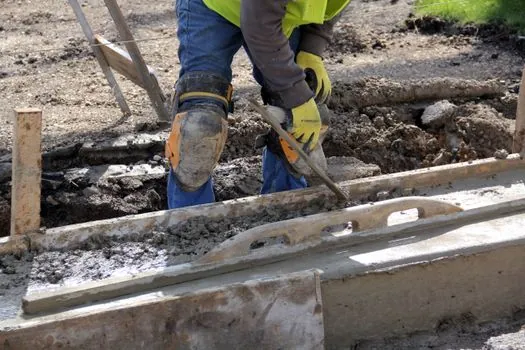
A power trowel operates near the end of the concrete finishing chain: screed first, then bull float to level high spots and let bleed water rise and evaporate, then trowel passes with overlapping steel blades to compress paste and close surface pores [S3].
Mix consistency controls the timing: a mix that is too wet produces excessive bleed water and makes trowel timing nearly impossible, while a mix that is too dry will not finish cleanly, so water control upstream dictates whether the trowel operator can hit the window at all [S3].
Hand troweling remains required at corners, edges, and tight areas around columns or walls regardless of machine size, because walk-behind and ride-on power trowels cannot reach those geometries [S3].
Diameter Classes and the 36 Inch Cross-Brand Sweet Spot
Aftermarket blade catalogs segment machines into three diameter bands: 24-30 inch, 34-42 inch, and 44-60 inch, with the bolt pattern (2-bolt, 3-bolt, 4-bolt, or metric variants) being the harder constraint than the brand name printed on the machine [S2][S4].
The 36 inch class is the most cross-compatible: the 6 x 14 inch finish blade (SK100), 8 x 14 inch combination blade (SK101), and 10 x 14 inch float shoe (SK102) all share a 3-bolt pattern that fits Allen, Bartell, MBW, Stone, Stow, Wacker, Wagman, and Whiteman / MultiQuip machines [S2][S4].
Smaller 24-30 inch machines carry tighter patterns: 24 inch Bartell / Wagman finish blades use a 2-bolt bar mount at 4 inch center-to-center, while 30 inch Allen / Bartell finish and combination blades use a 3-bolt pattern at 6 x 10⁻¹/2 inch dimensions, and the 30 inch MBW combination blade uses a metric hole pattern at 8 x 10 inch [S2][S4].
For masonry flatwork on residential garage floors, basements, and shop slabs, the 34-36 inch walk-behind class is the default because it covers ground faster than 24-30 inch units and still fits through standard doorways and side-yard access points.
Finish, Combination, and Float Shoe: Matching Blade Type to Pass Order
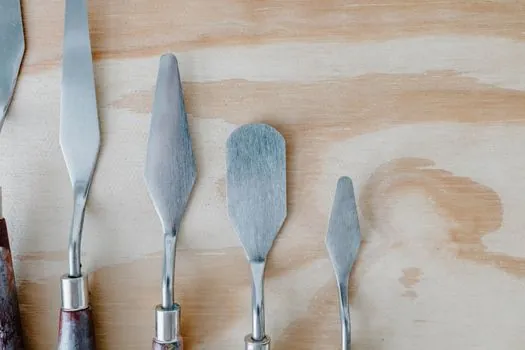
Three blade types dominate the aftermarket, and the order of use matters: early passes run flat finish blades at low pitch, then as the concrete stiffens the operator increases blade angle, and the final passes use dedicated finish blades to produce the dense, burnished surface that defines trowel finish [S3].
Float shoes (10 x 14 inch at 36 inch) are used in the first mechanical pass to flatten without sealing, combination blades (8 x 14 inch) handle the mid-stage where floating and troweling overlap, and finish blades (6 x 14 inch) close the surface in the final pass [S2][S4].
Stone holder attachments (SK313) fit machines under 36 inch and are used when the spec calls for a polished or burnished aggregate finish rather than a smooth steel-troweled surface [S2].
Slab Size, Operator Skill, and When Not to Use a Power Trowel
For residential jobs over 200 sq ft a walk-behind power trowel is the standard pick, covering more ground and producing a more consistent result than hand troweling, with operator skill rated moderate to high versus moderate for hand work [S3].
For slabs under 200 sq ft, in tight rooms with many penetrations, or where the finish is decorative / architectural, hand troweling or smaller 24 inch walk-behinds are the better fit, because the machine's footprint and rotor sweep do not justify the setup time [S3].
Trowel finish is not recommended for outdoor slabs where slip resistance is a priority, since the steel-troweled surface is smooth and becomes slick when wet; broom-finished or exposed-aggregate alternatives serve exterior masonry better [S3].
Blade Material, Wear Life, and Field-Aged Machines
36 inch finish blades ship in four material grades from the same manufacturer: Standard, Ultra Blue, Heavy-Duty Gold, and Orange Thunder, all sharing the 6 x 14 inch 3-bolt geometry but differing in carbide content, heat treatment, and expected wear life on abrasive mixes [S2][S4].
Many power trowels in the field have been in service 15, 20, 25, or even 35 years, and blade arms, spider plates, and mounting hardware are often replaced over that span, which means the original brand name on the machine no longer guarantees the original bolt pattern on the rotor [S4].
The replacement rule both DRP catalogs repeat: always measure the old blade (length, width, bolt spacing, mounting bar) and confirm the bolt pattern against the product page before ordering, because many brands used more than one blade pattern over the years and brand-name fitment is a guide, not a guarantee [S2][S4].
Bolt Pattern and Mounting: The Real Selection Gate
Five-step fitment logic applies across both DRP catalogs and the field: (1) match machine diameter first, (2) match blade type (finish, combination, float shoe, poly, stone holder), (3) measure the old blade for length, width, mounting bar, and bolt spacing, (4) confirm the bolt pattern because brands have used multiple patterns historically, (5) use item numbers as a starting point but verify against the old blade [S2][S4].
The 36 inch 3-bolt pattern is the most replicated across brands, which is why 36 inch replacement blades are stocked in more variants (Standard, Ultra Blue, Heavy-Duty Gold, Orange Thunder) than any other diameter class [S2].
For first-time buyers, the 34-36 inch walk-behind with a combination-blade starter set is the lowest-risk choice, while contractors running mixed fleets should stock SK100/SK101/SK102 36 inch blades as a baseline since they fit the longest list of machines [S2][S4].
Standards, Sourcing, and Trackable Signals

No single ASTM or ACI standard governs power trowel blade geometry; fitment is driven by de facto industry patterns consolidated in the DRP and Kraft Tool catalogs, with ACI 302.1R (floor slabs) and ACI 304R (measuring, mixing, transporting concrete) governing the mix-design and finishing-timing side of the process rather than the tooling [S3].
For more on matching power trowel diameter and blade type to road and pavement work, the 2026 spec map for road maintenance covers the heavier 44-60 inch ride-on class, while power trowel picks for steel-construction slabs extends the same diameter logic to composite deck work.
Reference page for tool classification and trowel-type background is in the power trowel encyclopedia entry; the broader masonry insulation reference covers the wall-side masonry context that often pairs with slab work on the same project.
Trackable signals to watch: 36 inch SK100/SK101/SK102 stock depth at DRP Tools and DRP Fast Ship, since 36 inch 3-bolt is the cross-brand baseline, and the next round of manufacturer bolt-pattern changes for 24 inch and 30 inch machines, which historically have carried the most pattern variants per diameter [S2][S4].
Spec-level background on the components involved: power cable.