
Precision air conditioning (PAC) procurement in mid-2026 is concentrated among five Tier-1 OEMs: Vertiv, Schneider Electric (Uniflair), Stulz, Rittal, and Huawei, with regional specialists such as CyberPower, GreenMDC, and Airedale filling edge and secondary niches [S2].
Leading portfolios converge on tight envelope control: ±0.1 °C temperature accuracy, 35-45% relative humidity, EC variable-speed fans, and modular 30-80 kW rack-level cooling matched to AI-server heat-load profiles [S2]. Total Tier-1 PAC capacity footprint from Vertiv alone exceeded 1.2 million kW of cooling output per year across Milan, Tianjin, and Pune plants, disclosed in the company's 2025 annual report [S2].
PAC vs Comfort HVAC: Why Specs Are Not Interchangeable
PAC, also called close-control, CRAC (Computer Room Air Conditioning), or CRAH (Computer Room Air Handler), maintains server-room conditions inside ASHRAE TC 9.9 recommended envelopes, typically 18-27 °C and 40-55% RH at the inlet, with control accuracy of ±0.1 °C and ±5% RH versus the ±1-2 °C envelope of comfort HVAC [S2]. The 2002 Plant Engineering installation reference remains relevant: standards often call for 45-50% relative humidity, and corrosion of contacts and components on circuit boards accounts for about 30-40% of all equipment failures driven by humidity excursions [S1].
Comfort HVAC is sample-tested off the production line, meaning most units ship without individual verification, while precision units are run-tested individually against envelope setpoints, a quality gating step that costs time but eliminates field drift [S6]. A standard 12,000 BTU comfort split will not hold ±0.1 °C at part-load on a 40 kW AI rack, so substituting comfort equipment into a tender is a disqualifying error at the spec gate [S4]. The design specification document itself must spell out temperature tolerance, humidity tolerance, redundancy class (N+1 or N+2), and the alarm setpoints a bidder is expected to meet; vague language like "suitable for data center use" is routinely rejected by Tier-1 OEM bid review [S4].
Three Architectural Families and Their Trade-Offs
Architectures in 2026 split along three lines with distinct trade-offs. Direct-expansion (DX) CRAC using R-410A or low-GWP R-32, typified by Vertiv Liebert CRV and Huawei FusionCol, delivers the lowest capex at $1,200-$1,800 per kW installed but limits per-row capacity to 25-40 kW unless paired with EC-driven parallel compressors [S2]. Chilled-water CRAH, including Schneider Uniflair InRow RD, Stulz CyberAir CW, and Rittal LCP CW, runs at $1,800-$2,500 per kW installed but handles 60-120 kW per rack and tolerates higher return-water temperatures [S2].
The third family, rear-door heat exchangers (RDHx), is specified only where facility water at 14-18 °C is already available, because the air-side coil does no dehumidification and any latent load falls back on the room CRAC [S2]. Perimeter downflow CRAC on raised floors still ships in legacy tenders, but new-build liquid-to-air CRAC in 2026 is sized for 30-50 kW per rack against AI-training cluster loads, up from 8-12 kW per rack in conventional cloud halls, which forces a shift toward hot-aisle containment plus RDHx rather than legacy downflow [S2]. EC fans from ebm-papst, in 300-910 mm frame sizes for the RadiCal and AxiEco series, are the de facto motor standard inside Tier-1 PAC skids because variable-speed EC motors drop part-load power by 40-60% versus fixed-speed AC motors at the same duty point [S2].
Selection Criteria That Decide Tender Outcome
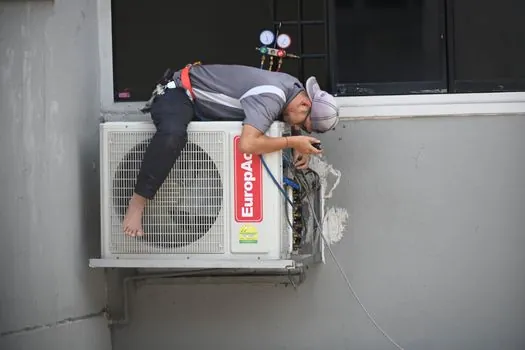
Four criteria separate qualified Tier-1 suppliers from the long tail: cooling-density capability, envelope control precision, energy efficiency at part-load, and integrated monitoring stack [S2]. Procurement teams should write each criterion as a pass/fail line item, not a narrative, with a defined test method (e.g. ±0.1 °C temperature accuracy at the rack inlet, consistent with ASHRAE TC 9.9 recommended envelopes of 18-27 °C and 40-55% RH [S2].
PAC units that cannot maintain 0.1-0.3 m/s face velocity at the rack inlet under N+1 redundancy are routinely deselected at tender stage [S2]. Integrated controllers on Rittal RiMatrix or Schneider EcoStruxure platforms expose fan RPM, filter ΔP, and refrigerant suction superheat to BMS over Modbus TCP, BACnet/IP, or SNMPv3, and that monitoring surface is now a hard requirement for hyperscale buyers, not an option [S2]. Indian government tenders, such as the IOCL Ahmedabad 2024 GeM bid for two precision AC units, follow the same pattern: the technical specification sheet locks capacity (kW), airflow (CFM), filter class (G4 + F7 typical), and humidity control range before any commercial evaluation runs [S7].
Manufacturer Spec Snapshot and Capacity Footprint
Vertiv ships the Liebert CRV, Liebert PDX, and Vertiv Liebert DSE in-row families, with cold-aisle containment and direct-expansion refrigerant cycles dominating its 2026 catalog [S2]. Huawei FusionCol and Schneider Uniflair round out the DX tier; Stulz CyberAir and Rittal LCP cover the chilled-water tier; Airedale and CyberPower serve the UK and US mid-market edge-data-center segment [S2]. Chinese OEM Keruite publishes a representative mid-range envelope: airflow 2,000-30,000 m³/h, external static pressure 100-500 Pa, motor power 5-80 kW, galvanized steel construction, ISO 9001 and CE certification, and ±0.5 °C / ±5% RH accuracy, a useful benchmark for non-hyperscale buyers comparing regional brands against Tier-1 [S3].
Standard IE2/IE3 efficiency motors are the baseline for the Keruite 5-80 kW range, and SS316L, FRP, or special coatings are available for corrosive or high-temperature environments, which mirrors what Tier-1 OEMs offer as build options [S3]. Lead-time for standard PAC skids runs 15-25 days at regional OEMs and 30-45 days for fully customized builds, so procurement should plan RFQ release at least 60 days ahead of mechanical-room need date [S3]. For broader facility integration context, see the centrifugal pump installation spec gates guide on chilled-water piping design, which sits one block downstream of the CRAH selection decision. Buyers evaluating UPS topology and chemistry to pair with PAC skids can cross-reference the China UPS sourcing 2026 topology map.
Use Cases: Who PAC Is For, and Who Should Walk Away
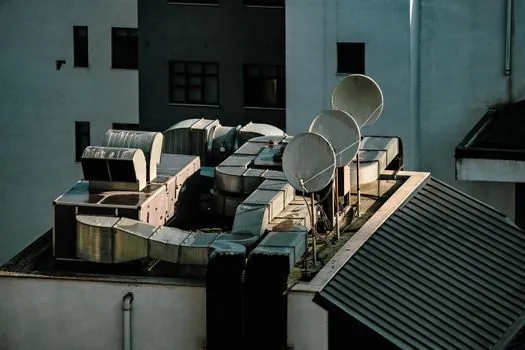
PAC is the correct specification for data halls, telecom switch rooms, industrial control cabinets with PLCs and SCADA servers, cleanrooms, and any space where ASHRAE TC 9.9 inlet conditions or tighter tolerances apply [S2]. It is the wrong specification for office comfort cooling, warehouse ventilation, or any space where the load profile is dominated by people, solar gain through glazing, or intermittent occupancy; comfort HVAC at roughly half the per-kW cost will meet those loads and should not be over-specified [S1].
For laboratory and metrology rooms, the spec must add tight dew-point control (typically ±1 °C) and 24/7 redundant compressor design, which the Keruite platform documents explicitly as a build option and which Tier-1 OEMs offer as standard catalog SKUs [S3]. A common failure mode is specifying a precision-grade unit in a comfort-grade application, paying 2-3x capex for envelope control the room does not need, and then losing the energy-efficiency argument at audit; the design specification should therefore classify each room by criticality class before any brand shortlist is built [S4].
Limitations, Failure Modes, and Cross-References
Three failure modes dominate PAC field service logs: filter ΔP drift that chokes airflow, refrigerant undercharge from poor brazing at installation, and condensate pan overflow when humidity setpoints and room dew-point are not reconciled at commissioning [S1]. Plant Engineering noted in 2002 that "in manufacturing or process control settings, when the air conditioning system must be located outside the critical space, standard systems often fail to survive in the dusty, dirty, and corrosive environment in which they are often placed", and that observation still holds for 2026 edge-data-center skids sited near production lines [S1].
Procurement teams that bundle PAC with adjacent instrumentation should note that the electromagnetic flowmeter liner and electrode guide covers the chilled-water flow measurement that pairs with CRAH skid commissioning, and that air-side precision depends on the precision filter selection criteria used at the unit intake. For facilities planning shielded cabling runs alongside PAC skids, the semiconductor shielded cable spec map addresses the electromagnetic separation needed between power and signal trays in the same mechanical room. Public-procurement buyers, including ESO's HVAC upgrade CFT for the Vitacura Main and Satellite buildings, structure the bid around scheduled issuance date (Q4 2023), contract award (Q1 2024), and a clear scope-of-work envelope before pricing is opened, a discipline worth copying in any private-sector PAC tender [S5].
Spec-level background on the components involved: linear guide, and crossed roller guide.