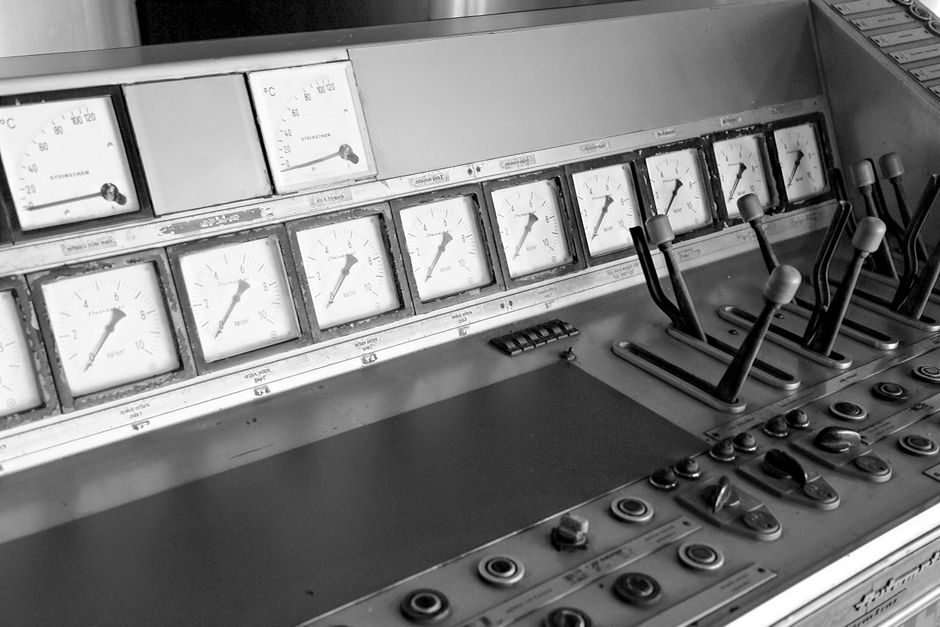
A pressure calibrator choice resolves into four engineering decisions: full-scale range, accuracy class, test media (gas versus hydraulic oil), and hazardous-area certification — all anchored to the unit-under-test (UUT) and the metrology loop it feeds [S2][S5].
For a working specification, treat range with at least 10–20% headroom above the UUT working pressure and pick an accuracy class four to ten times tighter than the device under test, otherwise the calibrator is the weakest link in the traceable chain [S3][S5].
Range Architecture: -1 bar to 700 bar Across Three Tiers
Industrial handheld pressure calibrators segment cleanly into three pressure tiers that map onto the UUT inventory at most plants [S5][S6]. Low-pressure hand-pump models cover -1…2 bar, -1…6 bar, and -1…10 bar spans, used for differential pressure transmitters, draft sensors, and cleanroom differential gauges. Mid-pressure units span -1…10 bar, -1…20 bar, and -1…25 bar — the workhorse band for HVAC, water treatment, and general process loops. High-pressure hydraulic hand-pumps run 0…200 bar, 0…350 bar, and 0…700 bar, required for hydraulic actuators, test bench skids, and HP fuel systems. The same KELLER-class architecture lists operating temperature 0…50 °C and a G1/4" female test port as the de facto interface standard across all three tiers [S5][S6].
For pneumatic bench/lab work above the hand-pump envelope, a desktop gas pump such as the ConST162 covers -0.095…14 MPa with finer volume control, while the ConST117 portable pump covers -0.095…4 MPa for in-duct transmitter checks [S2]. Above 700 bar the workflow normally migrates to a deadweight tester or an automated pressure controller rather than a hand-pump [S4].
Accuracy Class and Media Pairing
Accuracy class is the single most quoted number on a pressure calibrator data plate, and 0.05% FS is the current workhorse specification for handheld units in the Keller-style product line described in [S5][S6]. That figure is achievable because pneumatic calibrators compensate for head, temperature, and hysteresis inside the instrument, while hydraulic calibrators use oil as the transfer medium and accept slightly higher thermal drift in exchange for higher pressure ceilings.
Media pairing is non-negotiable. Low and mid-range hand-pumps use gas (typically air or nitrogen) because a gas column can be generated and bled quickly with a screw pump; high-pressure units above ~25 bar almost always run hydraulic oil to avoid gas compression losses and to keep the piston volume small [S5][S6]. A common error is to use a hydraulic hand-pump for low-range differential work — the incompressible fluid makes it nearly impossible to set 0.1 mbar resolution on a draft gauge.
Intrinsic Safety and Hazardous-Area Use
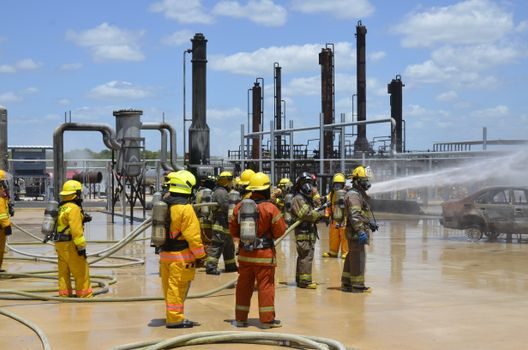
Where the calibrator is carried into a Zone 1 hazardous area, ATEX/IECEx certification is mandatory, and the Fluke 721Ex is the benchmark dual-range intrinsically-safe precision calibrator on the market in 2026, configurable to ordered sensor pairs and rated for explosive atmospheres [S3]. Non-Ex handheld calibrators are mechanically identical but cannot be carried into a flammable-gas atmosphere; if the metrology lab is in a safe area, a non-Ex unit is fine and saves cost.
For sites with mixed hazardous-area zoning, a common compromise is to keep one Ex unit (e.g. 721Ex) at the field team and reserve non-Ex portable calibrators for the workshop — a pattern that also reduces paperwork around hot-work permits and gas tests [S3][S4].
Portable Hand-Held vs Bench/Lab Pressure Controller
Three common configurations sit on the buyer's shortlist, each with a distinct duty cycle and cost band. (1) Portable hand-pump calibrator — pneumatic or hydraulic, accuracy ≈0.05% FS, ideal for loop checks at -1…700 bar, typically lowest cost. (2) Intrinsically-safe dual-range calibrator (e.g. Fluke 721Ex) — ≈0.025% FS in some configurations, certified for Zone 1, mid-to-high cost, used for custody-transfer and safety loops [S3]. (3) Bench-top automatic pressure controller (e.g. Time Electronics 8030) — closed-loop pneumatic control for high-stability sensor calibration, used in metrology labs, sits in a different cost and skill tier from the handheld [S4].
Decision logic: pick (1) for daily field loop checks, (2) when Ex certification is mandatory, and (3) only when the metrology lab runs production-volume gauge or transmitter calibrations where manual pumping becomes a throughput bottleneck [S4].
When NOT to Pick a General-Purpose Hand-Pump Calibrator
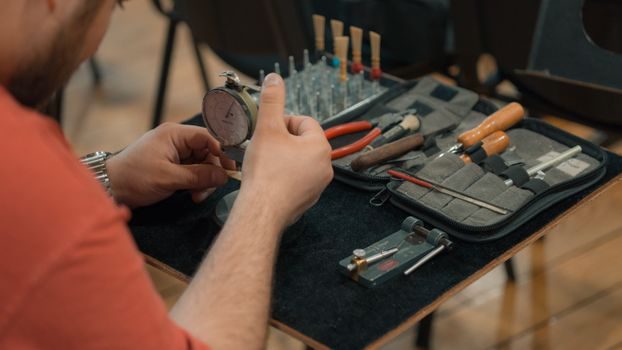
Hand-pump calibrators are the wrong tool when the UUT is a deadweight primary standard (the calibrator cannot beat the standard), when the test point count exceeds roughly 20 per shift (operator fatigue on the screw pump), or when the working fluid must remain a specific gas such as instrument air at controlled humidity — gas purity in a hand pump is hard to maintain [S4].
They are also the wrong tool for vacuum gauge calibration below -1 bar absolute or for absolute-pressure references that demand a sealed reference vacuum; a separate vacuum reference and pump chain is required, and a general-purpose hand-pump will not maintain -0.095 MPa steady for a cold soak [S2]. For high-volume lab work, the 8030-class automatic pneumatic controller delivers stability and repeatability a hand-pump cannot [S4].
What a Calibrator Connects To: Transmitters, Gauges, and Loops
Test-port interface is G1/4" female on the calibrator side in most Keller-class units, and the UUT side typically uses NPT or BSP adapters that ship with the kit [S5][S6]. For a 4-20 mA pressure transmitter, the calibrator supplies the reference pressure while a separate mA source/simulator (or a multifunction process calibrator) drives and reads the loop current — these are two distinct instruments and the distinction is one of the most common specification errors in a young technician's first PO.
Where the loop is HART or wireless HART, the modern path is a loop calibrator with HART modem, and a dedicated pressure calibrator feeds only the process connection. For field work on a smart transmitter, a signal calibrator plus a portable pressure source is still the standard combination because sourcing pressure and sourcing current in one box compromises both subsystems [S3][S4].
Sourcing, Standards, and a Final Shortlist Logic
For sourcing, Asian OEM catalogs list entry-level intelligent pressure calibrators in the US$ 1.60–5.00 per-piece band for temperature/humidity sensor-grade lots, while industrial 0.05% FS hand-pump units sit in the US$ several-hundred to low-thousands band — a roughly two-order-of-magnitude span between consumer-grade and process-grade product [S1]. Specialist units like the ConST117/162 pumps and 721Ex configurables carry brand-specific data sheets and a higher price-per-spec point [S2][S3].
Traceability for a class 0.05% FS calibrator should be claimed against a national or accredited lab (NIST, NIM, UKAS, A2LA), with calibration interval typically 12 months and a recommended re-test before any custody-transfer job. For the buyer, the final shortlist logic is: match range tier to the highest UUT pressure; require accuracy at least 4× tighter than the UUT; specify media (gas/oil) before picking a pump; and add Ex certification only if the field work demands it. Verify the listed range, accuracy, test port, media, and certificate on the data sheet before issuing the PO — the cheapest place to cut scope is also where most field-loop errors originate [S1][S3][S4][S5].
Trackable next signals to watch: 2026 catalog refreshes from major handheld-calibrator brands (Fluke, Beamex, Additel, KELLER) and any revision to ATEX/IECEx standards covering battery-powered field calibrators — both of which will reset price and certification shortlists in the coming two quarters.
See also our earlier report, PSU Selection Guide: Input, Output, Ripple and Topology Match.