
Across industrial and building-services catalogs scraped in May 2026, new pressure reducing valve (PRV) list prices span roughly USD 50 for a 1/2-inch domestic plumbing brass regulator, USD 200-500 for a 2-3 inch HVAC/hydronic iron-body unit, and USD 1,500-10,000+ for a 4-12 inch stainless or alloy process PRV rated for high-pressure steam, oil & gas or chemical service [S2][S3]. Used and surplus iron-body units from brands such as Bell & Gossett have been listed around USD 90 + USD 84.49 freight on secondary marketplaces, illustrating the depreciation curve a maintenance buyer can exploit [S5].
For a spec-driven buyer the headline number is misleading: the same nominal 2-inch PRV can vary 4-6x in price depending on body material, set-pressure band, end connection and the certification pack (UL/FM for fire-service, API 6D for pipeline service, ATEX/IECEx for hazardous areas). This guide breaks the line item down by the levers that actually move the quote - body and trim, size and pressure class, certification, and order quantity - and cross-references them against a pressure reducing valve reference page for the underlying function.
Price Bands by Application Tier (May 2026 data)
Domestic and light-commercial PRVs (DN15-DN50, brass body, EPDM diaphragm, set pressure 1.5-4 bar) cluster between USD 20-120 on retail channels, with used or open-box units such as the Reliance Cold Water Control Pack listed near GBP 150 (~USD 190) including a core unit and tundish [S3]. These are the units that show up in potable-water booster sets, irrigation laterals and small-boiler feed lines where the duty is steady, the fluid is clean and the consequence of a stuck valve is mostly nuisance rather than safety [S2].
Commercial HVAC / hydronic PRVs (DN50-DN150, cast iron or ductile iron body, set pressure 1-8 bar, flanged ends) sit in the USD 200-2,000 band, with legacy hydronic brands like Bell & Gossett FB-38 series appearing in the surplus market near USD 90 for the body alone [S5]. Industrial process PRVs (DN100-DN300, carbon steel, stainless or alloy trim, set pressures to 40 bar and above, fire-safe or NACE-qualified) move into the USD 2,000-25,000 range depending on size, trim and certification, and it is in this band that the certification pack - not the body casting - typically drives 20-40% of the price uplift.
The Levers That Move the Quote
Four variables account for the majority of a PRV price spread, and a specifier who isolates them gets a much cleaner comparison than one who compares list prices across vendors. The first lever is body and trim material: brass vs. cast iron vs. carbon steel vs. 316 stainless vs. duplex vs. alloy (Monel, Inconel) can swing a single line item by 3-8x, because the trim (seat, stem, spring, diaphragm) often costs more than the body itself on small PRVs and dictates corrosion allowance on process units. [S1]
The second lever is size and pressure class. A DN50 PN16 brass PRV and a DN150 PN40 cast-steel PRV share a product category but little else, and the second typically costs 5-10x the first once you account for the larger forging, heavier spring, larger diaphragm area and the pilot-valve assembly that industrial regulators need to maintain setpoint accuracy across a wide flow range. The third lever is certification and documentation: UL/FM approval for fire-service PRVs, API 6D or API 600 line for pipeline service, NACE MR0175 for sour-service, ATEX 2014/34/EU / IEC 60079 series for hazardous-area use, and material test certificates (EN 10204 3.1 or 3.2) for process plants - each adds engineering, witness-testing and documentation hours that show up on the invoice.
The fourth lever is order quantity and configuration. Pilot-operated PRVs (where a small pilot valve senses downstream pressure and modulates the main valve) cost more than direct-acting diaphragm PRVs but give much better accuracy and capacity, and they are typically specified above DN50 or where turndown exceeds 3:1; a quick comparison of pilot vs. direct-acting on the same line is one of the highest-ROI checks a buyer can run. The reference definition of a PRV as a valve used to reduce pressure to a specified value is documented in control-systems libraries and is consistent with the function industrial spec sheets describe [S4].
New vs. Used, and Where the Real Savings Are

Surplus and refurbished iron-body PRVs from installed hydronic and steam systems are commonly listed in the USD 80-400 range on secondary marketplaces, with the Bell & Gossett FB-38 (110192LF) being a representative example at USD 89.95 body + USD 84.49 freight on a 2026 listing [S5]. That kind of pricing is attractive for non-safety, non-code service: building-side HVAC make-up water, low-pressure glycol loops, and skid OEM spares where the buyer can verify the set-pressure spring and diaphragm are intact. For safety-relevant service - fire-service PRVs under UL/FM, boiler-feed PRVs under ASME, or PRVs on hazardous-area lines under ATEX - used units should be treated as suspect until re-certified, because the soft goods (diaphragm, O-rings, spring) carry the setpoint and degrade with age.
Open-box retail units are a middle ground: the Reliance cold-water control pack listed in May 2026 for GBP 150 included the valve, the replaceable core unit and the tundish, which is essentially a 60-70% saving versus buying the three parts new individually from a plumbing merchant [S3]. For new units, the most reliable price signal in May 2026 is the wholesale B2B portal data on Chinese-manufactured PRVs, which shows wide spread by size, body and certification - and is the same channel many EU and Middle-East distributors source from before adding their own certification, warranty and stocking margin [S2].
Comparison: Direct-Acting vs. Pilot-Operated vs. Differential Control
Direct-acting diaphragm PRVs (spring-loaded, no pilot) are the cheapest and the most common under DN50; they are accurate to roughly +/- 10% of set pressure, which is fine for plumbing and irrigation but marginal for process. Pilot-operated PRVs use a small pilot valve containing a pressure sensor element to sense downstream pressure and modulate the main piston or diaphragm; they hold +/- 5% accuracy, deliver higher capacity for the same line size, and cope with wider turndown (often 10:1 or more), but they cost 1.5-3x a direct-acting unit of the same body size and require a sense line, a local pressure gauge readout, and a downstream pressure adjustment procedure during commissioning. Differential- or ratio-controlled PRVs are a third family used where the regulator must hold a fixed pressure drop rather than a fixed downstream pressure, and they are typically specified in district heating and large steam systems; pricing tracks pilot-operated units once the body size is fixed. [S2]
For spec work, the rule of thumb is: direct-acting for potable, irrigation and light HVAC under DN50; pilot-operated for industrial process, hydronic distribution and steam; differential for district energy. The simulation side of the same problem is also standardized - MathWorks ships a configurable PRV model with sample time 2e-4 s, Backward Euler local solver and three nonlinear iterations per step, which is the kind of numerical setup an engineer can replicate in any equivalent real-time HIL environment [S1]. Buyers who need a deeper cut on how a PRV compares with another modulation valve, including characteristic curves and leakage class, will find a side-by-side in Pressure Reducing Valve vs Diaphragm Valve: 2026 Spec Cut.
Cost-of-Ownership Beyond the Sticker
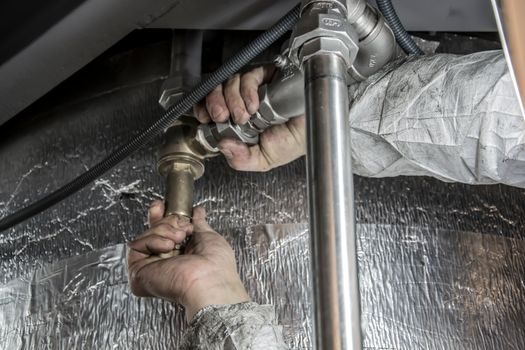
Installed cost for an industrial PRV typically runs 1.5-2.5x the valve list price once you add isolation valves, bypass, strainer, sense line, support, and labor - and on hazardous-area lines the ATEX-rated actuator and cable glands add a discrete line item on top, with setpoint verification at commissioning typically done via a pressure calibrator traceable to a national standard. Lifecycle cost is dominated by the soft-goods replacement interval: a typical EPDM or FKM diaphragm in a hydronic PRV lasts 5-10 years, while a stainless metal-bellows seal in a steam or process PRV can run 15+ years but costs more up front. For a process plant, the right comparison is therefore not the cheapest PRV that meets the spec, but the PRV whose mean-time-between-overhaul (MTBO) minimizes production-loss exposure during scheduled turnarounds. [S3]
Two trackable signals to watch in the second half of 2026: (1) FM/UL approval list updates for fire-service PRVs in the 4-12 inch range, where re-certifications tend to push prices up 5-15% on the next bid cycle; (2) raw-material surcharges on 316 stainless and duplex, which have been the dominant mid-2026 driver of stainless-PRV quote drift and which a buyer can hedge by locking orders at mill price rather than spot. Comparison work on adjacent fluid-handling components such as the Needle Valve 2026 Price & Cost Guide uses the same body / cert / size / quantity framework, which is useful when a project buys PRVs and needle valves off the same vendor and wants to compare the price-per-line-item.