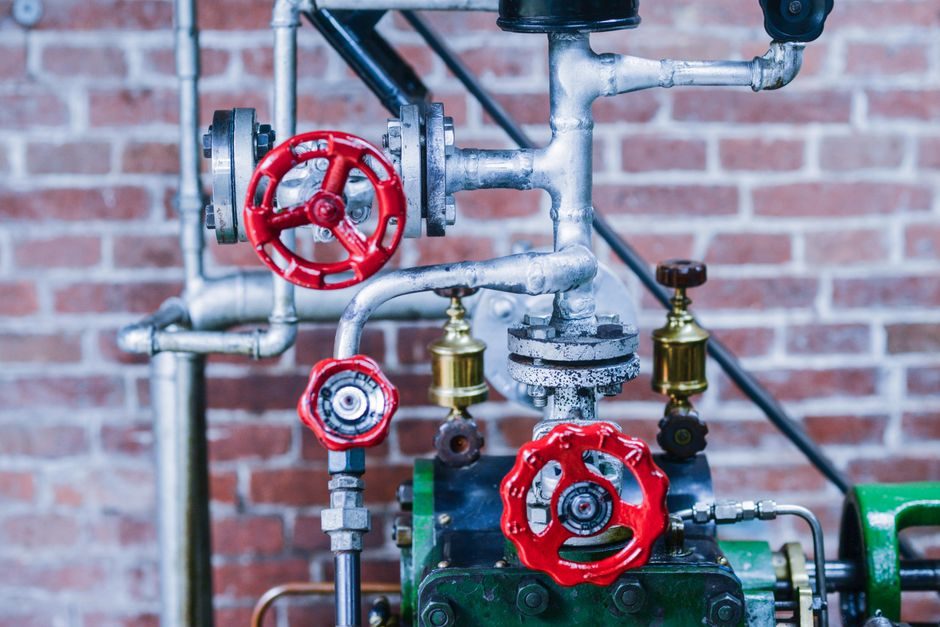
A pressure reducing valve (PRV) modulates to hold a set downstream pressure; a diaphragm valve isolates or throttles flow with a flexible elastomer diaphragm against a weir or seat. The two are built around different sensing/actuation physics and solve different problems on a piping sheet.
The clearest use split: PRVs for setpoint pressure control on water, steam and light hydrocarbon networks; diaphragm valves for corrosive, abrasive or hygienic service where metal wetted parts are off-limits. BERMAD's FP-42T pilot-operated, diaphragm-type PRV, for example, ships in DN40 to DN400 with PN16 and PN25 body ratings and is geared to pump discharge, fire-protection feed lines and irrigation headers [S1].
Function and Operating Physics
A PRV's job is to maintain a preset gauge pressure at its outlet regardless of upstream swings or flow changes. MATLAB's Hydraulics (Isothermal) block models the device as a normally open valve that contracts when outlet pressure, measured against a spring reference, exceeds setpoint [S3]. BERMAD's FP-42T is a diaphragm / hydraulically-operated pilot design: line pressure is routed through a pilot circuit that senses downstream pressure and modulates the main valve's diaphragm chamber [S1].
A diaphragm valve's job is throttling or on/off isolation with a flexible elastomer or PTFE diaphragm pressed against a weir. There is no setpoint pressure loop; the operator (manual handwheel, gear, pneumatic, or electric actuator) simply drives the compressor down onto the seat. The diaphragm also fully isolates the bonnet, stem and actuator from the process fluid - the working principle behind almost every diaphragm valve in chemical, mining and hygienic service.
Body, Size and Pressure Ratings
PRV bodies for water/steam service are typically flanged, in-line, one-piece. BERMAD FP-42T covers DN40 to DN400 (1.5"-16") with PN16 (16 bar / 232 psi) and PN25 (25 bar / 362 psi) body options and elastomer trim suited to pump-discharge and fire-feed duty [S1]. Standard PN ratings on the market run PN16/25/40 depending on size, with 2 bar minimum operating differential for sensible regulation.
Diaphragm valves span a wider size envelope, DN15 up to DN600 in common industrial lines, with body materials of PVC, PP-H, PVDF, ductile iron with rubber or EPDM linings, and full stainless/PTFE for pharma and semiconductor. Pressure ratings cluster around PN10/16 for plastic bodies and PN16/25 for lined metal. The comparison that matters for selection:
Pressure reducing valve: PN16/25, DN40-400, 2 bar minimum differential, fixed setpoint. Diaphragm valve: PN10/16 (plastic) to PN16/25 (lined metal), DN15-600, no setpoint, full process isolation. See the pressure reducing valve reference for deeper PRV sizing logic, and the diaphragm valve reference for material-by-service selection.
Selection Criteria: When Each One Wins
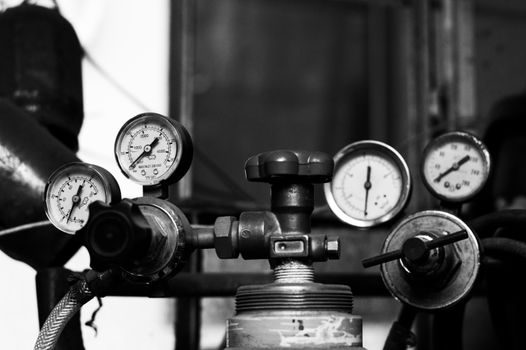
Specify a PRV when the requirement reads "hold 4.0 bar downstream across a 1-20 L/s flow swing." The sensing element is a diaphragm or piston loaded by an adjustable spring; on Y110X/Y116X series regulators, diaphragm sensing is used for smaller sizes and piston sensing for DN≥50, with the post-valve pressure adjustable by turning the spring bonnet [S2]. That setpoint behaviour is what a PRV exists to provide.
Specify a diaphragm valve when the requirement reads "isolate 30% HCl at 80 °C with zero stem leakage" or "drain food-grade slurry for CIP." There is no pressure setpoint; the requirement is contamination control, corrosion resistance, and tight shutoff on a flexible elastomer. The diaphragm valve reference covers the elastomer/material matrix that drives that decision.
A simple decision gate: if the spec line says "reduce / regulate / maintain X bar" - it's a PRV. If the spec line says "isolate / drain / sample / throttleslurry" - it's a diaphragm valve. The diaphragm-pump reference is a useful adjacent read because it shares the elastomer-diaphragm failure mode (flex life, chemical compatibility) even though the application is flow generation, not control.
Standards, Materials and Cert Envelope
PRVs in building and potable service typically carry WRAS, ACS, NSF/ANSI 61, or DVGW approvals depending on region; in oil & gas they meet NACE MR0175 for sour service and API 6D for pipeline valves. Fire-protection variants like the FP-42T are tuned to UL/FM and CE/PED pressure-equipment requirements, with elastomer compounds (EPDM, NBR) selected to the fluid [S1].
Diaphragm valves for chemical service reference ASME B16.34 (valve design), ISO 5752 (face-to-face), and TA-Luft / EPA Method 21 for fugitive emissions on the bonnet. Pharma and food grades add EHEDG Doc. 8, 3-A Sanitary Standard, and ASME BPE for surface finish (typically Ra ≤ 0.8 μm on wetted paths). Process wetted parts are usually PTFE, EPDM, FKM, or PFA-backed EPDM, with body in solid PP-H, PVDF or stainless with elastomer lining.
Limits and Failure Modes
PRVs lose regulation when the differential between inlet and outlet setpoint drops below the valve's minimum required differential (often 0.5-2.0 bar depending on size and pilot design). Below that, the valve goes "full open" and the downstream pressure tracks the upstream. Clogged pilot strainers, diaphragm fatigue on the sensing element, and seat erosion from cavitation are the three most common field failures on a hydraulically-operated PRV like the FP-42T. [S1]
Diaphragm valves lose isolation when the elastomer diaphragm fatigues, cold-flows under sustained compression, or chemically swells. Flex life is finite: PTFE diaphragms tolerate aggressive chemistry but fewer cycles (often 50,000-200,000); EPDM and natural rubber run higher cycle counts in benign service. Temperature is the other hard limit - EPDM caps near 120 °C, FKM around 180 °C, PTFE-backed designs push to 200 °C+, and PTFE diaphragms with PFA bodies can hit 200 °C in semiconductor wet-bench duty.
Cost, Lead Time and Sourcing
A DN100 flanged PRV with pilot circuit (BERMAD FP-42T class) sits roughly 2-3x the price of a same-class diaphragm valve at the same size, driven by the pilot trim and the dual-diaphragm assembly. For diaphragm valves, material drives most of the price: solid-PVDF and PTFE-lined bodies can match PRV cost at DN50-DN80 because of the raw fluoropolymer content. [S2]
Lead time is usually shorter for diaphragm valves from chemical distributors (8-12 weeks common for DN15-DN150), while PRVs with hydraulic pilots tend to run 10-16 weeks, with engineered-to-order pilots and special elastomer compounds adding another 4-6 weeks. The Diaphragm Valve vs Control Valve: 2026 Spec Cut article is a useful adjacent read on sourcing gates and the comparison matrix decision-tree for the broader valve family.
Trackable signals to watch: pilot-circuit miniaturisation is shrinking the PRV envelope into DN40-DN80 sizes that historically only diaphragm valves served, while high-cycle elastomer compounding (EPDM-PTFE laminates) is pushing diaphragm valve flex life toward 1,000,000 cycles for water and light-chemical service - which means the two device classes are converging at the small-end-of-the-piping-scale and continuing to specialise at the high-end.