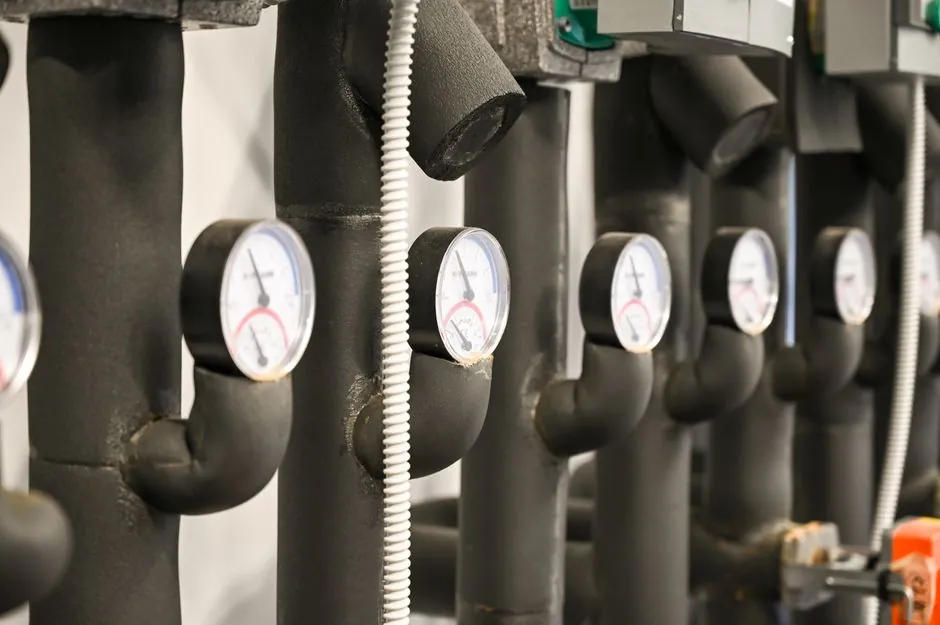
Choose the PRV from the product-contact boundary first: sanitary wetted parts for product and CIP service, utility construction for steam, water, and gases [S1][S4].
The valve must deliver the required reduced pressure across the expected flow range, not merely match the pipe diameter;
Separate Product-Contact and Utility Duties
Food and beverage valves divide into hygienic valves and utility valves: hygienic valves contact the product and require cleanable, maintainable wetted parts, while utility valves do not require the same degree of cleanability [S1].
Do not apply product-contact rules to every valve in the plant. A steam, compressed-air, water, or cleaning-service regulator may not contact food, whereas a regulator on juice, beer, milk, sauce, or syrup may require stainless construction, sanitary finishes, and a drainable configuration [S4].
For product-contact service, compare hygienic regulators with sanitary back-pressure regulators when downstream pressure must be held above the inlet pressure, and with a safety-relief valve only when the duty is overpressure protection rather than controlled reduction.
Set the Duty Before Choosing the Valve
Record inlet pressure, required outlet pressure, minimum and maximum flow, fluid temperature, viscosity, solids content, and whether the line can be cleaned in place. Pressure control matters in spray coating, bottle filling, vacuum canning, and food packaging, where a stable setpoint directly affects process performance [S3].
Size the regulator for the calculated flow and pressure drop, then confirm that operating point remains inside the manufacturer flow and Cv limits. A domestic-water sizing guide uses 1–2 m/s as its stated sizing band, demonstrating that line velocity must be checked rather than treating nominal pipe size as the regulator capacity [S5].
Do not use pipe size as the selection criterion. The regulator must have a spring range that covers the desired outlet pressure and enough flow capacity at the minimum load to maintain control [S7].
Compare the Main Valve Architectures
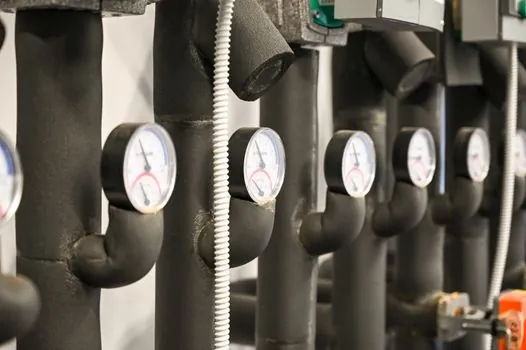
Self-operated pressure reducing valves are mechanically simple and require no auxiliary control medium, but downstream pressure can vary as inlet pressure or demand changes. Pilot-operated regulators provide higher capacity and more stable control, with added dependence on the pilot, diaphragm, sensing lines, and air supply [S3][S7].
Sanitary angle-seat valves suit duties requiring closure against a pressurized fluid and can reduce hydraulic shock during actuation, while butterfly valves generally provide lower holding pressure and are less suitable for high-pressure lines [S1].
Define Materials and Sanitary Construction
Stainless steel is a common control-valve material because it resists corrosion and tolerates repeated cleaning and sanitizing, but compatibility must be checked against the actual product, cleaning chemistry, temperature, and seals [S4]. Food and beverage service is not a single material class: wetted metal, elastomer, diaphragm, gasket, and surface-finish requirements can differ by application.
For product-contact equipment, ask the manufacturer to identify every wetted material, the sanitary grade, surface finish, connection standard, drainability, and the conditions for disassembly and reassembly. Valve selection must also address cleanability, maintenance access, and the risk of contamination [S1][S4].
Do not assume stainless steel alone makes a valve hygienic. A valve can have corrosion-resistant metal while retaining non-sanitary seals, inaccessible product pockets, unsuitable surface finish, or a geometry that drains poorly [S1][S4].
Match Capacity, Spring Range, and Installation Conditions
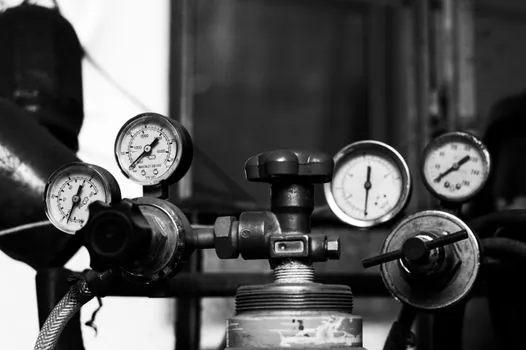
Spring range is the first mechanical check: choose a regulator whose adjustable outlet range contains the required setpoint, with margin for inlet-pressure variation and downstream friction loss. If the setpoint lies outside that range, modulation will be poor regardless of nominal size [S7].
Capacity is the second check.
Installation details can dominate performance. Confirm sensing-line routing, orientation, supported piping, diaphragm access, trapped-liquid removal, inlet and outlet pressure ratings, and whether the control medium is available for pilot operation [S3][S7].
Match the Duty to Food, Beverage, and Utility Service
Use a product-contact sanitary regulator when the regulated medium enters the product stream, including beverage filling, ingredient dosing, and spray coating.
Use a utility regulator for steam, water, or compressed air where product cleanliness is not involved. Gate valves are common on steam because slow opening limits steam-condensation interaction during startup and reduces flashing, while angle-seat valves serve duties requiring closure against pressurized fluid [S1].
For shared systems, investigate mix-proof sanitary valves when simultaneous dissimilar-product operation or clean-out isolation requires double block and bleed protection; ordinary sanitary seat valves do not automatically provide that segregation [S1].
Review Failure Modes Before Approval
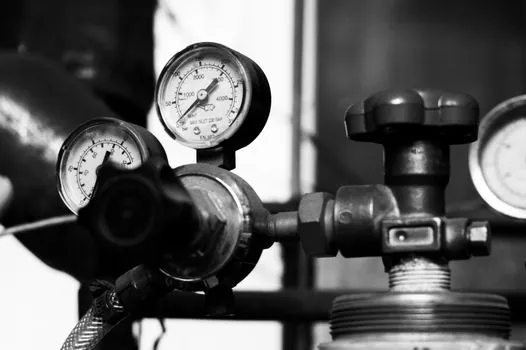
Three practical failure modes deserve specific review: hunting, chatter, and contamination. Pilot-operated regulators can be sensitive to air quality, restricted sensing paths, unsuitable diaphragm material, or unsuitable flow conditions; the manufacturer’s diaphragm-selection and chatter guidance should be checked for the actual service [S3].
Capacity loss is another common issue. Operating a regulator below its minimum controlled flow can promote instability, while sizing it for only the average demand can create excessive drop at peak flow. Confirm both the minimum-load and peak-flow behavior from the model-specific performance data [S2][S7].
Protect product quality by validating cleanability, drainability, material compatibility, gasket performance, and accessibility. Food-processing valves should support cleaning and maintenance without leaving concealed product-contact surfaces or crevices [S1][S4].
Approval Checklist for Procurement and Engineering
Issue the datasheet request with eight mandatory entries: fluid and concentration, minimum and maximum inlet pressure, required outlet range, minimum and maximum flow, operating temperature, wetted-material schedule, hygienic or utility classification, and cleaning method. Add viscosity, solids level, control medium, connection standard, and required certifications only where they apply. [S1]
Use the selected model’s limits to close the review: spring range must include the setpoint, calculated load must fall within rated capacity, pressure and temperature ratings must exceed worst-case conditions, and every product-contact material must be acceptable for product plus cleaning chemistry [S2][S4][S7].
The shortlist logic is straightforward: choose a self-operated sanitary regulator for modest, stable demand; use a pilot-operated design when capacity or pressure repeatability dominates; select an angle-seat arrangement where positive closure against pressure is required; and specify utility construction only when the line cannot contact product [S1][S3][S7].