
Food-grade diaphragm valves isolate the actuator from the product while supporting hygienic duties from viscous ingredient transfer to aseptic filling, subject to compatible wetted materials and validated cleaning conditions [S1][S2].
The decision depends on the complete valve design, material compatibility, installation, cleaning procedure, flow path, operating pressure, and temperature [S2].
Define the sanitary duty before selecting a body
A diaphragm valve uses a flexible elastomeric membrane to close against a seat, isolate flow or regulate it through linear actuator movement; the membrane also separates the process fluid from the bonnet and actuator [S2][S3].
This arrangement suits food and beverage applications involving viscous fluids, slurries or particulate-bearing products, including dairy, brewery, blending, ingredient dosing, storage, transport and filling duties [S1][S3]. It reduces contact with moving mechanical parts and their lubricants, but it does not make every valve automatically sterile or cleanable [S2].
A sanitary valve must provide smooth product-contact passages, drainability, limited crevices and an installation that does not trap liquid. These requirements govern the body pattern as much as the valve type, and the body-pattern decision is covered in detail in Weir vs Straight-Through Diaphragm Valve.
Match diaphragm elastomer to product and cleaning chemistry
Material selection directly constrains maximum operating pressure, service temperature and chemical compatibility, so the purchase specification should identify the elastomer grade rather than use the family name alone [S3]. Request food-contact documentation for the specific compound and intended conditions, and check compatibility separately against the product, detergents, sanitizers and process additives [S2].
Neither an elastomer family nor a body alloy, including 304 or 316 stainless steel, establishes suitability without product-specific compatibility data [S2][S9].
Use explicit thresholds for CIP and SIP duties

Compatible diaphragm valves can be included in a clean-in-place circuit, where cleaning solution circulates through installed piping without routine disassembly; steam-in-place is possible only when the valve, diaphragm and associated components are rated for the required sterilization conditions [S2].
Cleaning effectiveness depends on geometry, flow direction, installation orientation, cleaning chemistry, temperature and exposure time. A valve selected only because its listing mentions CIP may still fail because it cannot drain fully, contains inaccessible pockets, or uses an elastomer that cannot tolerate the cleaning cycle [S2].
Compare body patterns, controls and operating limits
Many diaphragm-valve models feature a straight-through design [S6].
| Selection criterion | Straight-through hygienic design | Weir-pattern design | Double-acting actuator option | |---|---|--- | | Product isolation | Flexible diaphragm isolates the process from bonnet and actuator [S2] | Flexible diaphragm provides isolation [S2] | Adds operating modes without changing wetted isolation [S2] | | Best fit | Low-loss transfer and hygienic routing | Applications where the specified body geometry provides the required opening and flow behavior | | | Main limits | Requires compatible elastomer, correct orientation and validated cleaning | Must be checked for crevices, drainage, pressure drop and seat contact | |
The elastomeric diaphragm is the primary control element, and hygienic selection depends on the complete valve design, material compatibility, installation, and cleaning procedure [S2][S3].
Size for pressure, temperature and product behavior
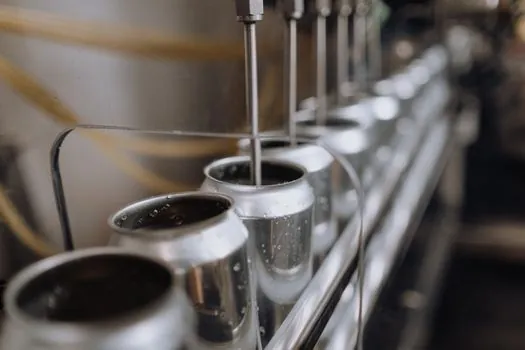
A diaphragm valve’s allowable pressure and temperature depend on the specific body, seat, diaphragm grade, actuator force and selected construction material; no universal food-industry limit applies across every model [S2][S3]. Obtain the manufacturer’s pressure-temperature curve and cycle-life information for the proposed materials rather than transferring ratings from a generic catalog.
Diaphragm valves are ideal for handling viscous fluids or fluids containing particulates [S1].
Stainless steel 304 and 316 are common food-grade body materials, with the choice governed by the medium and diaphragm compatibility; corrosion resistance must be evaluated against the actual product and cleaning chemicals rather than inferred from the grade label [S9].
Choose the control package by shutdown consequence
Manual actuation is adequate for simple isolation, while pneumatic, hydraulic or electric operators support automated filling, dosing and hygienic process control. Available packages can include a signaling box for position feedback and a compact positioner for proportional control [S6].
Specify the required fail position, air supply, control signal, operating speed, stroke adjustment and manual override. A spring action that fails closed may be appropriate where product loss or contamination is unacceptable, while fail-open may suit cooling or drain lines where blockage creates the greater hazard.
The actuator must not be treated as a food-contact component. Its supply and signal compatibility remain separate from the diaphragm, seat and body material approvals, and validation should cover both automatic cycling and manual operation [S2][S6].
Verify compliance with the complete valve specification

Food-grade claims are not enough for project approval. The submittal should identify the body alloy, diaphragm compound, seat, clamp, gasket, surface finish, actuator, pressure rating, temperature range and the certification applicable to the product-contact assembly [S2][S9].
Hygienic design criteria developed through 3-A Sanitary Standards are relevant for food-contact equipment, while ASME BPE is also cited for sanitary process equipment; the exact standard and edition must be confirmed against the purchased valve and project specification [S2][S4].
Do not infer FDA, 3-A or ASME BPE compliance from a supplier statement alone. Require documentation that identifies the covered product, configuration and conditions of use, and check that every product-contact material appears in the approval package [S4].
Confirm service history and maintainability before release
Diaphragm life depends on operating cycles, pressure fluctuations, compression, thermal exposure, product compatibility and cleaning conditions, so the replacement interval must be based on the qualified material and actual duty [S2].
Specify spare diaphragm and gasket part numbers, documented replacement torque, body drainability and installation orientation. A valve that cannot be drained in the installed position or requires removal for routine inspection may not fit a hygienic CIP-dependent line even if its bench test is satisfactory [S2][S8].
For general operating principles, the reference entry on diaphragm valves covers construction and actuation, while the food-grade selection criteria remain the controlling requirements for hygienic service.
Issue the final purchase order only after the valve schedule records product chemistry, operating pressure, operating and cleaning temperatures, elastomer grade, body alloy, flow requirement, fail action and required compliance documents.