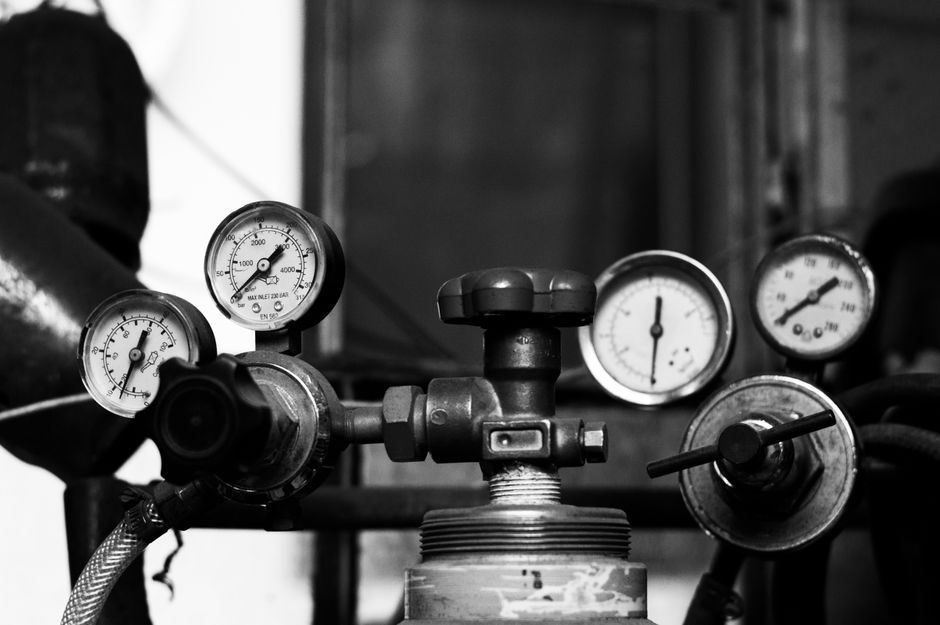
Diaphragm valves and control valves share modulating duty in water, chemical, and process lines, but they are not interchangeable: a diaphragm valve seals via a flexible elastomer or PTFE membrane pressed against a weir or seat, while a control valve modulates flow through a plug, ball, or disc against a precisely machined seat ring [S1][S3].
Current BERMAD and Brandoni diaphragm-valve offerings span DN 40 to DN 800 mm with pressure ratings from 0.5 bar up to 40 bar depending on body and pilot configuration [S1][S2][S4]. The 2026 catalog window also shows a heavy tilt toward hydraulically-operated, pilot-actuated diaphragm units for level and pressure-reducing service rather than direct-electric actuation.
Pressure and Temperature Ceilings by Body Type
Diaphragm-valve pressure ratings cluster on three tiers: low-pressure plastic-body modulating units cap at 10 bar (145 psi), double-chamber high-pressure units reach 25 bar (362.6 psi), and iron-body industrial diaphragm valves for water reach 16, 25, and 40 bar classes (232.1 / 362.6 / 580.2 psi) per the Brandoni 12.000 series [S4].
BERMAD's BC-720-2B-P double-chamber diaphragm valve is rated to 25 bar with a 60 °C (140 °F) temperature ceiling, sized DN 40–600 mm, and is built around a pressure-reducing pilot with an integral bypass [S3]. The IR-105-4″L/6″R plastic-body modulating unit, by contrast, sits at 0.5–10 bar and ships in DN 100/150/160 mm with a chemical-resistant Y-pattern monobloc body [S2].
Conventional diaphragm valves are temperature-limited by the elastomer or PTFE diaphragm itself; most EPDM and FKM liners in the 2026 BERMAD range stop at 60–70 °C continuous, while PTFE liners and metal-bonneted variants push higher. Control valves with metal seats and graphite packing routinely operate past 400 °C in steam and refinery service — a gap that disqualifies soft-seated diaphragm units in any superheated line.
Actuation: Hydraulic Pilot, Electric, and Pneumatic
The 2026 diaphragm-valve catalog skews heavily toward hydraulically-operated, pilot-controlled designs: the BERMAD WW-753-65 (DN 40–350), WW-750-80 (DN 40–600), and 105-M (DN 40–80) are all float- or pilot-driven, modulating level-control valves for tank filling [S1][S5][S6]. The Brandoni 12.000 series is one of the few electric-actuated diaphragm valves in the window, available in DN 50–800 mm with 16 / 25 / 40 bar body options and shut-off or flow-control function [S4].
Control valves are dominated by pneumatic diaphragm actuators on top of globe or angle bodies, with electric actuated globe and rotary designs as a strong secondary category. The key practical difference: a hydraulic pilot on a diaphragm valve can be powered by line pressure itself, so the valve self-actuates without a separate instrument-air supply — a real advantage on remote tank farms and irrigation headers where no air is available [S5][S1].
Diaphragm-pump-style hydraulically-operated diaphragm valves are sensitive to supply-pressure stability; if the pilot line is starved, the valve will not stroke fully. Process engineers pairing these with a diaphragm pump skid should verify the pump's NPSH and pulsation profile against the pilot's pressure range before commissioning.
Sealing, Leakage Class, and Media Compatibility
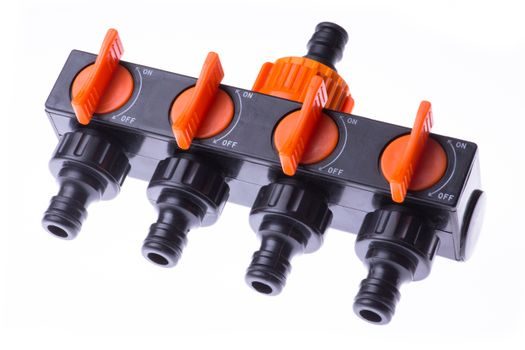
Diaphragm valves deliver bubble-tight shutoff by design — the elastomer or PTFE liner is the only wetted sealing element, and there is no stem packing to leak past. This makes them the default for corrosive acids, slurries, and pharmaceutical-grade water where any stem seepage is unacceptable. [S1]
Globe-pattern control valves are rated to IEC 60534-4 leakage classes (Class IV, V, VI) depending on trim; soft-seated Class VI is the typical high-shutoff benchmark at <0.0005 mL/min per inch of seat diameter. Metal-seated Class IV is the refinery workhorse. The leakage-class discipline matters because a control valve specced Class II on a sodium-hydroxide line will leak, while a diaphragm valve on the same line seals by virtue of its membrane.
PTFE and EPDM liners handle most mineral acids and caustics up to the temperature ceiling noted above; for abrasive slurries, the Brandoni 12.000 and BERMAD WW-750-80 are specced with replaceable elastomer diaphragms designed for frequent change-out rather than exotic alloy internals. Control valves in slurry service need hardened Stellite or tungsten-carbide trim — a different cost stack.
Selection Criteria: When a Diaphragm Valve Wins, When a Control Valve Wins
Use a diaphragm valve when the line carries corrosive or abrasive media, the duty is level / pressure-sustaining / pressure-reducing, the line is unheated (≤70 °C continuous for most liners), and the site has no instrument air. Use a control valve when the duty is high-temperature steam or hydrocarbon, the leakage class must be quantified (e.g. ISO 15848 fugitive-emission tested), the characterisation curve must be linear or equal-percentage across a wide range, or the signal is a 4–20 mA electronic command into a digital positioner. [S2]
A concrete cut: a DN 200, 16 bar, 50 °C sulfuric-acid transfer line almost always becomes a PTFE-lined diaphragm valve with a hydraulic pilot. A DN 200, 40 bar, 320 °C superheated-steaten header always becomes a globe-pattern control valve with metal seat and pneumatic actuator. The middle ground — DN 150, 10 bar, 90 °C cooling water — can be specified either way, and the tiebreaker is usually maintenance philosophy: diaphragm valves have one wear part (the membrane), control valves have a full trim kit.
For level-control duty on tanks, the BERMAD WW-753-65 and WW-750-80 hydraulic float pilots are widely used in the 2026 municipal-water and irrigation catalogs [S1][S5]. For throttling duty on clean industrial process lines, a control valve with characterised trim remains the standard answer.
Sourcing, Standards, and Field Failure Modes
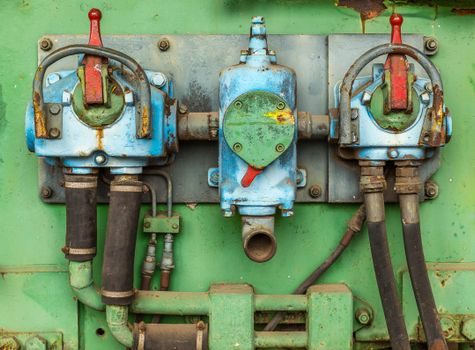
Spec gates to lock before sourcing: body material (cast iron, ductile, PP, PVDF), liner compound (EPDM / FKM / PTFE / natural rubber), pressure class (PN10 / PN16 / PN25 / PN40), DN range, end connection (flanged, wafer, threaded, grooved), actuation type, and pilot function. Each must be cross-checked against the line's chemistry, temperature, and duty cycle. [S3]
Relevant standards include EN 12266 for industrial-valve testing, EN 1074 for water-supply valves, ISO 5208 for pressure testing of valves, and ASME B16.34 for pressure-temperature ratings on flanged valves. Drinking-water service additionally requires WRAS, ACS, or NSF/ANSI 61 certification depending on jurisdiction — buyers in 2026 should request the certification number, not just a "potable" claim.
The most common field failure on a hydraulically-operated diaphragm valve is diaphragm fatigue or pinhole leak, typically after 3–7 years depending on cycle count and chemistry. The most common field failure on a control valve is seat-cutting from throttling at high differential pressure, or stem-packing degradation under thermal cycling. Stocking the right spares kit at install is cheaper than an unplanned shutdown, and 2026 lead times for PTFE diaphragms and Class VI trim kits both sit in the 4–8 week range from European OEM warehouses.
For broader industrial context on how these valves fit into motor-driven and electric-actuated plant architectures, see the electric-motor upstream and downstream spec map and the diaphragm-valve selection spec gates reference.
Track these signals over the next buying cycle: PTFE-liner temperature limits above 90 °C continuous, dual-certified ATEX + IECEx positioners for hazardous-area control valves, and pilot-operated diaphragm valves with integrated solenoid shut-off for SCADA-monitored tank farms. The Brandoni 12.000 electric-actuated DN 800 ceiling and the BERMAD BC-720-2B-P 25 bar pressure-reducing double chamber are reasonable benchmark models for 2026 RFQ comparison [S3][S4].