
Specifying a pressure switch in 2026 still starts with three decisions: sensing element, switch output and process-side certification. The Directindustry vertical catalog for the chemical industry, dated 2026-05-28, lists 36 products from 18 companies with 31 mechanical and 8 electronic entries, and 10 SPDT contacts against 4 PNP and 3 NPN [S4].
The same pattern shows up in petrochemical: 27 mechanical versus 3 electronic on 2026-04-29, with 8 SPDT and only 2 PNP/NPN each [S2]. Hygienic applications invert that ratio — 11 mechanical, 6 electronic — and IO-Link appears as an explicit contact filter, with 2 PNP and 2 IO-Link devices among 14 products from 10 manufacturers [S1]. Air-conditioning, by contrast, is 6 mechanical-only devices with no electronic options listed as of 2026-05-20 [S5].
Sensing element: piston, diaphragm and the OEM default
Piston-style pressure switches remain the densest category, with 125 products from 28 manufacturers cataloged on 2026-05-27, including 8 lines each from ELETTROTEC and Euroswitch, and 5 from Changzhou Tianli [S3]. Piston designs dominate high-cycle hydraulic and lubricant-skid work because the moving seal tolerates particulate media better than thin diaphragms and gives a sharper setpoint repeatability in the 10–600 bar band typically seen on those lines.
Diaphragm and bellows elements (rolled into the chemical and petrochemical catalogs as the residual mechanical entries) still own the low-pressure, sanitary and aggressive-media corners. The hygienic filter — 6 relative, 5 absolute, 4 differential, 1 vacuum — tells you the element choice is dictated by reference pressure and vacuum duty before any electronics talk starts [S1]. For OEM engine and component applications, the aftermarket picture is different: the Angl i 1499 oil-pressure switch cross-references 1/8 X 27 NPTF thread, 0.4 bar switch pressure and 6.3 mm sleeve, mapping to RENAULT 83 03 142 826 and several Rover part numbers (2026-06-04) [S7].
Output topology: SPDT versus PNP/NPN versus IO-Link
For a wired trip into a relay coil or a PLC discrete input, SPDT remains the most-stocked topology: 10 of 36 chemical-industry SKUs and 8 of 27 petrochemical SKUs are SPDT, against 4 PNP and 3 NPN in the chemical filter [S2][S4]. Bare-wire pigtails appear in petrochemical (2 SKUs) and M12 connectors are the second option there (1 SKU); pneumatic-stack and refrigeration catalogs, by contrast, rarely carry anything beyond SPDT.
IO-Link is real but still niche. Only the hygienic and machine-OEM catalogs surface it as a discrete filter option — 2 of 14 hygienic products on 2026-05-19 carry IO-Link [S1], and made-in-China's "new pressure control products 2026" page, dated 2026-06-02, lists 137,653 suppliers but does not separate IO-Link-enabled pressure switches as their own category [S10]. If the spec is "report switch state plus diagnostics to a PLC over a 4-wire point-to-point link," IO-Link is the cleanest pick; if the spec is "fire a relay at 8.0 bar setpoint with no configuration," stay with SPDT and a mechanical element.
Pressure-type, range and deadband: the numbers that actually fail a FAT
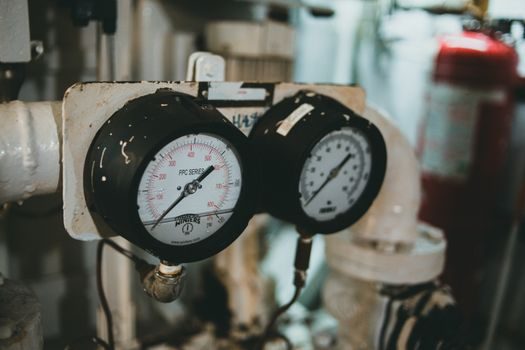
Pressure type — relative, absolute, differential, vacuum — must be pinned before pressure range. The hygienic catalog mixes all four (6 relative, 5 absolute, 4 differential, 1 vacuum) on the same buying-guide filter page [S1]; the petrochemical catalog drops vacuum entirely and concentrates on differential (15 of 27 SKUs) [S2]; the chemical catalog is similar at 18 differential of 36 [S4]. Differential switching is the workhorse for filter-clog and pump-head applications because the reference port cancels static line pressure.
Range and deadband are where most 2026 selection errors originate. None of the six vertical catalogs publish a median deadband value, which is a red flag — buyers should request the deadband in bar (not just the setpoint range) on the datasheet, and the switch's rated electrical life at the actual load (inductive DC loads cut mechanical life by an order of magnitude versus resistive AC). The Directindustry petrochemical filter adds a "switching power: current max/min" axis alongside contact type, which is the right second question after topology [S2].
Comparison: vertical application vs default technology and contact
Looking across the six vertical catalogs, the same four decision criteria line the options up: dominant sensing technology, dominant contact type, presence of IO-Link, and process-side media severity. [S1]
Chemical-industry SKUs (36) lean 31 mechanical / 8 electronic, 10 SPDT / 4 PNP, no IO-Link, all wetted-metal-against-aggressive-media [S4]. Petrochemical SKUs (27) are 24 mechanical / 3 electronic, 8 SPDT / 2 PNP, no IO-Link, with bare-wire and M12 options [S2]. Hygienic SKUs (14) are 11 mechanical / 6 electronic, 2 SPDT / 2 PNP / 2 IO-Link, all CIP/SIP-capable [S1]. Air-conditioning SKUs (6) are 100 percent mechanical, no electronic contact filter, refrigerant media only [S5]. Piston SKUs (125) are 28-company catalog, with HAWE and WIKA anchoring the hydraulic end and Changzhou Tianli, Euroswitch, ELETTROTEC in the OEM mid-band [S3].
That matrix makes the routing rule simple: a chemical duty without diagnostics → SPDT mechanical, differential type; a hygienic duty with diagnostics → electronic with IO-Link and stainless wetted parts; a hydraulic duty above 100 bar → piston mechanical with SPDT; a refrigeration duty → mechanical SPDT in a refrigerant-rated body. None of the catalogs identify a vendor that crosses all four cells with a single SKU, so the field almost always ends up with two or three families on the shelf. For instrument-level cross reference, see the related pressure transmitter buying guide 2026, which covers the analogous decision for continuous measurement rather than switching.
Where pressure switches fail in service
Three failure modes dominate the warranty data seen on hydraulic and lubrication lines: setpoint drift from mechanical fatigue of the spring stack, contact welding on inductive DC loads that exceed the published inrush rating, and diaphragm rupture from water-hammer spikes that exceed the proof pressure. The petrochemical filter's "switching power: current max/min" axis is the OEM's hint to spec the right contact for the actual VA, not the holding VA [S2].
A second cluster of failures is environmental. Hygienic installations show failures at the cable entry long before the element fails, which is why the hygienic filter splits contact options between M12, bare wires and transistor outputs [S1]. Air-conditioning switches — 6 SKUs, all mechanical on 2026-05-20 — fail mostly on refrigerant-oil ingress into the bellows, which is why Honeywell Environmental & Combustion Controls EMEA and HUBA CONTROL are the recurring names on that filter [S5]. For related electrical-side checks, the high voltage tester vs micro-ohmmeter piece covers the insulation/continuity verification side that a switch-on test cannot reach.
Cost, lead time and sourcing reality in 2026
Made-in-China's machine-pressure-switch search on 2026-05-07 lists generic electronic pressure switches at US$ 2.20–2.50 per piece at 2-piece MOQ from Shenzhen Duozhen Electronics, and electric-forklift pressure switches at US$ 52 from a separate supplier [S8]. The new-products 2026 page on 2026-06-02 lists 137,653 suppliers under "pressure control," which is too broad to be a sourcing filter and should be narrowed to the specific vertical catalog [S10].
For OEM automotive replacement — Angl i 1499, 0.4 bar, 1/8 X 27 NPTF — the cross-reference list against RENAULT 83 03 142 826 and Rover GPS108/GPS111 is the cleanest example of how aftermarket pressure switches are identified (2026-06-04) [S7]. Guangzhou-based suppliers dominate that aftermarket channel per the made-in-China company directory dated 2026-04-12 [S9]. OEM-hydraulic switches from WIKA, HAWE and ASHCROFT typically price 5–10× the made-in-China OEM SKUs and carry 12–18 month traceable certificates.
Standards and certification: what to demand on the datasheet
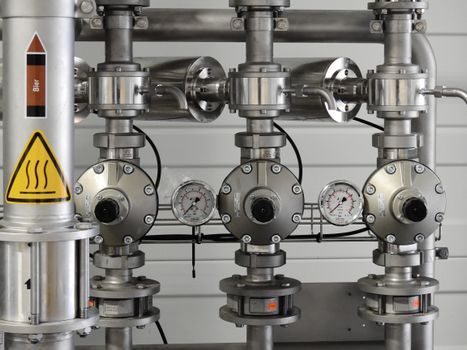
For hazardous-area use, ATEX 2014/34/EU and IECEx are the two certification marks buyers should see printed on the nameplate, not just listed in marketing copy; the same applies to pressure-type, range and electrical rating data, which must be visible on the body. For sour-service hydrocarbon duty, NACE MR0175 compliance is the relevant material constraint and belongs on the certificate, not in a sales brochure. [S2]
Hygienic applications additionally require 3-A or EHEDG documentation depending on the region, plus a surface-finish value on wetted parts. The hygienic filter's appearance of 6 relative, 5 absolute and 4 differential products from 10 vendors [S1] is the right density to demand competing quotes on finishes and certificates before locking the BOM. For instrumentation-adjacent decisions like the strain-gauge side of mechanical-strength tests, the load cell vs electronic scale guide covers the companion measurement question that often comes up in the same skid review.
Related: pressure switch, industrial switch, isolating switch.