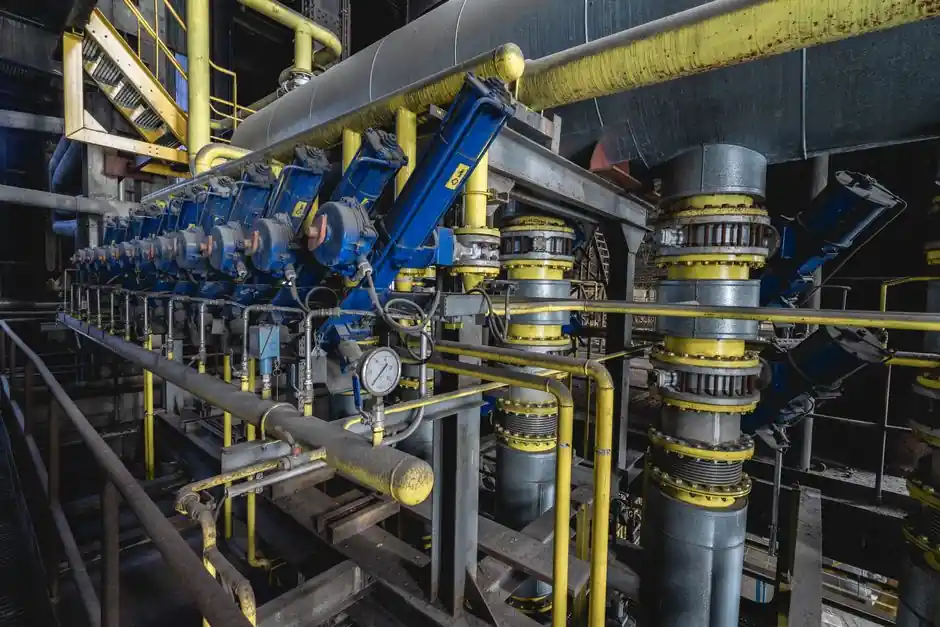
Pressure switches are picked by four numeric gates: proof pressure, adjustable setpoint range, switching differential, and contact electrical rating, all cross-checked against the process connection size and media compatibility [S4]. Get any of those wrong and the switch either trips early, welds its contacts, or ruptures the housing.
The fastest route to a misapplied switch is to order on price alone: a 30/50 PSI square-D style unit for a 300 bar hydraulic press will fail at first peak, while a 6000 PSI industrial differential switch on a domestic well pump will never see its setpoint. The 2026 market spans residential well-pump controls, HVAC refrigerant cut-outs, and process-loop instruments, each with its own spec envelope [S7].
Operating Principle and the Four Spec Numbers
A pressure switch is an electromechanical or solid-state device that opens or closes an electrical contact when process pressure crosses a setpoint, typically expressed as cut-in (lower) and cut-out (upper) pressures with a fixed or adjustable differential (deadband) between them [S4]. The sensing element is one of four families: bourdon tube, piston, diaphragm, or membrane, each tuned for a different pressure range and media.
On the bench the spec sheet is read in this order: (1) proof pressure (typically 1.5x to 2x the maximum setpoint, must exceed the system's safety-valve setting); (2) adjustable setpoint range, the working window where the spring and set screw allow reliable trip; (3) differential, the gap between cut-in and cut-out (a 20 PSI differential on a residential well switch means the pump runs from 30 PSI up to 50 PSI per cycle); (4) electrical rating, with residential SPDT contacts typically rated 5 A at 250 VAC and industrial versions 10 A to 15 A at the same voltage [S4]. For hazardous-area service, an ATEX 2014/34/EU or IECEx certification mark is mandatory, and the datasheet's Ex marking must match the zone classification of the installation.
Process Connection, Media, and Enclosure
Threaded process connections on industrial pressure switches cluster in the 1/8 in. to 1/2 in. NPT/BSP range, with 1/4 in. NPT male the most common default for general-purpose pneumatic and hydraulic service [S4]. Larger 1/2 in. and 3/4 in. ports appear on high-flow compressor and pump headers, while 1/8 in. fittings are reserved for instrument air and low-flow branch lines.
Media compatibility is decided by the wetted material: stainless steel 316 bodies handle water, steam, and most chemicals; brass is acceptable for air, water, and non-corrosive oils; aluminum saves cost on pneumatic panels; engineered plastics (PPS, PVDF) are used for deionized water and aggressive chemicals. Enclosure rating follows the duty: IP54 is the indoor minimum, IP65 is the standard for wash-down food and beverage, and IP67 or NEMA 4X covers outdoor and coastal installations. The selection logic for pressure-control hardware parallels the broader pressure-instrumentation family discussed in our pressure transmitter sizing and selection guide, where the same proof-pressure and media-discipline rules apply.
Residential, HVAC, and Industrial: Three Selection Tracks

Residential well-pump and booster service is dominated by the 30/50 PSI (or 40/60 PSI) electromechanical switch with a 1/4 in. NPT connection, SPDT contacts rated around 5 A at 230 VAC, and an adjustable differential of 15 to 30 PSI [S2][S3]. The 2026 rules of thumb for tank sizing around that switch are explicit: a 10 GPM pump needs at least 10 gallons of drawdown, a 16 GPM pump needs 24 gallons, and a 20+ GPM pump needs 2 gallons of drawdown per GPM of flow [S2]. Standard tank sizing runs 32 to 86 gallons for most 3-bedroom homes, with 20-gallon tanks reserved for cabins and 119-gallon units for high-flow homes with downstream water-treatment backwash loads [S3].
HVAC and refrigerant service uses low-pressure switches (typically 0.2 to 10 bar range) on refrigerant lines, with a manual reset option that latches the compressor off until a technician intervenes, versus auto-reset that restarts the compressor when pressure recovers. Industrial process service spans 1 bar to 600 bar with proof pressures above 1000 bar on hydraulic variants, often paired with ATEX/IECEx Ex d or Ex ia enclosures for Zone 1 and Zone 2 hazardous areas. Differential pressure switches, a separate sub-family, compare two ports (e.g. across a filter) and trip on the delta, commonly 0.1 to 10 bar across industrial filter and chiller applications [S4]. The market for 2026 lists 10 widely deployed switch families spanning these three tracks, from $20 residential units to $500+ ATEX-certified industrial differential switches [S7].
Cut-in, Cut-out, and Differential: Setting the Deadband
Cut-in pressure is the lower trip point that starts the pump or compressor; cut-out is the upper trip point that stops it; the differential is the gap, deliberately enforced, that prevents rapid cycling and contact arcing [S4]. A switch with too-narrow a differential on a high-flow pump will cycle the motor dozens of times per hour, burning out windings years before design life; a switch with too-wide a differential lets system pressure swing 30+ PSI between cycles, which users feel as shower temperature and flow instability [S3].
Rule-of-thumb cycle budgets for residential well systems (10 GPM pump, 30/50 PSI setting) are well documented: a 20-gallon tank cycles approximately 17 times per hour, a 32-gallon tank 11 times, a 44-gallon tank 8 times, and an 86-gallon tank only 4 times per hour [S3]. The financial logic is direct: each motor start draws 3 to 5 times running current, and a contactor rated for 100,000 cycles will hit that limit years early when cycling at 17/hr versus 4/hr. Most modern residential switches allow field adjustment of both cut-in (typically 20 to 40 PSI) and differential (typically 15 to 30 PSI) via two independent set screws, while industrial process switches often have a fixed differential specified at order time. Setting procedure: isolate power, drain the system, loosen the locknut on the cut-in spring, adjust to a gauge reference, then re-set the differential spring, and finally cycle the pump 3 to 5 times to confirm trip points before re-energizing the circuit [S1].
Comparison: Three Common Switch Types Against Four Criteria
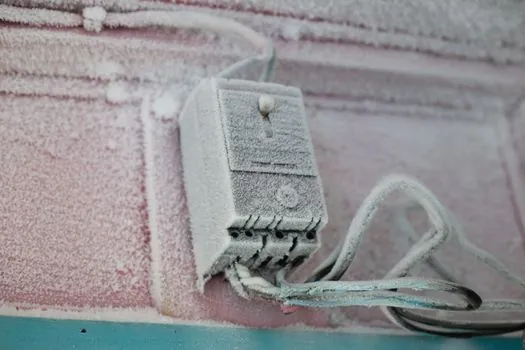
Three mainstream switch architectures can be lined up against the four criteria that drive real selection: pressure range, media compatibility, electrical rating, and approximate cost per unit. The table below captures the 2026 spec envelope from published manufacturer data and trade press [S4][S7].
Electromechanical diaphragm switches (bourdon or membrane) cover 1 to 600 bar with proof pressure 1.5x to 2x, accept water/oil/air with stainless or brass wetted parts, carry 5 to 15 A SPDT contacts at 250 VAC, and run $20 to $300 per unit. Piston-style switches concentrate above 10 bar and reach 1000 bar proof, work best on hydraulic oil and clean compressed air, share the same 5 to 15 A contact rating, and sit at $50 to $500. Electronic (solid-state) pressure switches span 0.1 to 600 bar with proof above 1000 bar, accept any non-corrosive media compatible with 316L stainless, switch at 0.5 to 5 A solid-state or relay outputs (often 4-20 mA or 0-10 V analog plus a trip relay), and run $80 to $600 per unit [S4][S7]. For general pneumatic and hydraulic service under 100 bar, electromechanical wins on cost and simplicity; above 100 bar, piston switches dominate; where you need a display, a 4-20 mA re-transmission signal, or a tight ±0.5% setpoint accuracy, electronic switches earn their premium. Note that mechanical switches, by their construction, can drift 1 to 3% over years of service, while electronic variants stay within ±0.5% but add a 24 VDC power requirement that electromechanical units do not need.
Who Should NOT Pick the Cheapest Switch
A buyer who picks the lowest-cost residential 30/50 PSI switch for any of these duties will see a failure within the first year: hydraulic press service above 100 bar (proof pressure exceeded), compressed-air systems with high humidity (brass body corrodes, internals fail), hazardous-area Zone 1 locations (no ATEX/IECEx certification, ignition risk), and any application where the system safety valve is set above the switch's proof pressure (housing rupture on spike) [S4]. Equally, specifying a 6000 PSI industrial differential switch on a residential well pump is wasted money: the setpoint range will not include 30/50 PSI, the 1/2 in. NPT port will not fit standard residential plumbing, and the industrial price tag is roughly 10x the residential unit [S7].
Shortlist logic for 2026: if the duty is residential water pumping at 30 to 60 PSI, specify a UL-listed electromechanical diaphragm switch with 1/4 in. NPT, SPDT 5 A contacts, and an adjustable 20 to 40 PSI cut-in range. If the duty is HVAC refrigerant low-pressure cut-out, specify a factory-set auto-reset or manual-reset switch with the refrigerant's saturation pressure at the trip temperature and a 1/4 in. flare connection. If the duty is process or hydraulic service above 10 bar, or in a hazardous area, specify a stainless 316 switch with proof pressure at least 1.5x the system's maximum working pressure, ATEX/IECEx certification matching the zone, and an electrical rating above the actual inrush current of the contactor or solenoid it drives. For the broader selection logic on pressure-control hardware, including upstream pressure reduction and how it interacts with the switch setpoint, the pressure reducing valve selection map is a useful cross-reference.
Trackable signals for the next quarter: ASCO and Honeywell have continued to expand their 2026 catalogs with IO-Link-equipped electronic pressure switches that report cycle counts and trip history over the same cable that carries the trip signal; this is a meaningful shift for plant maintenance teams planning predictive replacement. The CPS-45 and CPS-200 series from mid-tier Chinese suppliers (e.g. Shine Motor's 2026 top-10 list) are closing the spec gap on Western units at roughly 40% to 60% of the list price, though ATEX/IECEx coverage on those lines remains limited to non-hazardous models as of mid-2026 [S7]. For well-pump duty, a final sizing sanity check worth running: multiply the pump GPM by the 1.0/1.5/2.0 multiplier from the standard runtime table [S2], and compare to the selected tank's published drawdown at the actual 30/50 (or 40/60) PSI switch setting; the tank's drawdown must meet or exceed that number, otherwise the pump will rapid-cycle regardless of how the switch is set.
Spec-level background on the components involved: linear guide, crossed roller guide, and pressure switch.