
Pressure switches in 2026 are produced across three distinct build classes: electromechanical snap-action units using bourdon tubes, pistons, diaphragms, or membranes; electronic digital controllers with adjustable setpoints; and MIL-Spec ruggedized devices for defense and naval service [S1][S3][S4].
The current supplier base splits into US-centric specialty manufacturers (Tecmark, MPL, Ashcroft, SOR, CCS, Detroit Switch), global automation majors (Emerson), China-based OEM/ODM factories (Lefoo, Anfield), and channel distributors (Vytl Controls, Setpoint) [S1][S2][S3][S4][S5][S6][S7].
How a Pressure Switch Operates and What It Senses
A pressure switch contains a sensing element (bourdon tube, piston, diaphragm, or membrane) that deflects against a preloaded spring, converting fluid pressure into mechanical motion that opens or closes an electrical contact at a preset value [S1]. The spring force is tuned via an adjustable setpoint screw, allowing the same body to be reconfigured for different cut-in and cut-out levels without changing the hardware [S1].
Selection of sensing element is dictated by media and pressure band: pistons suit higher-pressure hydraulic circuits, diaphragms handle lower-pressure pneumatic and water service, and bourdon tubes remain common in process gas and steam work [S1]. For a primer on the underlying instrument category, see the pressure switch encyclopedia entry, which covers the same actuation physics in greater depth.
Electromechanical vs Digital vs MIL-Spec Build Classes
Electromechanical switches use a Dual-Snap belleville disc-spring principle to deliver snap-action contact transfer with no external power required, and CCS has built industrial pressure, temperature, and flow switches on this architecture for over 60 years [S2]. Digital pressure switches, by contrast, integrate a pressure transducer, microcontroller, and relay or transistor output, and are sold by Chinese OEM/ODM suppliers such as Lefoo with multiple mounting configurations for OEM integration [S3].
MIL-Spec units from Detroit Switch (Pittsburgh, PA) are organized around 222 and 444 series platforms and are designed for shock, vibration, and limited-access service in naval and military systems, with configurable electrical arrangements rather than fixed off-the-shelf part numbers [S4]. Emerson, Ashcroft, SOR, and Tecmark round out the electromechanical catalog at the industrial and process-control tier, with media compatibility, adjustable differentials, and enclosure ratings as the principal differentiators [S1][S7].
Cut-In, Cut-Out, and Differential Pressure Behavior
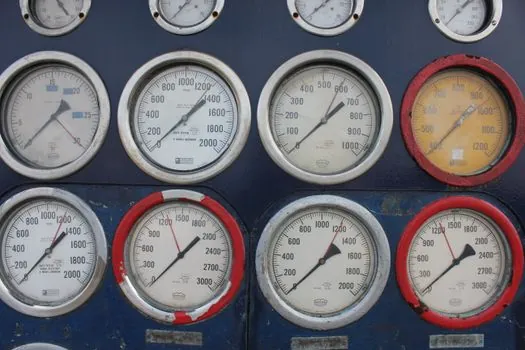
Cut-in pressure is the lower setpoint at which the contact transfers on falling system pressure, and cut-out pressure is the upper setpoint at which it resets on rising pressure; the gap between them is the differential or deadband, sized to prevent short-cycling of the driven load [S1].
In a typical pump control loop, the cut-in is set slightly below the minimum required system pressure and the cut-out is set at the working pressure ceiling, so the motor only restarts after a measurable pressure drop rather than on every ripple [S1]. This same differential logic is what makes a pressure gauge reading unstable if the gauge and switch disagree on setpoint calibration, a common commissioning fault on pump skids.
Suppliers, Distributors, and Sourcing Channels in 2026
Direct manufacturer sourcing dominates the US market, with Tecmark Corporation, MPL (Micro Pneumatic Logic), Ashcroft, and Emerson Automation Solutions listed as leading pressure switch manufacturers by IQS Directory in June 2026 [S1]. Specialty defense suppliers Detroit Switch (Pittsburgh, PA) and CCS (Chatsworth, CA, in business since the late 1950s) serve the MIL-Spec and aerospace/defense tier, while SOR Measurement and Control targets general industrial process applications [S2][S4][S7].
Distributor and channel models coexist with direct sales: Vytl Controls Group, which includes Setpoint Integrated Solutions, Valsource, W&O Supply, and A-T Controls, stocks pressure switches alongside broader flow-control lines for oil & gas and marine end users [S5]. On the OEM/ODM side, Chinese factories including Lefoo (digital pressure controllers with multiple mounting methods) and Anfield Sensors (standard and OEM pressure, temperature, and level switches) supply high-volume water, HVAC, and light-industrial builds at price points well below the US specialty tier [S3][S6].
Selection Criteria Buyers Should Lock Before Quoting
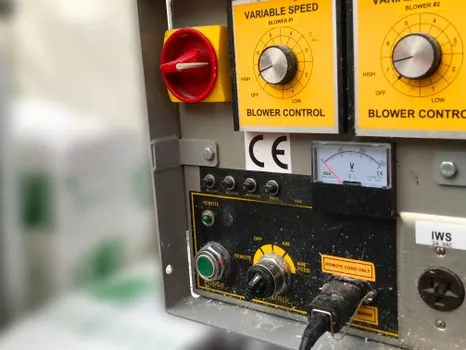
Five parameters cover most pressure switch RFQs: pressure range with proof and burst margins, switch differential (fixed or adjustable), media compatibility (water, oil, air, corrosive gas, steam), electrical rating (contact form, VA, inductive vs resistive load), and enclosure or hazardous-area certification [S1]. For process plants, materials of construction must align with the wetted media; for water and HVAC OEM builds, NSF or potable-water approvals often drive supplier choice over raw pressure rating [S3][S6].
Buyers specifying a digital unit should also confirm display type, output type (relay, transistor, 4–20 mA), and whether the controller accepts a remote setpoint input, since Chinese OEM digital switches in 2026 are typically sold as fixed-configuration catalog items rather than field-configurable modules [S3]. Buyers specifying a MIL-Spec unit should expect to work the supplier on shock, vibration, sealing, and electrical arrangement together, since the 222 and 444 series at Detroit Switch are platform-based rather than fixed part numbers [S4].
Reliability, Maintenance, and Common Failure Modes
Electromechanical switches are advertised as maintenance-free when built on a Dual-Snap belleville disc-spring principle, because the snap-action contact transfer avoids the slow creep and contact wear of a slow-make design [S2]. SOR's May 2026 guidance frames the long-term reliability question around inspection of setpoint drift, contact wear, and leak-tightness of the process connection, rather than recommending scheduled replacement of the internal mechanism [S7].
Common field failures across all three build classes are setpoint drift from diaphragm fatigue, contact welding on inductive loads without adequate suppressors, and process-side leakage at threaded connections subjected to thermal cycling [S1][S7]. For adjacent process-control hardware decisions, the pressure sensor supplier map walks through the same qualification logic from the transmitter side, and the safety relief valve classifications piece covers the overpressure protection that often pairs with a switch in a pump or compressor skid.
Two trackable signals for the next sourcing cycle: the 2026 Anfield Sensors OEM/ODM expansion noted in the Czshine Motor top-10 buying guide, and the continued Dual-Snap-based catalog releases from CCS targeting aerospace, defense, and energy [S2][S6]. A third signal worth monitoring is whether US MIL-Spec suppliers consolidate around the 222/444 platform pattern Detroit Switch is pushing, since that would simplify cross-vendor qualification for naval and military programs [S4].
For component-level specifications, see construction machinery and equipment.