
A safety relief valve is an automatic pressure-actuated device that opens at a predetermined set pressure to discharge fluid and recloses when system pressure returns below the reseat point, serving as the last line of defense on boilers, pressure vessels, and pipelines [S3].
Engineers choose from three primary families (relief valve, safety valve, safety relief valve) and five common sub-types (conventional spring-loaded, balanced spring-loaded, pilot-operated, power-actuated, temperature-pressure actuated), with selection driven by fluid phase, set pressure, and backpressure tolerance [S2].
Safety Valve vs Relief Valve vs Safety Relief Valve
The defining distinction between a safety valve and a relief valve is the opening characteristic, which is dictated by fluid compressibility [S1]. A safety valve is designed to open suddenly and release a large amount of fluid immediately, typically for gases or steam, using a pop action where escaping gas expands against a larger huddling-chamber area and forces the disc fully open almost instantly [S1][S4]. A relief valve opens gradually and proportionally to the pressure rise, since incompressible liquids do not expand on discharge, and is actuated by upstream pressure on a spring-loaded disc [S1][S2].
A safety relief valve combines both behaviors in a single body and can be specified for either liquid or gas service, which is why it is the most common generic overpressure device called out in the field [S2]. For a deeper dive on adjacent pressure-control hardware, see the pressure reducing valve selection map, which covers the setpoint-and-acceptance side of the same protection loop.
Conventional, Balanced, Pilot-Operated, Power-Actuated, and Temperature-Pressure Designs
Conventional spring-loaded valves expose the bonnet, spring, and guide to the released fluid; with a vented bonnet, relief-system backpressure decreases the specified set pressure, while an internally vented bonnet increases it, so this design is generally used in noncorrosive service and where backpressure stays below roughly 10% of set pressure [S2]. Balanced spring-loaded valves add a bellows or balance piston to isolate the bonnet area from backpressure, restoring set-pressure accuracy when discharge piping builds up superimposed backpressure [S2].
Pilot-operated safety relief valves (POSRV) use a small pilot to sense system pressure and admit process fluid above the main disc piston, allowing large orifice areas at moderate set pressures and reducing the incident shock of full-lift opening; they are the dominant choice for high-capacity gas service [S2][S3]. Power-actuated valves add an external actuator (pneumatic, electric, or hydraulic) to force open on command and are used in systems that need a fast external trip independent of the spring setpoint. Temperature-pressure actuated valves combine a thermal element with a pressure spring, so they trip on either an over-temperature or an over-pressure signal, and are the standard choice on hot water heaters and low-pressure hot-water boilers [S3]. For sensors that feed into these protection loops, the pressure sensor suppliers 2026 spec map tracks the upstream instrumentation layer.
Lift Categories, Orifice Sizing, and Set-Pressure Behavior
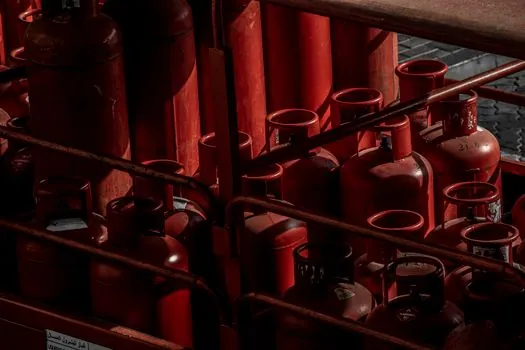
Safety valves for compressible service are sub-classified by lift ratio: low-lift lifts roughly 1/24 of the bore diameter, high-lift lifts 1/12, and full-lift lifts at least 1/4 of the bore, with full-lift designs delivering the highest certified capacity and being the default for steam service [S2]. Set pressure is the inlet static pressure at which the valve first lifts, overpressure is the additional pressure above set needed to reach full discharge capacity, blowdown is the difference between set and reseat pressure (typically expressed as a percentage of set pressure), and accumulation is the pressure rise allowed in the protected vessel during discharge, capped by the governing code [S4].
On the sizing and acceptance side, the pressure reducing valve installation and acceptance test guide walks through the setpoint-and-test sequence that pairs with any relief-valve sizing calculation.
Pressure, Temperature, Vacuum, and Combination Designs
Beyond the spring-versus-pilot split, safety relief devices are also classified by the parameter they sense [S3]. Pressure relief valves trip on overpressure alone and are the most common type. Temperature relief valves trip on a thermal element at a fixed temperature, typically used on water heaters. Vacuum relief valves admit air when internal pressure falls below atmospheric, protecting storage tanks from collapse. Combination relief valves integrate pressure and temperature protection in one body, used where both failure modes are credible on a hot-water storage vessel. Pilot-operated relief valves use a small pilot for precise control, while rupture discs are non-reclosing thin-metal devices that burst at a calibrated pressure and are often installed upstream of a relief valve to isolate corrosive service or to handle very high capacities that exceed a single valve [S3][S7]. Relief valves with accumulators store excess hydraulic fluid in a gas-charged bladder and return it to the circuit on pressure decay, which is the standard fix for hydraulic hammer in mobile equipment [S3].
Backpressure, Bellows, and Superimposed vs Built-Up Effects
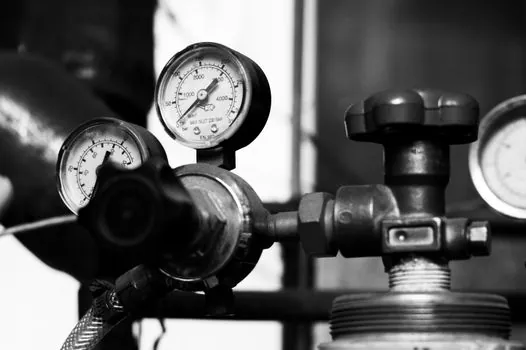
Backpressure is the pressure at the valve outlet and is split into two types that behave differently: superimposed backpressure is already present in the discharge header before the valve opens and acts on the disc like an extra inlet pressure, while built-up backpressure is generated by the valve's own discharge flowing through the outlet piping [S4]. Ignoring this is a common cause of valve instability and chatter, and the standard engineering response is to either (a) keep total backpressure below roughly 10% of set pressure, allowing a conventional spring-loaded design, or (b) specify a balanced-bellows or pilot-operated design that compensates for the outlet pressure [S2][S4].
Direct-Acting, Piston, and Diaphragm Construction Families
On the sanitary and low-pressure side, three basic construction families cover most clean-service skids [S5]. The direct-acting (or acting-type) pressure relief valve uses a flat diaphragm or bellows, has an independent structure with no external sensor line, is the smallest and most economical of the three, is sized for medium-to-low flow, and typically holds accuracy of around plus or minus 10% of the downstream set point. The piston-type pressure relief valve combines a pilot valve and a main valve in one body, where pilot exhaust pressure acts on a piston to open the main valve using inlet pressure, so at the same pipe size it handles higher flow than a direct-acting design. The diaphragm-type pressure relief valve uses a flexible diaphragm to isolate the spring and upper works from the process fluid, which is the standard pick for sanitary, pharmaceutical, and corrosive duties where bonnet contamination cannot be tolerated [S5].
Standards, Application Fit, and Sourcing Signals
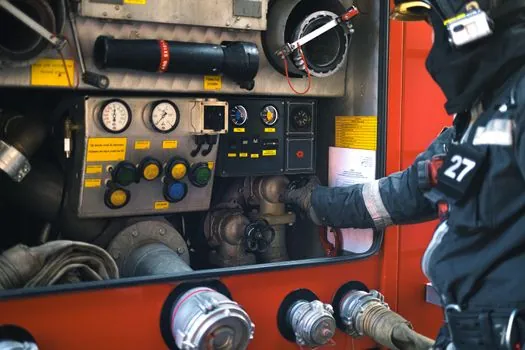
Overpressure protection devices are governed by ASME Section I (power boilers) and ASME Section VIII (unfired pressure vessels), which cap allowable accumulation during discharge and define the set-pressure margin above maximum allowable working pressure (MAWP) [S4]. Relief valves carry the broader term pressure relief device in API 520 / API 521 sizing practice, while safety valves and safety relief valves are the terms used in the ASME code. The three families map onto application fit as follows: relief valves for incompressible liquid service (hydraulic, pump discharge, liquid ammonia), safety valves for compressible gas and steam service (boiler drum, steam header, compressor discharge), and safety relief valves for dual-phase or where the fluid phase can swing between liquid and gas during a relief event (refinery columns, hydrocarbon storage, two-phase reactor dumps) [S1][S2][S3].
Trackable signals for the next spec cycle: (1) the growing share of pilot-operated designs in LNG and large-ammonia service as set pressures and required capacities climb, and (2) the migration of balanced-bellows designs into low-pressure steam skid packages where condensate carryover and discharge-piping layouts routinely push built-up backpressure above the conventional-design ceiling. For valve-casting sourcing context that affects both relief and reducing valve bodies, the cold-box core shooter selection for pump and valve castings piece covers the foundry-side specification drivers.
Detailed specification references: safety relief valve, construction machinery and equipment, and lamps and light fittings.