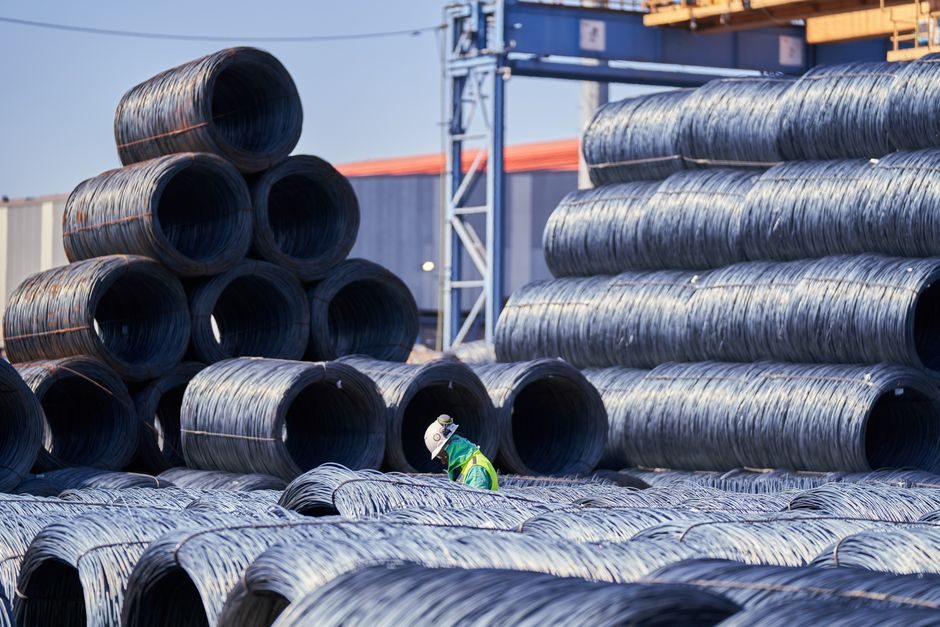
Buyers sourcing prestressing strand for post-tensioned slabs, bridge girders or wind-turbine foundations in 2026 should anchor the spec on ASTM A1061/A1061M-16 testing and EN 10369-1 sheathed-strand requirements before price negotiations begin [S1][S2].
The dominant construction is the seven-wire stress-relieved strand, commonly produced in 9.53 mm (3/8"), 12.7 mm (1/2"), 15.24 mm (0.6") and 17.8 mm (0.7") nominal diameters, with 1860 MPa tensile grade as the de facto international baseline for both bridge and building post-tensioning [S1]. EN 10369-1:2019-07 covers protected and sheathed variants (grease-filled HDPE sheathing) used in unbonded and external tendons, and lists the general requirements the European supply chain continues to ship against [S2].
Specification Stack: Diameter, Grade, Relaxation Class
ASTM A1061/A1061M-16 is the test-methods standard behind the property sheet: breaking load, 1% elongation, yield at 1% extension, and the relaxation test that separates "low-relaxation" (Class B, typically ≤2.5% after 1000 h at 0.7 Fu) from ordinary-relaxation strand [S1]. The same standard covers the full 7-wire geometry family used in North American PT design, including the 15.24 mm 1860 MPa grade that maps to the legacy ASTM A416 grade 270 strand that most US precast yards still call out on drawings [S1].
European tenders default to EN 10138 for the base strand, with EN 10369-1 adding the sheathing, grease, and corrosion-protection rules for protected tendons [S2][S3]. Buyers comparing offers across continents should ask that each line of the mill cert be tied to the relevant A1061 test method for the property reported, since the standard covers breaking load, proof load, elongation at fracture, and stress relaxation without itself quantifying acceptance criteria [S1].
Selection Criteria: Bonded vs Unbonded vs External
For bonded (grouted) post-tensioning in bridge boxes and high-rise flat plates, bare seven-wire strand in 12.7 mm or 15.24 mm at 1860 MPa remains the default — the sheathing is stripped at the anchor and the duct is cement-grouted after stressing. For unbonded slab tendons, EN 10369-1 sheathed strand (typically 12.7 mm or 15.7 mm with ≥1.0 mm HDPE sheath, grease filling ≥36 g/m for 15.7 mm) is the standard ask on European jobs [S2].
For external, restressable, and replaceable tendons — the geometry used in segmental bridge boxes and wind-tower anchors — monostrand 15.7 mm or 17.8 mm with double HDPE sheathing and wax filler is becoming the de facto spec, since EN 10369-1 defines the corrosion-fatigue envelope these tendons must clear over their 50-to-100-year design life [S2]. Galvanized strand remains a niche option, specified where stray-current or chloride exposure outweighs the 5-to-10% cost premium and the relaxation penalty that the zinc coating introduces.
Material and Process Discipline at the Mill
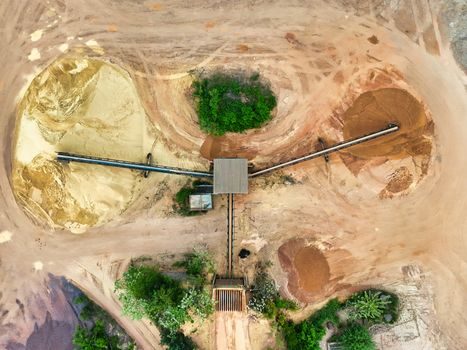
Yard-level quality starts with wire rod: high-carbon (0.78-0.92% C) Si-Mn-Cr steel drawn to 4.0-5.0 mm wires, then stranded and stress-relieved at 380-420 °C under tension to lock in the low-relaxation microstructure [S1].
Coil handling is part of the spec: a 12.7 mm 1860 MPa coil weighs roughly 2,400-2,700 kg and has an inner diameter of 0.9-1.1 m, which sets the re-spooling equipment the yard must run. A1061/A1061M-16 covers the strand sample length, the chuck system, and the loading rate for the breaking-load and elongation tests, so any mill certificate that does not reference the A1061 method numbers on the data lines is incomplete [S1].
Comparison of Strand Types Against Four Decision Criteria
The four strand geometries buyers see most often in 2026 RFQs line up as follows on the criteria that actually move the order: [S1]
Bare 7-wire 12.7 mm 1860 MPa — baseline cost per kN, lowest unit price, suited to bonded and grouted internal tendons in cast-in-place concrete. Unbonded 7-wire 15.7 mm EN 10369-1 — ~8-15% cost premium over bare, fastest install for slab PT, full corrosion protection inside the sheath. External 7-wire 15.7-17.8 mm double-sheathed — premium 20-35% above bare, the only option for restressable/replaceable tendons and aggressive chloride exposure. Galvanized 7-wire 12.7-15.2 mm — niche, used where stray DC current or soil-resistivity conditions disqualify the HDPE-sheath option, accepts a relaxation penalty.
On corrosion protection: EN 10369-1 sheathed strand carries an HDPE sheath ≥1.0 mm, grease fill ≥36 g/m (15.7 mm), leak-tested before delivery [S2]. On unit capacity: 15.24 mm 1860 MPa minimum breaking load 260.7 kN; 12.7 mm 1860 MPa minimum 183.7 kN per ASTM A416/A1061 testing [S1].
Who This Is (and Is Not) For
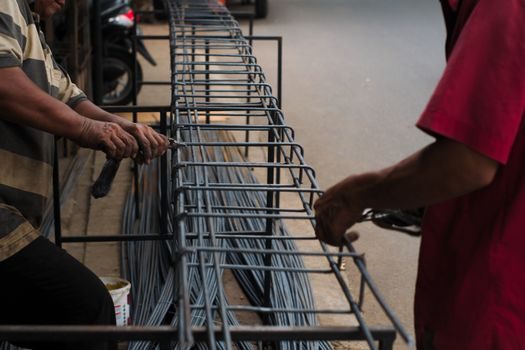
This buying lane is for post-tensioning subcontractors, precast yard buyers, and bridge superstructure procurement engineers specifying seven-wire stress-relieved strand under A1061/A1061M-16 testing and EN 10369-1 sheathed products [S1][S2]. It is not the right product family for non-prestressed concrete reinforcement: conventional rebar (BS 4449, ASTM A615) and steel strand for non-structural lifting are governed by different standards and use different wire counts and strengths.
It is also not the right lane for buyers chasing the cheapest coil they can land on a truck. Strand failure modes — wire breaks at the chuck, relaxation loss above 3%, delayed brittle fracture from Cu-Ni-Cr residue — surface within months of stressing and are expensive to remediate once the tendon is grouted. A1061 test data on the mill cert is the cheapest insurance in the package [S1].
Use Cases That Move the Specification
Post-tensioned building slabs (unbonded, 12.7-15.7 mm, EN 10369-1) dominate volume for commercial high-rise; bridge box girders and segmental piers (bonded, 12.7-15.24 mm) drive the bonded share; LNG and nuclear containments (bonded, 15.24-17.8 mm) require the highest ductility class and full traceability; wind-turbine foundations and anchor cages (galvanized or sheathed external) round out the demand mix in 2026 [S1][S2].
That ratio is worth keeping on the buyer's cost sheet when comparing rebar and rebar-processing equipment investments for the same project; for context, rebar cutter 2026 price and cost guide walks the same per-tonne and per-piece levers on the cutting side of the yard.
Limitations, Failure Modes, Inspection Levers
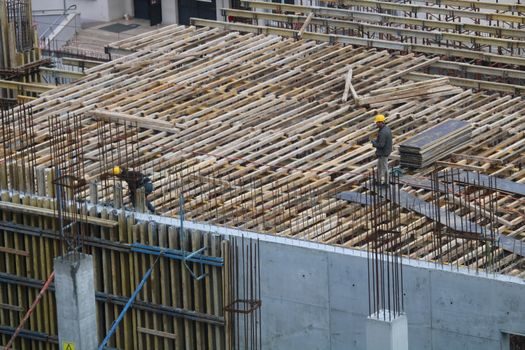
Low-relaxation strand that fails the A1061 1000 h relaxation test at values above 2.5% will lose more prestress in service than the design assumed — a 1% extra relaxation on a slab tendon can drop the effective prestress 3-5% over the design life and crack the slab earlier than predicted [S1]. Buyers should require the actual 1000 h test value on the cert, not a class declaration.
Delayed brittle fracture is the high-consequence failure mode: residual Cu, Ni, Cr above the A1061 envelope, or hydrogen pickup from acid cleaning at the plant, can trigger sudden wire breaks inside the sheath months after stressing [S1]. EN 10369-1 closes this gap on the sheathing side by requiring leak-tested, grease-filled sheaths that block moisture and oxygen at the wire surface [S2]. On the receiving dock, three practical levers: (1) verify the A1061 test method numbers on each coil's mill cert, (2) inspect the coil for white rust, kinks, and crushed wraps, (3) weigh the coil — a 12.7 mm 1860 MPa coil under 2,300 kg almost certainly is short-length, and strand supplied in short lengths is harder to feed through the stressing jack.
Trackable signals to watch over the next reporting window: A1061/A1061M revision activity covering relaxation test duration and the 0.1% proof-load protocol, and EN 10369 series updates for higher-pressure grease injection (≥48 g/m) on external tendons. Both show up in mill and linear guide sourcing discussions for the same projects, but only the strand side carries the corrosion-fatigue consequences.