Wholesale 7-wire PC strand is posted on Made-in-China.com at US$430.00–650.00 per tonne with a 1-tonne MOQ, with Tianjin RuiTong Iron & Steel Co., LTD listed as a Diamond Member Audited Supplier out of Tianjin [S1]. The price band is tight across grades (typically 1860 MPa low-relaxation) and diameters (9.3 / 12.7 / 15.2 / 15.7 mm), reflecting the narrow metallurgical window of cold-drawn, stress-relieved wire rope.
Supply is concentrated in three Chinese clusters: Tianjin/Hebei (wire rod + stranding), Zhejiang/Ningbo (anchorage and post-tensioning hardware), and Shandong (galvanized duct and flat duct accessories). Auxiliary components are quoted separately — anchors at US$1.00–1.50 per piece at 1,000-piece MOQ from Ningbo Xlin Post Tensioning and Handan Xingming Fastener [S2], and galvanized/corrugated post-tension ducts at US$0.58–0.68 per metre at 1,000-metre MOQ from JNFLEX (Changzhou) [S4].
Standards That Bind the Quote: ASTM A1061 and JT/T 329-2010
ASTM A1061/A1061M-16 is the Standard Test Methods for Testing Multi-Wire Steel Prestressing Strand and is the go-to reference for breaking load, yield at 1% extension, elongation, and relaxation testing on 2-, 3-, and 7-wire strand [S6]. Domestic Chinese bridge tenders typically overlay GB/T 5224 (strand) and JT/T 329-2010 — Prestressing Strand Anchorage, Grip and Coupler for Highway Bridge — which came into force on 2011-03-01 and runs 30 pages covering wedge anchors, bearing plates, and couplers used with 15.2 mm and 15.7 mm strand [S3].
On the cross-border side, EXA Steel Group markets PC strand for bare prestressing, plastic-laminated post-tension, and high-tensile grades out of its own facility, with multi-year export experience and kiloton annual output published on its corporate page [S5]. The takeaway: any quotation below US$430/tonne is almost certainly not compliant with A1061 testing and should trigger a mill-certificate and relaxation-curve audit before order release.
Three Options on the Maker Map, Side by Side
Buyers in 2026 typically choose between three channels. (1) Direct mill — Tianjin RuiTong and similar Diamond Members — best landed cost per tonne, 1-tonne MOQ, requires in-house QC against A1061 [S1]. (2) Trading house / system integrator — Shaanxi Zhongtuo and Liuzhou Xuanqiao package the jack, anchor, duct, and strand as a turnkey prestressing system in the US$1,000–100,000 per-piece band [S7]. (3) Specialist exporter — EXA Steel — offers pre-certified coils and strand packs for post-tension slab and ground-anchor work [S5].
Comparison on the four criteria that actually move a PO: price per tonne is lowest at the mill (US$430–650 [S1]); lead time is shortest at trading houses that hold inventory of anchors (US$1.00–1.50/pc [S2]) and ducts (US$0.58–0.68/m [S4]); documentation depth (A1061 test report + GB/T 5224 mill cert) is strongest at direct mills; engineering support (jack calibration, duct layout) is strongest at system integrators. For highway-bridge tenders under JT/T 329-2010 anchorage rules [S3], mill sourcing is usually mandatory.
Component Pricing Around the Strand Itself
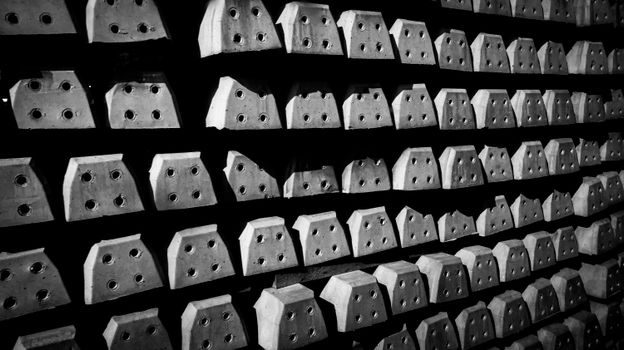
The strand is roughly 60–70% of a post-tension kit's material cost; the rest sits in the anchor, duct, and grout hardware. Anchors from Ningbo Xlin and Handan Xingming run US$1.00–1.50 per piece at 1,000-piece MOQ, with Qingdao Laurent New Materials pricing flat and multi-plane anchors in the US$0.10–0.50 per-piece band at 10-piece MOQ for project-trial orders [S2].
Ducts are quoted by JNFLEX at US$0.58–0.68 per metre for both round galvanized and flat 70 mm configurations used in slab and beam post-tensioning [S4]. For context on how steel and component pricing moves in 2026, see the steel plate supplier map and grade bands and the crimp-tooling connector bands — both cluster in the same Tianjin/Hebei corridor and move on the same wire-rod cycle. Engineering background on the product family is in the prestressing strand encyclopedia entry and the broader steel strand reference.
Who This Channel Is For, and Who It Is Not
Mill-direct Tianjin/Hebei sourcing pays off for buyers pulling 50+ tonnes per month who can hold A1061 test reports [S6] and JT/T 329-2010 [S3] paperwork in their own QC file. Trading houses make sense for one-off bridge pours, retrofit post-tensioning, and ground anchors under 10 tonnes, where the system-integrator jack-and-pump package (US$4,000 per set from Liuzhou Xuanqiao [S7]) is cheaper than renting equipment locally. Specialist exporters such as EXA suit buyers who need pre-shipment witnessed stress-relaxation tests and English-language mill certificates [S5].
This channel is a poor fit for buyers who need 1,860 MPa grade strand with epoxy coating for marine piers — most Tianjin mills stock bare or galvanized, not full epoxy-filled, and lead time on coated product stretches into 8–10 weeks. It is also a poor fit for ASTM A416 Grade 270 strand in non-standard coil diameters (18 mm and above); volume there is too thin to clear the 1-tonne MOQ at competitive price.
Limitations, Failure Modes and QC Traps
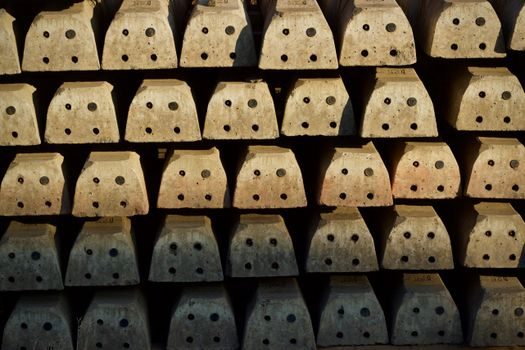
Low-relaxation strand is named for ≤2.5% relaxation after 1,000 hours at 70% GUTS — a property the mill proves by test, not by certificate, and a frequent rejection point under third-party inspection [S6]. Wedge-anchor assemblies under JT/T 329-2010 must pass anchor-efficiency factor (ηa) ≥ 0.95 and grip-efficiency (ηg) ≥ 0.97 on the strand they ship with, not on a generic 15.2 mm [S3]. Mixing strand from one coil and anchors from another batch without re-test is a common audit finding on Chinese bridge sites.
Galvanized duct at US$0.58–0.68/m [S4] must meet the corrugation profile and wall thickness called in the project spec; thin-wall duct collapses under grout pressure and is the single most common post-tension defect. Pull-box and vent-tube detailing is not covered by the duct line item and must be added to the BOM before RFQ release, or the duct supplier will substitute standard fittings.
Sourcing Workflow That Survives a Mill Audit
Step 1: lock the grade and standard on the RFQ — 1860 MPa, 7-wire, 15.2 mm, low-relaxation to GB/T 5224 with A1061/A1061M-16 test reports [S6]. Step 2: ask for a mill certificate with heat number, cast chemistry, and 1,000-hour relaxation curve, not a generic COA. Step 3: match the anchor supplier to the strand supplier's heat-cert — JT/T 329-2010 [S3] anchor-anchor-anchor efficiency tests are tied to a specific strand batch. Step 4: confirm duct and grout vent accessories on the same PO so the duct vendor [S4] cannot swap fittings.
Trackable signal for the next 90 days: Chinese mill wire-rod prices (Shihezi and Tangshan billet) tend to move strand FOB inside 4–6 weeks; a move of more than ±US$30/tonne on the Made-in-China listing [S1] is the leading edge of a re-quote window. Second signal: anchor and duct vendors [S2][S4] typically lag strand moves by 2–3 weeks, so a strand drop now is an anchor-drop RFQ opportunity in Q3 2026.
For component-level specifications, see pressure transmitter.