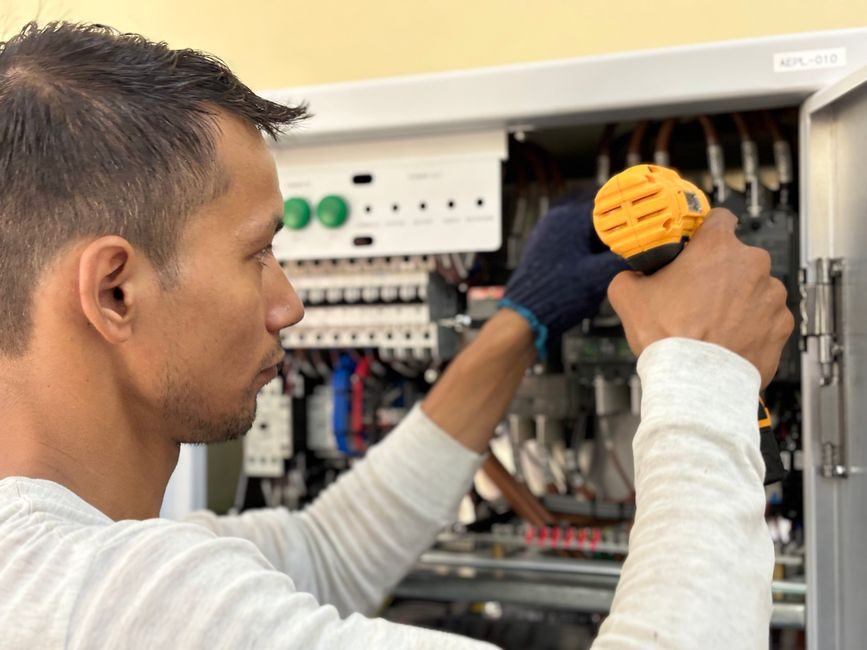
A standard PLC is a digitally operating electronic apparatus that uses a programmable memory to implement logic, sequencing, timing, counting and arithmetic over digital or analog I/O, the definition that the IEC finalised in 1987 and that subsequent literature still quotes verbatim [S6]. A Safety PLC is the same physical form factor, but with hardware and firmware diversity, dual-channel cross-checking, and certified diagnostic coverage that lets it execute a Safety Instrumented Function (SIF) up to a defined Safety Integrity Level (SIL) under IEC 61508 and IEC 61511.
For spec engineers, the difference is not marketing copy: it is whether the controller is allowed to carry a risk-reduction credit on a Safety Instrumented Function at all. Any process or machine hazard that is being reduced to a tolerable level by an E/E/PE system needs a safety-rated controller; a standard PLC cannot legally be used to claim that credit in most jurisdictions.
Architectural Differences: Single Channel vs Redundant Diverse Core
A general-purpose PLC typically runs one CPU with one set of I/O scan logic against a single program image, with internal self-tests that are sufficient for non-safety control but not for SIL claims [S1][S3]. A Safety PLC adds a second, diverse processor running the same logic in parallel; the two cores compare results every cycle, and a discrepancy forces the system to a deterministic safe state within a defined fault-tolerant time.
Safety PLCs also build diagnostics into the I/O layer: each input and output is read back internally, line faults (short, open, cross-circuit) are detected on the field wiring, and pulse-test patterns reject stuck contacts [S2]. On a standard PLC, those same diagnostics either do not exist or are implemented in application code without any certified coverage factor, which is why a SIL calculation cannot credit a standard CPU even if a clever programmer writes redundant logic in the user task.
Where Each Type Is Specified
A standard PLC fits non-safety control loops: a packaging line's recipe sequencing, an HVAC unit's duty rotation, a tank-farm pump staging, a building-management schedule. These are productivity and quality functions, and they are governed by general-purpose industrial standards rather than functional-safety ones. [S1]
A Safety PLC is required wherever an identified hazard analysis has assigned a SIF to the controller. Typical examples: emergency stop on a safety fence around a robot cell, over-speed trip on a turbine, high-high level shutdown on a hydrocarbon vessel, burner management flame-failure logic, fire and gas detection, and the interlock chain on a press or guarded machine. The same cabinet will often contain a standard PLC running the process and a Safety PLC running the protection function, with the two exchanging data over industrial Ethernet but kept logically independent.
Selection Criteria: SIL, Diagnostics, Wiring and Cost
First screen: is the function a SIF at all? If the answer is no, do not specify a Safety PLC; the cost premium (commonly 3 to 6 times a comparable standard controller, depending on I/O count) is wasted and the supply chain for spares becomes narrower. If the answer is yes, the next screen is the target SIL: SIL 2 is the most common demand rate, achievable by most modern safety controllers with appropriate proof-test intervals; SIL 3 is the harder ceiling and usually forces a tighter architectural constraint, more diagnostics and stricter environmental limits. [S2]
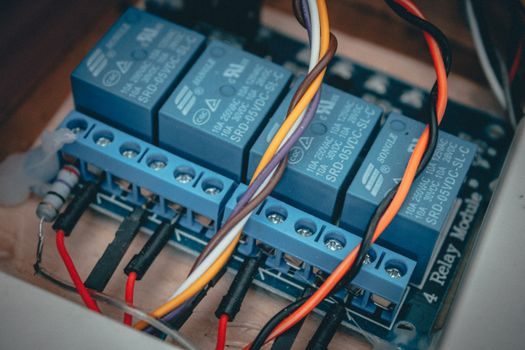
Then look at the I/O topology. Safety PLCs support a mix of standard I/O and safety I/O, and the safety channels are usually rated for specific sensor families: 24 V DC digital inputs that accept OSSDs from light curtains, NAMUR-type inputs for safety barrier interfaces, or analog inputs for continuous functions like level or position. A common mistake is to under-specify the number of safety I/O versus standard I/O; safety channels cost more per point, and once a function is in safety, the field device on the other side of the wiring is part of the SIL budget too.
Programming is a fourth criterion. Standard PLCs are programmed in the IEC 61131-3 languages (Ladder Diagram, Function Block Diagram, Structured Text, Instruction List, Sequential Function Chart) under any vendor's toolchain [S4][S6]. Safety PLCs restrict the language set (typically LD, FBD, ST only) and add certified function blocks: certified emergency-stop block, certified muting block, certified two-hand control block. The application developer writes a safety application in a slightly different editor, signs it off, and the compiler emits a checksum and a version stamp that the runtime verifies before execution. This added toolchain is non-trivial; plan for it in the engineering hours.
Comparison: Standard PLC vs Safety PLC Across Four Decision Criteria
Across the four criteria that matter at purchase, the two classes line up as follows. (1) Functional-safety credit: a standard PLC provides none, a Safety PLC is certified to IEC 61508 up to SIL 3 and project-applicable to IEC 61511 / IEC 62061 / ISO 13849-1 PL e. (2) Hardware architecture: single CPU, single I/O image versus dual diverse processors with continuous cross-check and certified I/O diagnostics. (3) Application scope: process, motion, and machine productivity logic versus emergency stop, guard interlock, fire and gas, burner management, over-speed and level / pressure / temperature trip functions. (4) Engineering cost and lead time: lower unit cost and faster commissioning for the standard PLC, with a typical safety variant running higher unit cost, a longer quote cycle, and longer safety-lifecycle documentation. [S3]
The decision tree is therefore narrow. Start from the hazard analysis: does any risk reduction depend on this controller? If no, spec the standard PLC. If yes, the question shifts to "which Safety PLC has the SIL, the I/O mix, the fieldbus profile and the programming environment that fit the project?" not whether to buy one at all.
Limits, Failure Modes and Common Mistakes

Safety PLCs do not eliminate the need for a hazard analysis; they execute the SIFs the analysis defines. They also do not remove the proof-test obligation: a SIL 2 / SIL 3 SIF still requires periodic functional testing, and the proof-test interval enters the PFDavg calculation directly. A common engineering error is to assume that "Safety PLC" is a one-time insurance policy and to skip the proof test on long-running plant, which silently degrades the achieved SIL over years of service. [S4]
Another frequent error is to mix safety and non-safety signals on the same module without keeping the safety function independent. The certified safety channels must remain in the safety domain end-to-end, including routing, segregation and labelling; bridging them to standard control through hand-shake bits is acceptable, but the bridge itself is a defined interface in the safety manual and must be respected. Similarly, do not extend the safety function through a wireless or non-certified gateway: SIL does not transfer through an opaque link.
Standards, Documentation and Sourcing
The standards stack is well-defined and worth naming precisely. IEC 61508 is the umbrella functional-safety standard for electrical / electronic / programmable electronic safety-related systems; IEC 61511 is the process-sector application of IEC 61508 and is the standard a refinery, chemical plant or upstream operator will cite; IEC 62061 is the machinery-sector equivalent and ISO 13849-1 is the alternative performance-level (PL a to PL e) approach for hydraulic, pneumatic and mechanical safety functions on machines. On the operator side, an end user running hazardous-area machinery will additionally demand ATEX or IECEx equipment-grouping compliance for the controller and its I/O when installed in a Zone 1 or Zone 2 location; the Safety PLC itself is mounted in the safe area, but its I/O channels and field wiring must be evaluated against the area classification. [S5]
For buyers, the practical sourcing checklist is: confirm the SIL certificate scope and the issuing notified body; confirm the safety I/O count, mix (digital / analog / relay) and supported sensor families; confirm the programming toolchain and the certified library version that ships with it; confirm the proof-test interval assumed in the manufacturer's PFDavg / PFH data; and confirm the spare-parts commitment, because a Safety PLC is normally expected to be supported for the installed lifetime of the process unit, which can be 15 to 25 years. Standard PLC buyers, by contrast, can take a more transactional view because the I/O density, scan time, memory, protocol fit and price band dominate the decision, as laid out in a separate PLC selection criteria reference for industrial buyers.
Trackable signals for the rest of 2026: new SIL 3 I/O modules with native OPC UA Pub/Sub on the safety bus, more Safety PLC vendors offering pre-engineered libraries for burner management, and an ongoing shift toward integrated standard-plus-safety controllers in a single backplane to cut cabinet footprint. None of these change the fundamental split: a standard PLC runs the process, a Safety PLC protects it, and the specifier's job is to keep the two domains clean.