EN 388: 2016 + A1: 2018 codifies mechanical protection for protective gloves using a four-digit pictogram (e.g. 4X42DP) covering abrasion, cut, tear, and puncture, with EN ISO 13997 TDM cut scores expressed A through F [S3].
Procurement teams specifying gloves for warehouse operations should treat EN 388 plus EN 511 (cold) and EN 374 (chemical) as the baseline triplet, then add cut-resistance, touchscreen, and food-contact gates per job function rather than issuing one SKU facility-wide [S2].
EN 388 Rating Decoded: What Each Digit and Letter Means
An EN 388 shield followed by e.g. 4X42DP is a six-position string: A = abrasion cycles (Level 1: 100, Level 2: 500, Level 3: 2,000, Level 4: 8,000); B = Coupe-test cut index (Level 1: 1.2 through Level 5: 20.0, or X if not rated); C = tear in newtons (10 / 25 / 50 / 75); D = puncture in newtons (20 / 60 / 100 / 150); E = EN ISO 13997 TDM cut in newtons lettered A through F; F = optional P for passed impact protection [S3].
When both cut ratings appear, the A-F TDM result is the more reliable reference for modern high-performance fibres, because the rotating-blade Coupe test loses accuracy as the blade dulls on engineered yarns [S3]. For warehouse operations spanning automotive-component kitting, general material handling, and pallet work, Ansell groups these as medium-risk and recommends ISO C-D or Coupe 3-4 as the balance point between cut protection and dexterity [S3].
Matching Glove Construction to Warehouse Job Functions
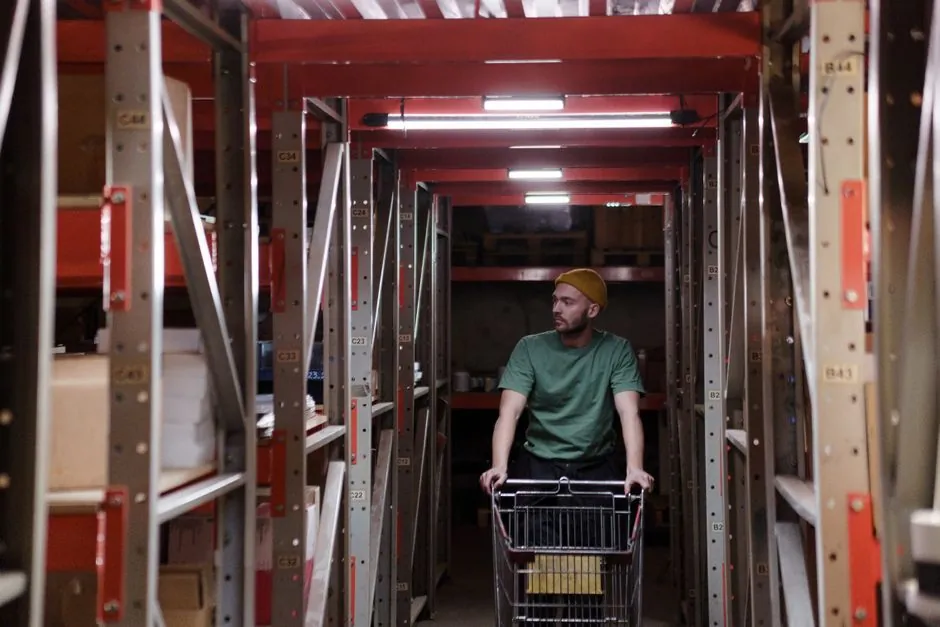
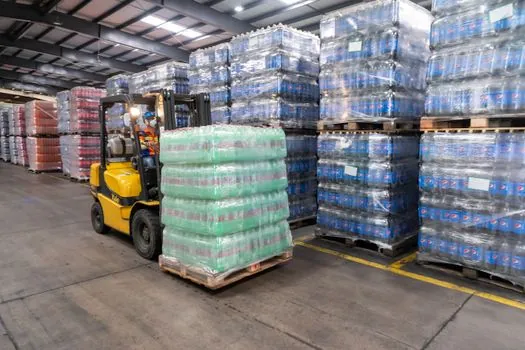
A picker handling frozen cartons, a forklift operator gripping a steering tiller in a -20 °C dock, and a maintenance tech debanding a steel-strapped pallet need three different constructions; buying one model facility-wide is a known failure mode [S2]. Document freezer temperature, exposure duration, moisture load, grip surfaces, scanner or touchscreen use, sharp-edge contact, and food-contact status before shortlisting materials [S2].
For case picking and frozen-food handling, evaluate palm grip on the actual packaging (condensation, frost, shrink-film, and wet cardboard each behave differently), and verify food-contact documentation when gloves may touch unpackaged product [S2]. For forklift, pallet-jack, and equipment operation, check finger mobility around controls, palm grip on cold or smooth surfaces, cuff interference with sleeves, and whether insulation compresses after repeated flexing; touchscreen claims should be validated on the exact WMS terminals in use, because wet or frosted screens shift capacitance and break the conductive fingertip pattern [S2].
Cut and Abrasion Gates for General Warehouse Picking
Medium-risk warehouse work aligns to EN 388 ISO C-D or Coupe 3-4 per current OEM guidance, while high-risk sheet-metal or glass-handling tasks step up to ISO E-F [S3]. Light-duty assembly and packaging can drop to ISO A-B or Coupe 1-2, where flexibility and dexterity dominate the spec sheet [S3].
For abrasion, a Level 3 (2,000 cycles) or Level 4 (8,000 cycles) palm coating is the practical floor for carton handling across a multi-shift week; Level 2 (500 cycles) typically wears through inside one shift on concrete-edge pallet contact. Pair the EN 388 string with an EN 388: 2016 + A1: 2018 stamp date on the technical file, since pre-2016 stock using only the Coupe value can hide a real TDM shortfall.
Cold-Storage and Freezer-Selection Constraints
EN 511 governs convective cold, contact cold, and water permeability for gloves used in refrigerated and frozen warehouses; pick a model whose contact-cold grade survives the coldest rack or evaporator coil the worker can actually touch, not just the ambient air temperature [S2]. NIOSH guidance reinforces three engineering points: protect the hands, keep the gloves dry (wet fabric conducts heat roughly 25x faster than dry loft), and never let bare skin contact cold metal surfaces, which drive heat away by conduction far faster than still air [S2].
Highly efficient, thin insulation outperforms bulky loft on dexterity, so a -30 °C picker can usually tolerate a thinner, higher-loft-per-cm glove than a -10 °C dock worker, provided the palm coating stays flexible at the operating temperature. For mixed-zone workers moving between ambient and freezer aisles, stage two glove weights at the dock curtain rather than over- or under-protecting for the dominant zone.
Cut-Resistant Fibre Selection and Misconceptions
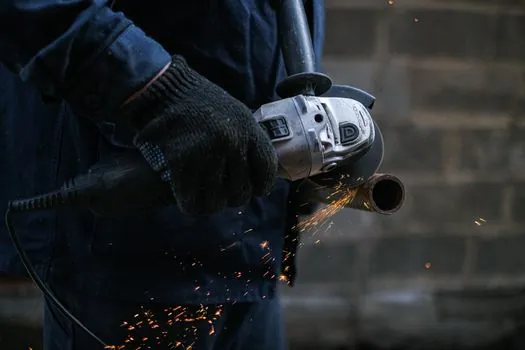
Stainless-steel mesh gloves are not a universal upgrade: source guidance explicitly notes they offer only limited protection and on high-speed rotating blades they function as a short-duration barrier that fails if the machine does not stop in time [S1]. That makes mesh suitable for fixed-blade cutting and some deboning tasks, not for general warehouse picking, conveyor service, or pallet-bander maintenance where a high-cut HPPE, aramid, or steel-core engineered yarn at EN ISO 13997 level C-E is the safer default [S1][S3].
ANSI/ISEA 105 cut levels A1-A9 are commonly cross-marketed against EN 388 A-F, but the test methods and forces are not equivalent; treat them as parallel ladders, not interchangeable conversions. If a spec sheet lists only the ANSI letter, ask the supplier for the EN 388: 2016 + A1: 2018 six-position string and the separate EN ISO 13997 newton value before approving a warehouse-wide substitution.
Comparison: Glove Types Against Warehouse Decision Criteria
The four glove categories a warehouse typically shortlists line up against the decision criteria as follows, based on the EN 388 and EN 511 reference data above [S3][S2]:
Light-duty nitrile-coated assembly gloves: EN 388 abrasion Level 3-4, cut A-B / Coupe 1-2, no EN 511 rating; lowest cost, highest dexterity, no freezer qualification.
Medium-risk HPPE or aramid knit with PU or nitrile palm: EN 388 cut ISO C-D / Coupe 3-4, abrasion Level 3-4, optional EN 511 grade for chilled (not frozen) zones; balanced pick for general warehouse picking.
Insulated freezer gloves with nitrile or latex foam palm: EN 388 cut B-C (cut is secondary to cold), EN 511 contact-cold grade matching the rack temperature, touchscreen fingertip variants available; the right pick for sub-zero picking, with grip verified on the actual packaging film [S2].
High-cut engineered-yarn gloves with steel core or reinforced palm: EN 388 cut ISO E-F, TDM 20+ N, abrasion Level 4; the right pick for sheet-metal receiving, glass handling, and pallet-bander maintenance, but typically too bulky and too cold-porous for routine picking [S3].
Implementation Gates for Safety and Procurement Teams

Treat glove selection as a controlled document, not a stockroom decision: capture the EN 388 string, EN 511 grade (if cold), food-contact statement (if applicable), touchscreen validation notes, and sizing distribution, then re-qualify on a defined interval or whenever a near-miss or cut injury is logged [S2]. A glove labelled "for cold work" is not automatically appropriate for the cut, chemical, or food-contact hazards in the same job [S2].
Run a 1-2 week wearer trial with the actual WMS terminals, packaging films, and freezer zones in play, and audit the failed-pair bin: if more than ~10-15% of returned gloves show palm-coating wear-through before the planned replacement interval, the abrasion rating is too low for that task. For facilities also specifying racking, conveyors, or mezzanine structural steel, align the PPE spec to the same hazard-assessment cycle used for the wider safety barrier and machine safety reviews, and cross-reference glove sizing against workforce hand anthropometry so issued stock is actually worn rather than left in the locker.
For adjacent PPE decisions in the same facility, see the spec gates used in welding glove selection by process, leather, and cuff, and review the broader warehouse equipment baseline in warehouse steel pipe selection: schedule, grade and coating gates; for cold-chain facilities also specifying safety gloves alongside insulated workwear, align EN 511 contact-cold grades with the freezer temperature map documented during the hazard assessment.