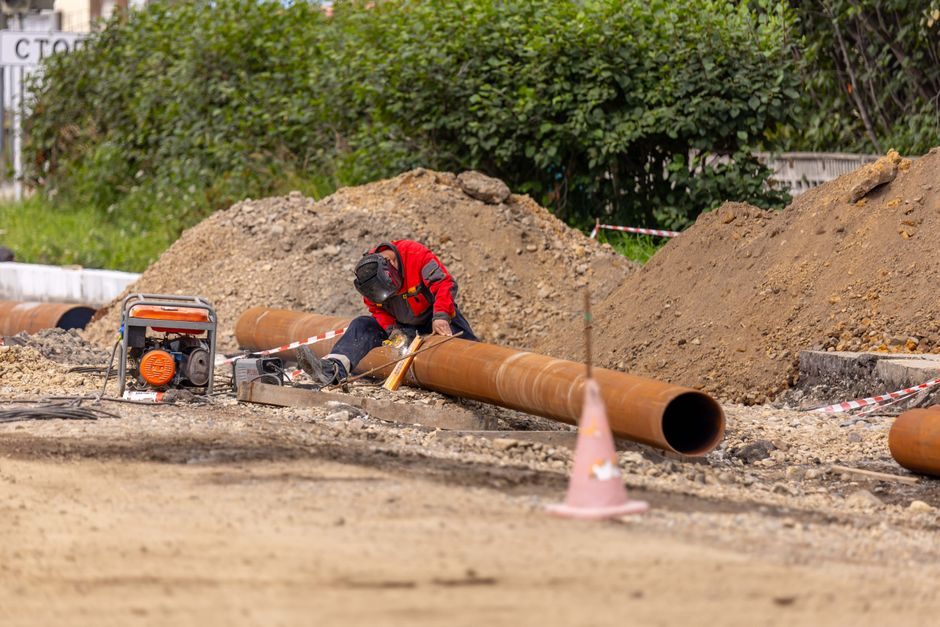
The cheapest documented PVC-U SKU in the current public trading record is dn16-65 mm electrical conduit at US $0.20 per metre with a 1,000 m MOQ and a 10,000 t/yr production line behind it, whereas the upper bound on the supply-side ledger is the extrusion line itself, listed FOB at US $15,000-300,000 per set on 1-set MOQ with one-month peak-season lead times and 15-day off-season lead times [S1][S3]. Understanding that the metre-price, the kilogram-price and the line-price are three different products is the first step to reading a PVC-U quotation correctly; the second is mapping the schedule, the joint and the certification onto the line item.
What PVC-U actually is, and why it prices below chlorinated or metallic alternatives
PVC-U is unplasticised polyvinyl chloride — a rigid thermoplastic made by polymerising vinyl chloride monomer and compounding the resulting PVC resin with stabilisers, lubricants, fillers (typically CaCO3 at 5-15 phr), pigments and impact modifiers, with no phthalate plasticiser added [S2]. Because the plasticiser fraction that drives flexible-PVC cost is absent, PVC-U sits at the bottom of the plastics cost stack and well below chlorinated PVC-C, CPVC, copper, ductile iron and stainless steel on a per-metre basis for cold-water, drainage and conduit duty [S2][S3].
The trade-off is temperature ceiling: PVC-U is rated to roughly 60 °C continuous service water, well below CPVC's 90 °C and far below metallic systems. Reviewing the broader PVC-U pipe specification envelope confirms that pressure class, not raw material, is usually the dominant cost driver within the same diameter.
Resin cost mechanics: the K-value window that frames every quotation
PVC-U pipe resin is bought on K-value (Fikentscher viscosity), not on melt-flow index; pressure-grade pipe uses K65-K68 (corresponding to approximate molecular weight 90,000-110,000 g/mol and a tensile modulus around 3,000 MPa), while drainage and conduit grades drop to K57-K60 for easier processing at lower hoop strength [S2].
On a 2025-2026 spot basis, suspension-grade K65-K68 PVC resin in Northeast Asia has hovered in a US $700-900/t CIF band, with ethylene-derived VCM feedstock tying it loosely to naphtha-ethylene spreads. Converters then add 8-15 % for compound additives, 10-18 % for extrusion conversion (energy at roughly 0.35-0.55 kWh/kg of pipe), 5-10 % for factory overhead, and 3-8 % for packaging, strapping and 4 m / 6 m stick bundling. The metre price of the finished pipe is therefore a function of diameter and wall: a dn110 mm PN16 (SDR 11) pipe with 10.0 mm wall weighs about 5.4 kg/m, whereas a dn315 mm PN10 (SDR 21) pipe with 15.0 mm wall weighs about 21.7 kg/m, so the same resin cents-per-kilogram translates into very different cents-per-metre. Sourcing-side discipline on PE pipe specification follows the same diameter-wall logic, but PE's density of 0.95 g/cm³ vs PVC-U's 1.40-1.45 g/cm³ means PE needs thicker walls for the same pressure class, narrowing the per-metre gap.
Finished-pipe price bands by duty class (2026 reference)
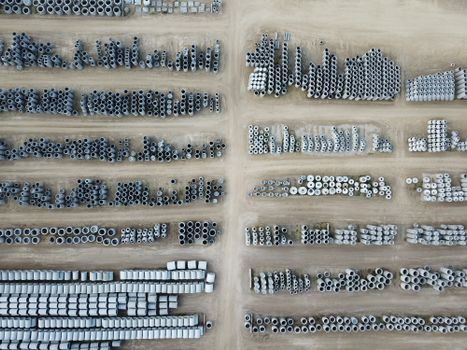
The current public trading record on Made-in-China places the lowest documented PVC-U metre rate at US $0.20/m for dn16-65 mm orange electrical conduit, MOQ 1,000 m, with a 10,000 t/yr production-capacity ceiling behind the listing [S3]. Conduit is sold in 3 m or 4 m lengths, with integral socket or plain-end, and pricing is dominated by wall-thickness uniformity (typically 1.0-2.5 mm) and UL 651 / IEC 61386-21 listing for the export market rather than by pressure class.
Pressure pipe bands observed for Q2-Q3 2026 ex-works, for reference, look approximately as follows: dn20-63 mm PN16 (1.6 MPa) socket-ended solvent-weld pipe in the US $0.30-0.80/m range; dn75-160 mm PN12.5 in the US $0.90-2.50/m range; dn200-400 mm PN10 in the US $3.00-9.00/m range; and dn500-800 mm PN6 large-diameter irrigation in the US $12-40/m range. Drainage and DWV pipe is 20-35 % cheaper than pressure pipe of the same diameter because the wall is thinner and the resin K-value can drop. Every metre-price in these bands is a function of four numbers on the spec sheet — diameter, wall, pressure class and joint system — and ignoring any of them produces a misleading comparison. The same logic of pipe fitting selection carries through to the jointing hardware, which adds another 8-25 % to the installed cost of a PVC-U run.
Joint systems and the accessories that swing the installed price
Three joint families cover the majority of PVC-U pipe installations, and each carries a different accessory cost layer: solvent cement (ASTM D2564 / EN 14814) socket-weld for small-bore pressure and drainage, typically adding 1-3 % to the pipe cost; EPDM rubber-ring push-fit (ISO 4633) for sewer and large-bore pressure, adding 4-9 %; and mechanical flange or compression couplings (ISO 15493 / AWWA C900) for above-grade or repair duty, adding 12-25 % [S1][S2]. Solvent-weld joints are the cheapest per joint but require cure time and skilled installers, while rubber-ring joints cost more in the fitting but install faster and tolerate soil movement better.
On a typical 110 mm PN16 water main, the per-metre pipe cost roughly doubles once you include the rubber-ring coupler, the ductile-iron fittings at every change of direction, the thrust blocks, the tracing wire and the warning tape. Buyers who price on pipe-only metre rate and then discover the fitting layer is the most common cause of budget overrun. Fixing every 6-12 m with pipe clamps and saddle outlets is a separate line item again, and is rarely quoted in the headline pipe price.
Comparing PVC-U against the four alternatives it most often replaces
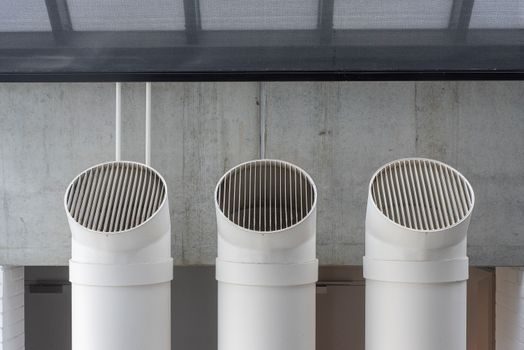
The decision matrix that an engineer actually applies therefore comes down to four criteria: temperature (PVC-U fails above 60 °C), pressure (PVC-U PN6-PN25 covers most cold-water and irrigation duty but not high-rise risers), UV exposure (PVC-U needs paint or shelter after roughly 18-24 months direct sun to limit the visible chalking) and code compliance (PVC-U is accepted for potable under NSF/ANSI 61, WRAS, ACS; excluded from fire-sprinkler risers in most IBC jurisdictions). When all four clear, PVC-U is the lowest-cost option; when any one of them fails, the project migrates to PE, CPVC, ductile iron or steel. The PVC-U pipe specification reference lists the standard-by-standard pressure and temperature envelopes that govern those cut-offs.
Sourcing levers that actually move the invoice
Off-season lead times inside 15 workdays versus peak-season one-month lead times also matter, because a missed factory slot can push a project onto air-freight at 4-6× sea-freight cost [S1].
Certification is the silent fifth lever: ASTM D1785, ASTM D2241, ISO 1452, EN 12200, BS 3505, GB/T 13641 and AS/NZS 1477 all cover nominally similar pipes, but a factory audited to NSF/ANSI 61 and WRAS for potable runs 4-9 % above a non-certified equivalent, while a CSA B137.3 or ICC-ES PMG listing adds another 2-5 % for North American code projects. Skipping certification to save the percentage almost always costs more in customs holds and re-test fees than the saving is worth.
The natural-gas supply chain disruption reshaping 2026 project budgets is also pushing some municipal water utilities to revisit PVC-U versus PE pipe specification on long distribution runs, because PE's fused-joint leak rate is materially lower than PVC-U's rubber-ring rate, and gas-funded HDPE产能 is easing PE pricing in some regions. Buyers tracking that crossover should watch North-Asian VCM spot spreads and the K65-K68 resin index together, because PE100 and PVC-U K65 compete for the same chlorine-ethylene balance and tend to move in the same direction within a 60-90 day lag. Two trackable signals for the next quarter are: (1) Q3 2026 Northeast-Asian K65-K68 resin settlement relative to the Q2 reference band, and (2) any new NSF/ANSI 61 factory audit announcements in the Vietnam and Indonesia conversion cluster, both of which historically drop FOB Asia PVC-U pricing by 3-6 % when capacity lands.
For related coverage, see Concrete Curing Compound Selection Criteria: Resin, Wax and Acrylic Spec Logic.