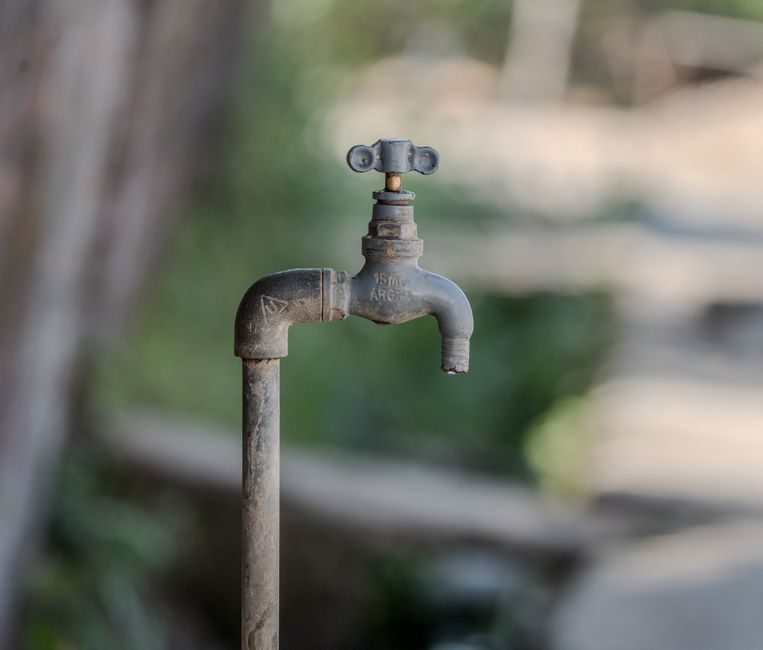
PVC-U pressure pipe is specified when the service stays under roughly 60 °C, the chemistry is oxidiser-free, and the design life hits 50 years at a 20 °C lower-confidence-limit (LCL) stress [S2].
GB/T 4219.1-2008 sets out the material, product classification, and 50-year σ_LCL design point for extruded industrial PVC-U pressure pipe, including water, sewage, chemical, electroplating, metallurgy, pulp/paper, and food/beverage service [S2]. ISO 11673:2005 layers the fracture-toughness test on top, defining C-ring geometry, wall-thickness measurement, yield stress, and the critical stress-intensity factor K_C that separates ductile from brittle behaviour [S1].
Pressure and Temperature: The 50-Year LCL Anchor
PVC-U pipe is designed against a 20 °C / 50-year lower-confidence-limit stress (σ_LCL) and a separately tabulated overall service (design) factor, with both terms defined inside GB/T 4219.1-2008 [S2]. The LCL anchor is what lets a specifier convert a long-term hydrostatic target into a one-time allowable hoop-stress number; the design factor then discounts it for water hammer, surge, and fitness-for-service. In a typical industrial water or weak-chemical line, working pressure for PN16-class PVC-U runs around 1.6 MPa at 20 °C, dropping to roughly 0.6–0.8 MPa at 60 °C once derating is applied — a derate envelope the engineer has to confirm against the manufacturer's own pressure/temperature curve, not from a generic brochure.
The two failure modes an engineer must size against are creep rupture and brittle fracture. ISO 11673:2005 spells out the C-ring fracture-toughness test: cut a ring from the pipe, machine a notch on the reference point wall, pull it, and back-calculate K_C from yield stress, geometry factor, and notch depth [S1]. The test result is what guards against the brittle-cracking failure that the long-term LCL curve cannot catch on its own — a cracked PVC-U solvent-cement joint on a hot chemical line is the classic case where σ_LCL looked fine and K_C did not.
Chemistry and Temperature: Where PVC-U Is and Is Not the Right Pick
PVC-U is rated for most mineral acids, alkalis, brine, and salt solutions up to roughly 60 °C, but it is attacked by aromatic and chlorinated solvents, strong oxidisers, and esters — acetone, benzene, toluene, carbon tetrachloride, and concentrated (>70%) nitric/sulphuric acid all dissolve or stress-crack the resin [S2]. A common rule inside chemical-plant pipe racks is: if the MSDS lists ketones, aromatics, or concentrated oxidisers anywhere in the concentrate, switch to PPR pipe, PVDF, or FRP/dual-laminate; if the stream is dilute mineral acid, caustic, or potable/industrial water, PVC-U is usually the cheapest qualified option.
For buried irrigation laterals, GB/T 13664-2006 covers a separate low-pressure conveyance class with its own pressure and dimension table [S3]. The split is deliberate: industrial pipe (GB/T 4219.1) is built for 50-year LCL at 20 °C, while low-pressure irrigation (GB/T 13664) is built for seasonal low-head service, and a specifier mixing the two tables for the wrong duty class will get either an over-built or an under-built line.
Joint System: Solvent Cement, Elastomeric, or Flanged
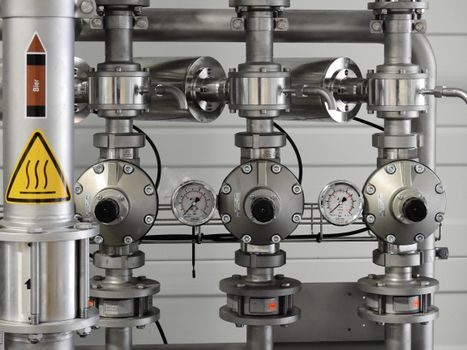
Three joint families dominate PVC-U: solvent-cement (cold-weld) socket joints, elastomeric-ring push-on sockets, and flanged connections — and the choice is not free. Solvent-cement joints are the lowest-cost option for water and chemical service, with a typical pressure rating equal to the pipe itself, but they need a controlled cure window (usually 24 h before pressure test at 20 °C) and fail fast if the surface prep is bad. Elastomeric-ring joints tolerate a small angular deflection and are the right pick for buried transmission mains, while flanged joints are reserved for valve connections, equipment tie-ins, and any location that will be opened. [S1]
For an equipment tie-in, the flanged end must transition through a PVC-U stub-end and a compatible pipe fitting backing ring, with the gasket material selected for the chemistry (EPDM for water/weak acid, FKM/CR for hydrocarbons, NBR for oils). A common engineering miss is bolting a PVC-U flange against a steel flange with a steel back-up ring and then torquing to the steel spec — PVC-U flanges are gasket-sealed, not metal-to-metal, and the bolt torque is governed by the PVC-U stub, not the pipe schedule.
Wall Thickness, SDR and the Pressure Class Table
PVC-U pipe dimension is governed by the Standard Dimension Ratio (SDR = outside diameter / wall thickness), not by a Sch number, and the SDR plus the σ_LCL plus the design factor set the pressure class. A typical PN16 metric series runs SDR 11 at 20 °C, with the wall thickening as the SDR drops (e.g. SDR 13.6 for PN12.5, SDR 17 for PN10, SDR 21 for PN8). Engineers should pull the actual table from the manufacturer datasheet and cross-check it against the pressure/temperature derating curve — SDR alone does not tell you the operating envelope. [S2]
For abrasive slurry service, the same plastic pipe family moves to a thicker SDR or to a lined steel solution; PVC-U wears fast on sharp-angled silica slurry, and a derate of 0.5–0.7× the rated pressure is normal in the field. For pure water or weak acid at steady temperature, no derate beyond the temperature curve is needed.
Standards and Quality Gates to Verify Before PO
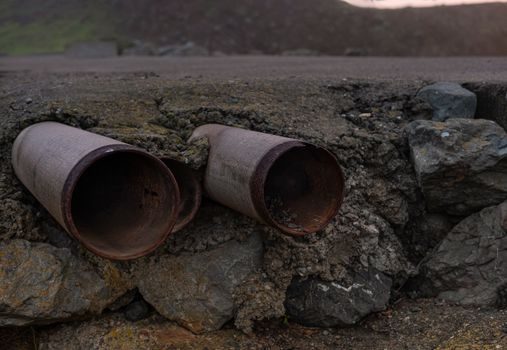
Four documents cover the bulk of an industrial PVC-U spec: GB/T 4219.1-2008 for industrial pressure pipe material, classification and test method [S2]; ISO 11673:2005 for fracture-toughness K_C testing of pressure pipe [S1]; GB/T 13664-2006 for low-pressure irrigation PVC-U [S3]; and a separate product standard for the fittings (the pipe and fitting standards are not interchangeable). Inside the QA package, an engineer should require: material certificate with σ_LCL value, hydrostatic test report per the standard, C-ring fracture-toughness value where brittle-cracking is a concern, and joint-system test data (solvent-cement cure curves or elastomeric-ring leak pressure).
Two failure modes show up repeatedly in field service reports and should be checked at the design stage. Thermal expansion of PVC-U is roughly 0.07 mm/m·K — about six times that of steel — so any long run above 5 m needs an expansion loop, a rubber expansion joint, or a deliberate change of direction to absorb movement; missing this is the root cause of most bowed PVC-U pipe-rack runs. UV degradation also forces a paint, a sleeve, or an indoor routing for any outdoor line, since unfilled PVC-U resin loses impact strength after 12–24 months of direct sun exposure.
Selection Snapshot: PVC-U vs the Common Alternatives
On a four-criterion compare — temperature limit, chemical resistance, joint cost, and 50-year design basis — PVC-U lands at roughly 60 °C ceiling, strong resistance to mineral acids/alkalis but poor to aromatics/ketones, lowest joint cost via solvent cement, and a published σ_LCL design basis [S2]. PE pipe pushes to roughly 60–80 °C with near-universal chemical resistance but loses on joint cost (butt-fusion or electrofusion) and on long-term creep data; PPR pipe lands in the 70–95 °C hot-water band with similar solvent-cement economics but a thinner published industrial-trace record; lined steel or FRP carries the high-temperature / strong-solvent envelope but at 4–8× the joint cost.
For a one-line rule: stay on PVC-U when the stream is water, weak acid, weak caustic, or brine, the operating temperature is at or below 60 °C, and the line is not exposed to UV or aromatic solvents. Switch to PE pipe for outdoor potable water or where impact/UV resistance dominates; switch to PPR for the 70–95 °C hot-water or food-grade band; switch to lined steel or FRP once the MSDS crosses into concentrated oxidisers, aromatic solvents, or above-100 °C service.
Support, Hanger and Clamp Spacing
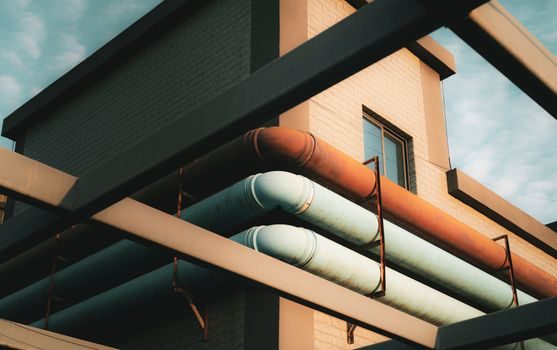
Because PVC-U is rigid and has a higher thermal expansion than steel, support spacing and clamp design drive as much of the install cost as the pipe itself. For horizontal runs at 20 °C, a typical support spacing for PN16 PVC-U is 0.9–1.2 m for sizes DN15–DN50, dropping to 1.5–1.8 m for DN65–DN150; hot-service lines derate by roughly 0.7×, and the support must use a wide, smooth pipe clamp saddle — never a U-bolt on bare pipe, which will crack the wall under thermal cycling. [S3]
At every valve, heavy fitting, and directional change, the support moves to within one pipe diameter of the joint to absorb the reaction force; missing this is the second most common PVC-U field failure, after missing thermal expansion. Engineers should also confirm that the PVC-U pipe manufacturer's installation guide is referenced in the QA package, since the spacing tables in the standard assume a particular SDR and temperature envelope and the field derate can be material.
Trackable signals for the next sourcing cycle: the GB/T 4219.1-2008 edition for industrial PVC-U pressure pipes (confirmed as the current latest version); ISO 11673:2005 fracture-toughness acceptance value agreed with the supplier and recorded in the ITP; and the manufacturer's pressure/temperature rating data derived from the 20 °C, 50-year lower confidence limit and overall service (design) coefficient per GB/T 4219.1-2008, requested as a controlled document rather than a brochure page.
For related coverage, see Roller Conveyor Sizing: Load, Roller and Frame Selection.