
Quartz procurement in 2026 is not a single market but three: electronic-grade quartz crystal resonators listing at $0.025–0.35 per piece on Chinese B2B portals [S1], high-purity fused quartz components from dedicated manufacturers in Jiangsu [S2], and engineered quartz surfacing for architectural use [S4].
The decision starts with end-use: a 32.768 kHz timing reference, a semiconductor wafer-carrier, and a kitchen countertop share almost no acceptance criteria, so the buying guide below separates them before addressing the spec sheets.
Electronic-grade quartz crystal: drive level, aging and load capacitance
Quartz crystal resonators on the Made-in-China 2026 new-product feed split cleanly into DIP and SMD packages with quoted unit prices of $0.30–0.35 per piece (DIP TF-206, MOQ 3,000 pieces) and $0.025–0.04 per piece (SMD, MOQ 3,000 pieces) [S1]. Aging is specified as 5 ppm max for the DIP line and 3 ppm/year for the SMD line, a 1.7× tightening that maps directly to TCXO versus XO duty cycles [S1].
Drive level is the second hard gate. The DIP TF-206 is rated conventional 0.1 μW with a 1.0 μW maximum, while the SMD unit is rated 10 μW — a 10× difference that determines whether the part survives in a low-power IoT real-time-clock footprint or in a telecom baseband PLL [S1]. Loading capacitance is listed as 6–20 pF (DIP, customer-specifiable) versus a fixed 9 pF (SMD), which is the lever to confirm against the oscillator IC's CL pin before placing the PO [S1].
Certification evidence carries weight: both product lines disclose ISO 9001:2015 and RoHS/Pb-Free, and the DIP line additionally lists IATF 16949 — the spec to demand for any lot bound into automotive clusters or ADAS ECUs [S1]. For the underlying material physics that drive these numbers, the quartz material reference covers the Q-factor, AT-cut orientation and impedance behaviour behind the spec sheet.
Fused quartz and high-purity components: where purity beats price
For semiconductor, solar and lighting buyers, the question is not $0.025 versus $0.30 per piece but ppm-level metal contamination in the bulk. Lianyungang Quark Quartz Material Co., Ltd. — based at #153 Mingzhu Road, Donghai Economic Development Zone, Jiangsu — lists fused quartz crucibles and quartz plates as catalogue lines, the two workhorse forms for PV ingot growth and wafer handling [S2].
The buying heuristic is: 99.95% SiO2 (3N5) is the typical cutoff for lighting-tube and general labware; 99.99% (4N) is the entry tier for photovoltaic crucibles where Fe/Cu/Na at single-digit ppm shortens service life; 99.999% (5N) and above is reserved for semiconductor diffusion and optical preform applications, and commands pricing 3–8× the 3N5 line [S2].
Wall thickness, end-port geometry and bubble-grade classification (commonly A, B, C per ASTM or equivalent domestic standards) are the three drawing-side specs that separate a usable crucible from a reject. For a parallel material reference that often sits beside fused quartz in a fab's BOM, copper material covers the OFHC grades used in chuck and heat-sink fabrications.
Engineered quartz countertops: the architectural lane
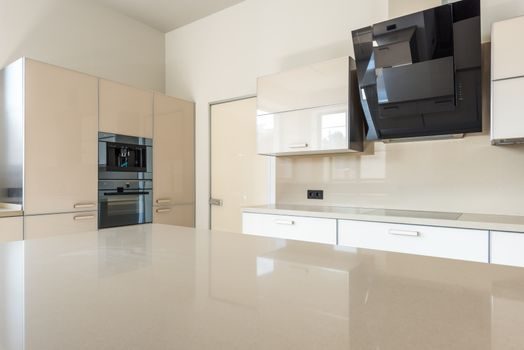
Quartz, or engineered stone, countertops have become a popular choice in recent years, offering far more color choices than granite [S4].
Mohs hardness lands at 7 for most engineered quartz lines, putting it on par with granite and ahead of marble (Mohs 3–4), which is the spec to put in front of any client still cross-shopping natural stone [S4]. Stain, scratch and acid resistance are governed by resin chemistry rather than the quartz aggregate, which is why a written warranty (typically 10–15 years residential, 5–10 years commercial) is the right artefact to compare between brands rather than the printed spec sheet.
Lead time and freight dominate the landed cost picture: a full slab from a Chinese or Indian fabricator ships in 4–6 weeks sea-freight to North America, plus another 1–2 weeks for cut-to-size and edging, so the procurement clock starts 8 weeks before install. For buyers also evaluating copper-bearing or magnetic-filler surface materials, the magnetic material entry is the cross-reference for any functional-surface spec.
YOFC and the optical-fibre / quartz substrate lane
Yangtze Optical Fibre and Cable (YOFC) — whose 2026 corporate pages list "Quartz Material" as a distinct product family under its Smart Link Better Life portfolio — is the marker for the optical-fibre preform and quartz substrate lane, where buying decisions pivot on preform diameter, OH content and cladding geometry rather than the resonator specs covered earlier [S3].
Prequalification here is documentary: ISO 9001 quality system certificates, batch-traceability records, and — for any preform or substrate bound into telecom or hyperscale data-centre fibre — a Telcordia GR-20 or IEC 60793 conformance statement. Pricing is per-kilogram or per-preform and rarely appears on public listings, which is itself a signal: this lane runs on RFQ, not e-commerce.
Certifications, standards and the cross-vendor comparison matrix

Three certification marks recur across all three lanes and are the cheapest filter to apply up-front: ISO 9001:2015 (baseline QMS), RoHS / Pb-Free (mandatory for any electronic-grade or surface material bound into the EU), and IATF 16949 (automotive lot-release) — all three appear in the 2026 quartz crystal product disclosures on Made-in-China [S1].
A side-by-side comparison of the three lanes on the four criteria that actually drive PO decisions:
Quartz crystal resonators (DIP TF-206 / SMD): price band $0.025–0.35/pc at MOQ 3,000 [S1]; typical tolerances 5 ppm aging (DIP), 3 ppm/year (SMD), 9–20 pF load [S1]; lead time 2–4 weeks ex-works China; governing standards include IEC 60122-1 for quartz crystal units. Fused quartz components (crucibles, plates, tubes): price band 3N5–5N purity, quotes on RFQ; tolerance wall-thickness ±0.5 mm typical, bubble grade per ASTM equivalent; lead time 4–8 weeks for custom geometry. Engineered quartz countertops: price band per slab plus cut/fabrication, plus freight as covered above; tolerance thickness ±0.5 mm, slab flatness critical for seam quality; lead time 8–12 weeks door-to-door North America.
What quartz is NOT for, and the common rejection causes
Quartz is the wrong material when the duty cycle exceeds its phase-transition or mechanical limits. Fused quartz softens above roughly 1,650 °C and devitrifies (cristobalite formation) with prolonged service above 1,100 °C, which is why silicon carbide is specified for higher-temperature diffusion and not fused quartz [S2].
Quartz crystal resonators fail in three repeatable patterns: drive over-level (exceeding the rated μW causes frequency shift and eventual electrode delamination), excessive load-capacitance mismatch (pulls the oscillator off the nominal ppm window), and solder-reflow thermal-shock on large SMD packages — all three are spec-sheet numbers, not field guesses, and all three are addressed in IEC 60122-1 and the vendor's datasheet.
For buyers whose engineering BOM also includes functional or additive-manufactured materials — the magnetic fillers, sintered necks and powder-bed grades that share a quartz purchase order in some plant workflows — the additive manufacturing material reference is the parallel entry point.
Verification checklist before issuing a 2026 PO
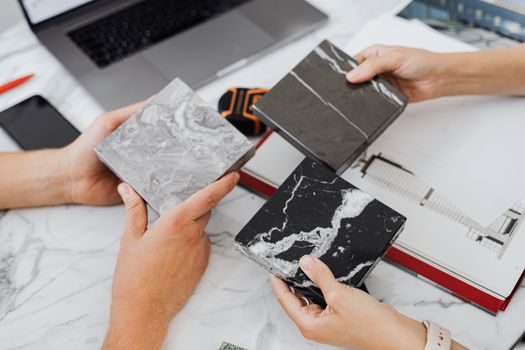
Five artefacts, in this order, separate a clean quartz PO from a return: (1) a recent (≤12-month) ISO 9001 certificate in the manufacturer's name; (2) a batch-traceable test report citing purity, bubble grade or aging ppm as applicable; (3) a sample lot (typically 50–200 pieces for crystals, 1–3 pieces for slabs/crucibles) evaluated against the drawing before the bulk release; (4) an RoHS / REACH declaration for the EU-bound shipment; (5) a written warranty aligned to the application — 10–15 years residential for engineered quartz, 12-month workmanship for crystals. [S1]
Trackable signals to watch over the next quarter: the 2026 release of YOFC's quartz substrate capacity figures [S3], any 3N5-versus-5N price spread movement on Chinese B2B RFQ feeds, and the next round of IATF 16949 surveillance audits on the crystal-component lines that already disclose automotive certification [S1]. For buyers cross-shopping adjacent high-purity material lines, the Sputtering Target Buying Guide 2026 sits in the same spec-discipline lane.