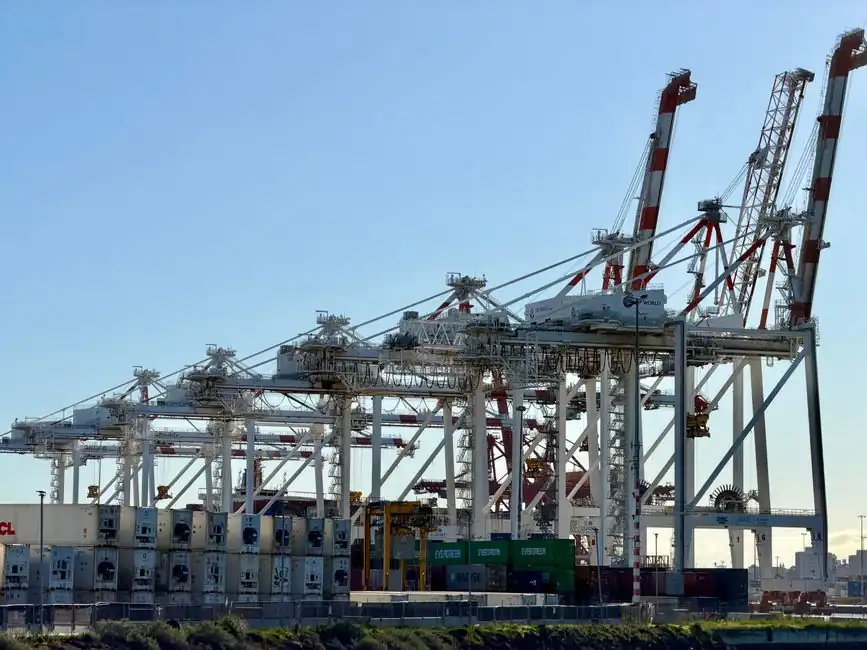
Rail-mounted stacker cranes (the AS/RS class) travel a fixed bottom rail set into the floor slab and a top guide rail fixed to the rack profile, reaching up to 45 m high in aisles as narrow as 1.5 m [S4]. Aisle stackers (ride-on or stand-on pallet stackers, the forklift-derived class) run on the open floor, need wider working aisles, and cap out at lift heights roughly one-quarter of a high-bay crane.
Both machines handle unit loads, but they optimise different warehouse variables: the rail-mounted variant trades layout rigidity for cube density and continuous autonomous cycles, while the aisle stacker trades density for capital-light flexibility. The decision is layout-driven, not brand-driven, and the rest of this article lines the two options up against the criteria that actually move a project from spec to commissioning.
Definition and scope: what each machine physically is
A rail-mounted stacker crane is an automated machine that travels the length of an aisle and stores or retrieves unit loads with no operator on board, using a mast plus a telescopic-fork or shuttle extraction system [S7]. The structure is a single or double mast, with single-mast units typically used for lighter loads and double-mast units used for heavier pallets and greater heights [S5]. The aisle-floor and rack-top dual-rail arrangement is what lets the machine hold position laterally while the mast inserts and extracts at height [S2].
An aisle stacker crane (also called a pallet stacker or walkie/rider stacker) is a wheeled, operator-driven forklift-derived truck that lifts a mast vertically and drives itself between rack rows. The same machine class is documented on the SourceBySpec pallet stacker reference page, which lists the typical reach range and counterbalanced versus straddle chassis options. The rail-mounted class is documented under stacker crane, where the AS/RS-style mast-on-rails architecture is described in detail.
Aisle and footprint: the layout variable that decides first
Rail-mounted cranes operate in aisles approximately 1.5 m wide and can build rack structures up to 45 m tall, which is the headline layout benefit of the class [S4]. Because both rails are fixed, the building floor slab and the rack uprights have to be engineered as a coupled system from day one; layout changes after commissioning are expensive. Aisle stackers, by contrast, only need the floor to support wheel loads and a working aisle wide enough for the truck to turn and place a pallet, typically 2.6–3.2 m for a counterbalanced reach truck and roughly 2.4–2.8 m for a straddle stacker in VNA-style guidance.
On the storage-density side, rail-mounted cranes support single-, double-, and multi-deep rack configurations; a double-deep stacker crane stores two pallets per position and lifts warehouse storage density without adding aisles, while a multi-deep variant pushes density further at the cost of retrieval selectivity [S5]. Aisle stackers can serve double-deep racks only with the right truck reach and operator skill, and selectivity drops as depth increases. The rail-mounted class also fits the same kind of crawler crane-style fixed-path planning logic in the sense that the machine's motion envelope is fully predictable and engineered against the building geometry.
Throughput, duty cycle, and operating envelope
Rail-mounted cranes run continuously 24/7/365 under WMS/WCS control, with combined storage-and-retrieval cycles in a single aisle traverse [S4]. Reference travel speeds of up to 722 ft/min and lift speeds of up to 217 ft/min are published for single-mast pallet stacker cranes, with operating temperatures from -22 °F to 104 °F as standard [S2]. Cold-store variants extend that envelope to roughly -30 °C, which makes the class a default for frozen and chilled warehouses where an operator-driven truck is impractical [S4].
Aisle stackers are limited by the operator and the battery: a single-shift rider stacker typically delivers 80–150 pallet moves per hour in real conditions, well below the sustained cycle rate of a rail-mounted crane in combined-cycle mode. The trade-off is responsiveness: an aisle stacker can be re-tasked instantly, while a rail-mounted crane's WCS queue absorbs fast-changing orders. Sites that run a few peak hours per day usually stick with aisle stackers; sites with a flat, predictable SKU flow benefit more from rail-mounted automation.
Load capacity, height, and extraction options
Single-mast pallet stacker cranes published in the Mecalux MT-1 through MT-5 range cover 26 ft to 148 ft of height and max permitted loads of 1.1–1.65 t single-deep, with double-deep variants derated to 1.1 t across the line [S2]. Heavier pallet loads (above roughly 1.5–2 t at height) usually require a twin-mast configuration, because the dual-column geometry adds bending stiffness and reduces mast sway at full lift [S5]. The mast itself is the body of the crane and houses the lifting cradle and telescopic forks, which is the same architecture described in the stacker crane reference.
Extraction-system options drive most of the layout decision: telescopic forks handle single-deep and double-deep positions on the same mast, pallet shuttles decouple the crane from deep-lane storage, and on-board conveyors allow direct in-aisle handover to upstream or downstream conveyor lines [S1]. Aisle stackers carry their own forks on the mast and rely on the operator to align, which is fine for open-floor block stacking but constrains them in deep-lane or automated-handover scenarios.
Comparison matrix: rail-mounted vs aisle stacker, criterion by criterion
Set against the four criteria that actually drive a warehouse-layout decision, the two options line up as follows. Aisle width: rail-mounted ≈1.5 m, aisle stacker ≈2.4–3.2 m. Maximum lift height: rail-mounted up to 45 m, aisle stacker typically ≤12 m for practical reach trucks. Operating hours: rail-mounted 24/7/365, aisle stacker one to two shifts per day with battery swaps. Capital profile: rail-mounted is a multi-year AS/RS project integrated with racking, conveyors, and WCS, while aisle stackers are off-the-shelf trucks that scale one at a time. The 1.5 m aisle and 45 m height numbers come from the published AS/RS spec, and the 24/7/365 claim is from the same class description [S4].
For cold storage the rail-mounted crane's -30 °C rating and unmanned operation is the only realistic option, since manned truck work at that temperature is a safety and productivity problem [S4]. For a 5,000 m² distribution centre with low ceiling height and highly variable SKU flow, aisle stackers remain the lower-capital, faster-to-deploy answer. For a 20,000 m² high-bay build with steady throughput, the rail-mounted crane is the standard answer because the building, racking, and crane are designed together from the foundation up. Selecting between the two therefore comes down to whether the warehouse is being designed around the machine (rail-mounted) or the machine is being dropped into an existing layout (aisle stacker).
Who each option is for, and who it is not for
Rail-mounted stacker cranes are built for: greenfield high-bay warehouses above roughly 8 m clear height; operations with stable, predictable SKU velocity; cold stores at 0 °C down to -30 °C; sites where forklift-driven aisle traffic is a safety or damage concern; and projects that pair the crane with a pallet-shuttle or conveyor-based AS/RS upstream and downstream. They are not built for: warehouses with frequent layout changes, brownfield sites where the slab and rack cannot be re-engineered, or operations with fewer than roughly 200 pallet moves per hour in the target aisle. The deep-lane variants especially pay back only when storage density is the binding constraint and retrieval selectivity can be relaxed. [S4]
Aisle stackers are built for: existing buildings with mid-height racking, mixed-SKU operations, e-commerce back-of-house replenishment, and any site that needs capacity in increments of one truck rather than one aisle. They are not built for: unmanned 24/7 operation, very narrow aisles, or sites where aisle width is the binding constraint on storage capacity. The class also overlaps with the truck-mounted crane and truck-mounted concrete pump categories only in the sense of being wheeled, operator-driven machines; functionally, a pallet stacker is closer to a forklift than to any of the lifting classes on those reference pages.
Limitations, failure modes, and integration cost
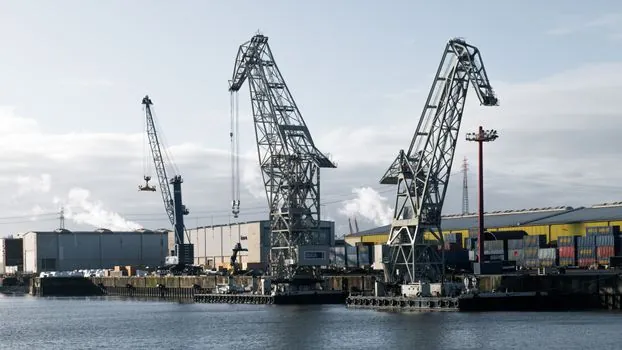
Rail-mounted cranes still require aisle dimensions that, by design, reduce overall warehouse footprint flexibility compared with grid-based cube storage, which is the main limitation called out for the class [S3]. A single aisle is a single point of failure unless the WCS can route around it via conveyors or a redundant crane, and the foundation rail plus top guide rail are tied to the rack structure, so any rack settlement or building movement shows up as mast alignment drift. Energy-recovery systems on the hoist and travel drives are common to keep continuous-duty consumption in check, and they should be priced into the comparison, not added later.
Aisle stackers fail in different ways: battery degradation cuts into shift coverage, mast sway under max load limits effective height, and operator-induced rack damage is a chronic cost in mixed-traffic warehouses. Safety features such as collision-avoidance sensors and aisle-guidance wire or rail guidance are available on premium trucks, but they raise unit cost toward the lower end of an AS/RS aisle. For projects that need a side-by-side comparison of structural steel options for the building that will house either system, the single girder vs double girder crane capacity line reference is useful background on when the supporting steelwork itself dictates the layout. Relatedly, the single girder overhead crane maximum span article covers the same steelwork logic for the bridge structure that a stacker crane mast typically runs beneath.
Selection checklist and trackable signals
The layout decision reduces to five questions: is the warehouse greenfield or brownfield; is clear height above 8 m or below; is the throughput flat-and-predictable or spiky; is cold storage a requirement; and is the budget profile capital-heavy (rail-mounted) or capital-light (aisle stacker). If four of five answers point to fixed-path automation, the rail-mounted crane is the correct answer; if three or more point to flexibility, the aisle stacker wins. A 1.5 m aisle footprint and 45 m height envelope are the most concrete numbers to anchor the layout sketch [S4], and the published 1.1–1.65 t single-mast load range sets the upper bound for the single-mast class [S2].
Trackable signals to watch on 2026-10-04: any vendor update that pushes mast-top speed above the existing 722 ft/min reference figure, and any AS/RS commissioning case study that documents payback inside three years for double-deep pallet-shuttle layouts. The first signal would shift the throughput case in favour of rail-mounted cranes; the second would shift the capex case. Until either moves, the current layout rule holds: rail-mounted for new high-bay builds measured in decades of operation, aisle stacker for everything else.