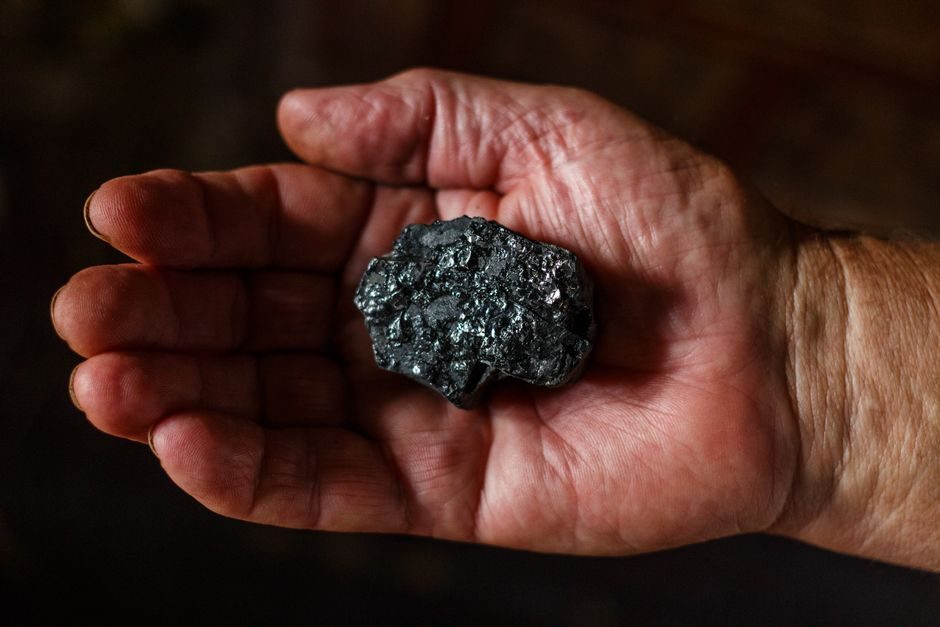
REIA's 2026 Annual Conference ran 9-11 June 2026 at the Frankfurt Marriott Hotel, Germany, drawing global producers, separators and magnet alloy buyers into a single technical forum for the first half of 2026 [S1].
Current spot reference bands on Made-in-China.com show cerium-group oxides at US$ 1.45-1.60/kg and Ytterbium metal granule at US$ 135-200/kg for Min. Order 10 kg with ISO certification, giving process engineers a hard number for 2026 budget codes [S2].
Market sizing: two studies, two scopes, both cited
Grand View Research sized the global rare earth elements market at US$ 3.95 Bn in 2024 with a forecast of US$ 6.28 Bn by 2030 at an 8.6% CAGR over 2025-2030, and recorded Asia Pacific at over 86% of 2024 revenue [S7]. Transparency Market Research took the broader rare earth metals framing and put 2025 at US$ 14.1 Bn with a path to US$ 30.9 Bn by 2036 at 7.4% CAGR over 2026-2036, attributing the curve to EV traction motors and wind turbine generator demand [S5]. IndustryARC's earlier scoping of "Rare Earth Metals Market" tracks a 2019-2024 forecast window in which the report covers 2018 base share by segment [S3].
The two primary studies split the definitional line: GVR counts separated oxide and metal REE ex-China concentrate; TMR rolls in the downstream metal and alloy value. Engineers writing RFQ justifications should pick the scope that matches their bill of materials before quoting CAGR in a CAPEX memo [S5][S7].
Supply concentration and the French revival backdrop
China remained the largest producer and consumer of REE in 2024, anchoring Asia Pacific's 86%+ revenue share, with the price spike of 2022-2023 lifting reported revenue before normalisation in 2024-2025 [S7]. A 2023 Springer conference paper, "The Revival of the French Rare Earth Industry", documents that in the 1980s-1990s France was a major REE separator and that French RE separation technology was once among the most advanced globally; in the early 2000s most French separation capacity moved to China and the French RE industry is now "very weak" in relative terms [S8]. The 11th China Baotou Rare Earth Industry Forum, held 20 September 2019 in Baotou, Inner Mongolia, gathered Ministry of Industry and Information Technology officials and industrial leaders to promote trade, manufacturing, research and applications partnerships [S4].
For 2026 sourcing, that history translates to a near-single-vendor risk profile on heavy rare earth separation (Dy, Tb) and to renewed European policy interest in non-Chinese separation capacity — context that the REIA Frankfurt 2026 agenda explicitly engages [S1][S8].
Spec hotspots: NdFeB magnets, EV traction and wind

NdFeB permanent magnets remain the single largest REE end-use, with neodymium, praseodymium, dysprosium and terbium pulled into EV traction motors, wind turbine generators and industrial servo drives; TMR cites accelerating EV and clean-energy demand as the principal 2026-2036 growth driver [S5]. IndustryARC frames "computers and cell phones" alongside magnets as a baseline demand pillar across its 2019-2024 forecast window, giving a multi-decade demand floor for light REE in electronics [S3].
The 2026 magnet specification work is therefore concentrated on grain-boundary diffusion (GBD) dysprosium and terbium reduction, where heavy REE loading has been pushed down in commercial grades without sacrificing coercivity, an engineering route that directly attacks the heavy REE supply risk noted above [S1][S5].
Price reference points for 2026 RFQ lines
Cerium-oxide / cerium-group powder was listed on Made-in-China.com at US$ 1.45-1.60/kg with Min. Order 1 Ton and RoHS, CE and ISO certifications, with applications including Catalyst Masses, Energy Materials, Photoelectric Material, Photorecording Material, Medicine, Astronavigation, Computer and ICT [S2]. Ytterbium metal granule was listed at US$ 135-200/kg with Min. Order 10 kg and ISO certification, with applications including Energy Materials and Photoelectric Material [S2]. These are offer-board reference points, not contract benchmarks, and units in the listing are explicitly per kilogram despite the page header showing "Ton" for some SKUs.
For magnet-grade NdPr oxide and NdFeB alloy the listed Made-in-China reference does not always separate magnet-grade purity (typically ≥99.5% REO, low Fe/Ca) from generic RE compounds, so a 2026 buy should validate the assay certificate line-by-line before locking the unit price [S2].
Comparison: light REE vs heavy REE supply posture in 2026
Light REE (La, Ce, Pr, Nd): abundant relative to demand, multi-supplier including China-dominant, price low single-digit USD/kg for oxides, low supply risk in 2026 [S2][S7].
Heavy REE (Dy, Tb): supply concentrated in Chinese separation, price volatility historically tracked dysprosium oxide spikes through 2022-2023, recovery in 2024-2025 has not fully closed the supply risk window flagged in French and European policy work [S5][S7][S8].
Mid REE (Sm, Eu, Gd): dominated by Chinese separation, with Ytterbium (a heavy-misclassified mid element) quoted at US$ 135-200/kg on offer boards in 2026, illustrating the spread versus light REE at sub-US$2/kg [S2].
Buyers writing 2026 RFQs should weight light REE on price and lead time, and heavy REE on dual-source qualification and inventory cover, a posture that mirrors the REIA Frankfurt 2026 thematic agenda [S1][S2].
Who this matters for, and who it does not
FOR: magnet alloy producers specifying NdFeB and SmCo grades, EV traction motor OEMs, wind generator fabricators, defence and aerospace actuator buyers, photonics and laser material houses (Yb, Er, Nd doped), catalyst vendors (La, Ce oxides) and process engineers scoping non-Chinese separation [S1][S5][S7][S8].
NOT FOR: commodity steel desulphurisation buyers using cerium as a trace additive (volume low, substitution easy), academic research labs drawing milligram-scale REE from chemical suppliers (price band orders of magnitude above these references), or downstream fabricators buying finished NdFeB sintered magnets who can insulate themselves behind a magnet supplier warranty [S2][S3].
Engineering constraints, failure modes and substitution limits
Magnet coercivity above ~150 °C operation still requires dysprosium or terbium in the grain-boundary phase; ferrite magnets substitute only up to the ~100 °C / moderate-torque envelope, leaving high-temperature and high-torque paths NdFeB-only [S5][S7]. REIA's 2026 conference programming explicitly engages the magnet spec and substitution question, indicating the engineering community has not closed the gap [S1]. Rare earth phosphors (Eu, Y, Tb) in lighting and display remain substitution-resistant because of narrow-band emission, and Ytterbium's role in fibre lasers and quantum-dot research keeps demand sticky in photonics even when bulk magnet demand softens [S2][S5].
Process risk in 2026 sits less on price and more on separation capacity scheduling, with the 2022-2023 price spike and the post-2023 revenue normalisation showing the curve that a single-quote RFQ can ride into a CAPEX overrun [S7].
Tracking signals for the rest of 2026
REIA Frankfurt 2026 conference proceedings (post-11 June 2026) will publish session notes on heavy REE supply and magnet spec shifts; the Made-in-China offer board is a daily reference for Ce-group and Yb price drift; the next Grand View Research and Transparency Market Research updates will refresh the 2025-2030 sizing curves; Baotou forum and Chinese MIIT communications will continue to mark Chinese-side capacity policy direction. Two trackable signals for 2026: (1) any EU- or US-funded non-Chinese separation line FID announcements tied to the REIA agenda [S1], and (2) NdPr oxide offer-board price stability on Made-in-China.com relative to the dysprosium oxide curve [S2].
Buyers writing Q3-Q4 2026 RFQs should cross-check both signals before signing single-source supply contracts. Process engineers specifying pressure transmitter and flow meter instrumentation into REE separation and reduction lines should expect hydrogen fluoride and acid-resistant alloy selections consistent with REE hydrometallurgy practice, a materials choice that travels with the chemical plant envelope, not the magnet market. Sourcing-side context for 2026 also tracks adjacent industrial demand curves, including the hydrogen fuel cell market sizing and the robotics supply chain magnet outlook, both of which compete for the same heavy REE the magnet-grade NdFeB chain needs.
For component-level specifications, see earth ground tester.