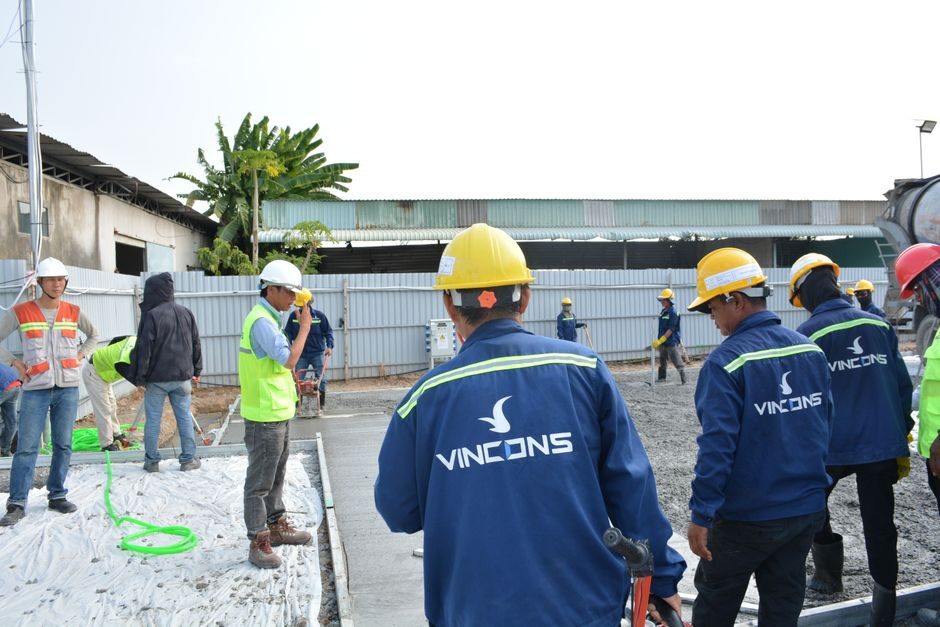
Ready-mix concrete is a factory-batched mixture of cement, water, fine and coarse aggregate, and chemical/mineral admixtures, dosed by mass at a concrete batching plant and discharged into an agitator truck for delivery in plastic state [S1][S4]. Specifiers do not buy a "brand" of ready-mix; they buy a documented mix design against a target strength class, slump, maximum aggregate size, and exposure class, and the supplier's QC records are the real product [S2].
Two regional suppliers illustrate the operating profile: Kansas Sand & Concrete in Topeka serves eastern Kansas as a ready-mix concrete supplier [S2], and A-1 Ready Mix has served the Northern Oregon Coast since 1997 under contact 503-861-3900 [S3]. Allied Market Research tracks the segment through a 2030 forecast model covering global ready-mix concrete market size, trends and segmentation [S5].
Definition and Scope: What the Specifier Is Actually Buying
"Ready-mix" in the construction sense covers any concrete batched at a fixed plant and delivered in plastic state, as opposed to materials mixed on the slab or jobsite [S1][S4]. The product is a process output: cement binder, supplementary cementitious materials, water, concrete admixture package, and graded aggregate combined under a mix-design sheet that the producer files per project [S2]. The Free Dictionary defines ready-mix as "a mixture in proper proportions of two or more ingredients, as of concrete or a food product, marketed for consumer or construction use" [S4].
Selection starts with three declared numbers on the mix-design submittal: target compressive strength (e.g. 25, 30, 35, 40 MPa at 28 days), nominal maximum aggregate size (10, 14, 20, 40 mm), and slump or slump-flow at point of discharge (typically 75–200 mm for slump, 500–800 mm for SCC) [S2]. Exposure class — carbonation, chlorides, freeze-thaw, sulfates, chemical attack — drives the maximum water/cement ratio and minimum cement content, which in turn lock the admixture dosing window [S5].
Strength, Slump and Aggregate: The Three Numbers That Gate the Order
Specified 28-day compressive strength is the headline parameter: 20 MPa for non-structural blinding, 25–30 MPa for typical slabs and footings, 35–40 MPa for columns and beams in commercial frames, and 50 MPa+ for high-rise columns, bridge decks and precast match-casting [S5]. Each step up in strength class requires a tighter w/c ratio (commonly 0.40–0.55 for structural mixes) and a finer aggregate grading, both of which raise paste demand and pump pressure [S2].
Slump at discharge is the second gate. 50–100 mm suits pavers and hand-tamping; 100–180 mm suits pump placement and slab pours; 180–200 mm is the practical ceiling before segregation risk; self-consolidating concrete (SCC) is specified by slump-flow 500–800 mm rather than slump [S2][S5]. Coarse-aggregate nominal size follows reinforcement spacing: 10 mm and 14 mm for heavily reinforced sections, 20 mm for beams and columns, 40 mm for mass concrete and large footings [S2].
Three concrete-pumping facts that re-route the order: pumpable mixes need a continuous fine-aggregate grading curve and ≤25% retained on the 9.5 mm sieve to avoid line blockage; boom-pump pressures of 60–85 bar at the truck put a ceiling on angular aggregate content; and placing via concrete vibrator poker requires enough plastic viscosity to consolidate without segregation, so undervibrated high-slump mixes bleed and overvibrated low-slump mixes leave rock pockets [S2][S5].
Exposure Class, Durability and the w/c Ceiling

Exposure class controls the w/c ratio ceiling and the minimum binder content before strength is even discussed. Carbonation-driven XC classes cap w/c at 0.65 (XC1) down to 0.45 (XC4); chloride XD/XS classes drop to 0.40–0.45; freeze-thaw XF classes demand air-entrainment at 4–6% with w/c ≤0.45–0.55; chemical-attack XA classes cap w/c at 0.45–0.50 and often force sulfate-resisting cement [S5].
Supplementary cementitious materials — fly ash (typically 15–30% replacement), ground granulated blast-furnace slag (30–65%), silica fume (5–10%) — push long-term permeability down by refining the pore structure, at the cost of slower early strength and longer concrete curing compound retention [S2][S5]. For bridge decks and marine pours, a typical ternary blend of 50% OPC / 40% slag / 10% silica fume at w/c 0.38 routinely delivers 28-day strengths above 60 MPa and chloride diffusion coefficients an order of magnitude below plain-OPC mixes [S5].
RMC vs Site-Mix vs Precast: When Ready-Mix Is and Is Not the Right Call
RMC wins on three project shapes: urban pours inside a 30–45 minute haul radius where plant QC, weigh-batchers and admixture dosing are tighter than any site mixer can match; high daily volumes (typically above 50 m³/day) where truck cycle time and chuting economics beat site-mix labour; and pours under controlled mix-design submittals — DOT, commercial, industrial — where a mill cert and delivery ticket are contract deliverables [S2][S3].
Site-mix still has a place on remote sites, very small pours (≤5 m³), or where the only available water source is suspect and on-site proportioning avoids contaminating the plant's QC [S4]. Precast beats RMC on architectural finish, dimensional tolerance under ±3 mm, and early-strength stripping (typically 12–18 hours vs 24–48 hours for cast-in-place RMC) [S5]. A short, project-shaped decision tree: choose RMC for structural cast-in-place above 25 m³/day inside an hour's haul; choose site-mix for remote, low-volume or no-QC-contract pours; choose precast for repetitive elements, architectural finish, or 24-hour loading cycles [S2][S3][S5].
Haul Time, Temperature and the 90-Minute Working Window

ASTM C94 / equivalent plant-delivery standards cap discharge within 90 minutes of batching or 300 revolutions of the drum, whichever comes first — a hard contractual line on most RMC orders [S5]. Inside that window, slump loss runs 12–25 mm per 30 minutes in summer heat, and 30°C ambient conditions can cut the workable window to 45 minutes unless retarders or chilled water are dosed at the plant [S2].
Three field controls decide whether the pour finishes inside spec: the truck ticket must record actual w/c, admixture doses, batch temperature (target ≤32°C in hot weather) and time of first water addition; the delivery radius is planned so the last truck discharges before the first truck starts its initial set; and the placement crew is sized to finish the slab within 60 minutes of strike-off so the concrete curing compound can be applied inside the moisture-loss window [S2][S5]. On hot-weather pours above 35°C, plant-side options that the specifier can write into the order include chilled mix water, ice as a partial water charge, and Type II/IV low-heat cement [S2].
Steel Fiber Reinforcement as a Ready-Mix Additive
Steel-fiber dosing at 20–40 kg/m³ converts a standard ready-mix into a fibre-reinforced mix used for ground-supported slabs, pile-supported deck slabs, tunnel segments and shotcrete [S2]. The fibres — typically 30–60 mm long with hooked or crimped ends and 50–80 aspect ratio — bridge plastic-shrinkage cracks and add post-crack residual strength of 1.0–2.5 MPa at 3% volume fraction [S5].
Specifiers comparing fibre systems against traditional rebar should note that steel fibers replace mesh reinforcement in slab-on-grade but do not replace structural rebar in beams and columns; for structural reinforcement decisions, the project-level comparison of Steel Fiber vs Steel Section: Reinforcement Role and Load-Path Function lays out where each system carries load and where they overlap [S2][S5]. For pricing context, fibre cost is a function of aspect ratio, tensile strength (1,000–2,000 MPa typical) and packaging, as detailed in the Steel Fiber Price & Cost Guide 2026: Spec, Grade and Sourcing Levers [S5].
QC, Standards and the Paper Trail the Inspector Will Ask For

Four documents accompany every RMC delivery and the specifier's submittal review should check them in advance: the mix-design sheet with target strength, w/c, admixture dosages and aggregate source; the plant's QC records (typically last 12 months of compressive-test results, ≤1 per 100 m³ per mix); the mill certificate for the cement and any supplementary cementitious materials; and the truck ticket recording batch time, water added at site, slump at discharge and concrete temperature [S2][S5]. Common governing standards the supplier is working to include ASTM C94 (ready-mixed concrete), ASTM C150 (Portland cement), ASTM C494 (chemical admixtures), and EN 206 (concrete specification in Europe) [S2][S5].
Acceptance testing on site is normally 28-day compressive cylinders cast at point of discharge, with frequency 1 set per 100 m³ or per pour day, whichever is more frequent; early-break cylinders at 7 days are tracked as a process control, not an acceptance criterion [S5]. Two sign-offs to keep on file: the producer's mix-design submittal accepted by the engineer-of-record before the first pour, and a written confirmation of any field water addition, since each 10 litres of water added on the slump-test pad raises the w/c by roughly 0.01 and drops 28-day strength by 4–6 MPa [S2][S5].
Trackable signals over the next 6–12 months: the 2026–2030 forecast updates from Allied Market Research on regional cement and SCM availability [S5], and the continued rollout of lower-clinker CEM II / CEM III cements in European EN 206 markets, which is pushing the cement-side cost line and pushing admixture dosage windows wider on standard RMC orders [S5].