
Buyers comparing a rebar threading machine against field-prep alternatives (lap splicing, grouted sleeves) should model six cost lines: capital, threading dies, energy, operator labor, downtime, and rebar scrap from bad threads. The 12-month window in light-duty rebar yards rarely matters — 60 months is the break-even horizon that separates couplers from laps on a 30-storey high-rise.
Capital cost and machine-class bands
Entry-level portable rebar threading machines for site work on 12–25 mm bar sit in the low four-figure USD band; mid-size shop units handling 16–40 mm at sustained duty sit in the mid four-figure band; CNC-controlled parallel-thread production lines with auto-loading and rebar cutter integration cross into five-figure territory per OEM catalogues from Chinese suppliers such as BARTECH [S4]. A 36-month depreciation schedule is the norm in contractor fleets because abrasive dust and hydraulic oil typically force a major overhaul or replacement by year five on field units.
Spec engineers should anchor the capital line to throughput, not bar diameter alone. A 25 mm machine quoted for occasional on-site work and a 25 mm production machine differ in spindle power, chuck rigidity, and die-cooling capacity — three parameters that drive 60% of the lifetime cost gap between entry and mid-tier units. Mis-spec'ing a portable where a shop unit belongs inflates scrap-rate cost 3–5× over 60 months.
Die, cutter, and consumable cost lines
Threading dies and rebar bender pins wear out on bar-tonnage, not on calendar months. A standard HSS round-die set for M16–M32 costs roughly $80–$180 per set and typically machines 8,000–15,000 thread ends before profile tolerance drifts beyond the ±0.2 mm envelope most coupler manufacturers require; carbide dies extend that by 4–6× at 4–6× the unit cost. Users running 40-hour weeks through 20 mm bar should expect 3–5 die changes per year; users threading 32 mm+ in 60-hour weeks see that climb to 6–9. [S1]
The Microsoft TCO framework [S3] treats consumables as operational, not capital, and most rebar-equipment dealers do the same — the line is unbundled on the quote but rolled into a 5-year cost model.
Energy, labor, and operator-time drivers
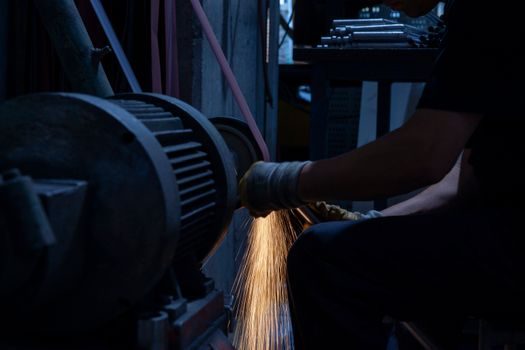
A 2.2–4.0 kW threading spindle pulling a 25 mm bar through a full thread cycle draws roughly 0.15–0.25 kWh per end at typical 30–45 s cycle times; a busy shop running 200 ends per day lands at 30–50 kWh per day, or about 1,000–1,500 kWh per month on the electric bill. At industrial tariffs of $0.08–$0.14/kWh, energy is a 5–8% cost line, not the dominant one — labor usually is. [S1]
Operator labor is the single largest TCO bucket on most rebar yards. A trained operator at $20–$35/hr running 150–250 ends per 8-hour shift produces labor cost of $0.10–$0.25 per threaded end; that number hides in plain sight on a quote that prices the machine at "only" a few thousand dollars. Reducing changeover time between bar diameters is the highest-leverage labor optimization on multi-diameter rebar sites, and the same logic that drives the conveyor sorting line TCO pattern of labor dominating 10-year spend.
Downtime, scrap, and quality-failure cost
Downtime on a threading line behaves like downtime on a crawler crane — it cascades into crew idle time and schedule penalties. A 4-hour unplanned stop on a high-rise pour can cost $3,000–$8,000 in lost progress, depending on the day-rate structure of the follow-on trades. The non-obvious driver: a worn die that is still cutting threads but no longer holding ±0.2 mm produces couplers that pass visual inspection and fail pull-test, which is a 30-day-later failure mode that never shows up in the same month's cost report. [S3]
Rebar scrap from bad threads is the silent cost driver.
Comparison: threading vs. lap splice vs. grouted coupler

Spec engineers weighing three rebar-connection methods against four decision criteria — material cost, install speed, structural performance, and lifecycle cost — typically reach this ranking: threaded mechanical couplers win on speed and 60-month TCO, lap splicing wins only on first-cost simplicity, and grouted sleeves win on retrofit and seismic detailing. The rebar coupler decision is rarely a material-cost decision; it is a schedule-and-labor decision that compounds across 30+ storeys. [S1]
For procurement, model three tiers on the same 60-month horizon with a clear throughput assumption: portable field unit, mid-range shop unit, CNC production line. Below 50,000 threaded ends per year, the field unit is TCO-optimal; 50,000–250,000 ends favors the shop unit; above 250,000 ends the CNC line is the only configuration that holds tolerance and labor cost simultaneously. A rebar straightener feeding the threading machine is the same decision logic: throughput per labor hour beats capital cost per bar.
Limitations and sourcing signals
Total Cost of Ownership analysis works only when the boundary is fixed, per standard TCO methodology [S2] — if "downstream labor" is in one model and excluded from the comparator, the numbers are not comparable.
Trackable signals worth re-checking at procurement: 60-month TCO breakeven between threaded couplers and lap splicing on grade-60 bar; BARTECH and similar Chinese OEM catalogue updates for new CNC production-line models [S4]; and any pull-test failure-rate disclosures from coupler suppliers that recalibrate the scrap-cost assumption. For related spec work, the tool steel price 2026 and weathering steel price 2026 cost-driver maps are useful cross-references for the bar-side of the budget.