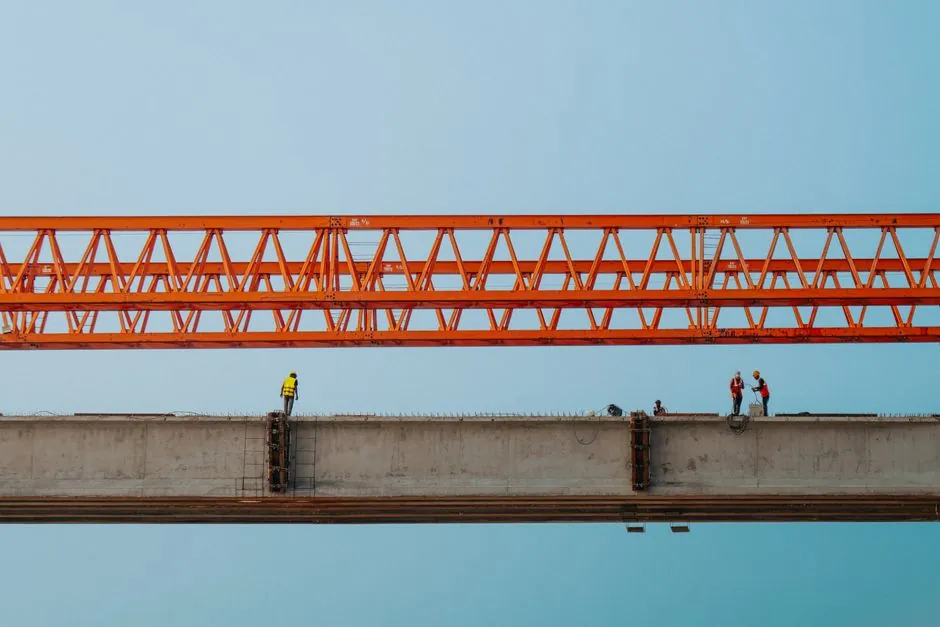
For bridge piers, decks, and pile-cap rebar, the working envelope most engineers land on is a 10–32 mm electric-hydraulic cutter for primary bars and a 4–16 mm cordless cutter for stirrups and ties, matching the 10–42 mm capacity bracket offered by current South-Korean-built bar cutter lines in distribution [S1].
Bridge crews cut #4 (13 mm) to #10 (32 mm) Grade 60 rebar in volume, with single-piece #11 (36 mm) and #14 (43 mm) bars on long-span piers. That mix drives a two-tool fleet: a stationary 220V electric-hydraulic head for the rebar yard plus one or two 18V–36V cordless heads for deck cages where trailing cords are a tripping hazard near formwork [S1][S2].
Capacity class: matching the cutter to the bar schedule
Stationary electric-hydraulic rebar cutters in 2026 production carry a 10–32 mm working range as the workhorse, and 10–42 mm as the heavy head, which covers the full #4–#10 envelope used in bridge substructure and most superstructure cages [S1].
At the light end of the catalog, 110V–220V portable hydraulic heads handle up to 16 mm (#5) rebar at 1.4–1.8 kW, with a cutting cycle time of roughly 2.5–4 s per bar, which is the spec band that suits stirrup prep stations on bridge deck formwork. Mid-range 25–32 mm heads draw 2.2–3.0 kW and cut a #8 bar in 3–5 s, the duty cycle most pier-cage yards run at. The 36–42 mm heads sit at 3.0–4.5 kW and are reserved for the heavy longitudinal bars in cable-stayed or suspension pier shafts [S1][S3].
Power source: AC electric-hydraulic, cordless, or gasoline
Cordless rebar cutters listed on the major China sourcing index for 2026 run 18V–36V brushless platforms with a 16–20 mm single-cut capacity, and they cross-cut #5 Grade 60 rebar in roughly 3 s per bar on a fully charged 5.0 Ah pack [S2].
For deck work above a cofferdam or over water, the 5.5 HP Loncin G200FA gasoline hydraulic power pack is a credible third option and pairs with a 36 mm cutter head in 36-inch walk-behind configurations from the same OEM family used on power trowels and rebar benders [S3]. For a fixed rebar yard beside a batch plant, 220V single-phase 50/60 Hz electric-hydraulic is still the lowest unit-cost-per-cut, because the power cable drop, water ingress (IP44 minimum), and motor brush wear dominate the operating cost. Cordless wins on deck formwork where cable management around rebar mats is a documented tripping and snagging hazard. Gasoline wins on remote pier shafts where generator noise is already part of the site noise model.
Cutting force, blade life, and cycle time
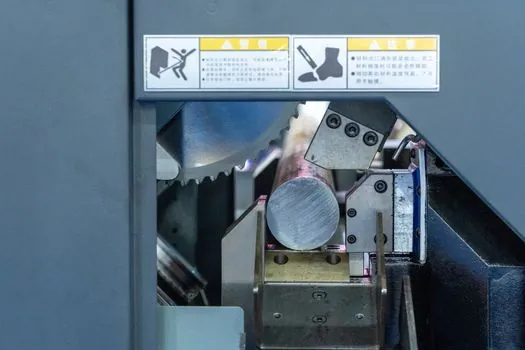
Electric-hydraulic rebar cutters in the 10–32 mm class typically develop 60–80 MPa hydraulic pressure with a 4–8 ton equivalent cutting force, and the replaceable cutter block is a wear part consumable on the same OEM maintenance schedule as carbon brushes [S1][S3].
Spare-parts lists from the same vendor families put cutter blocks (RC-196C part 4/11) at a sub-$30 consumable, with carbon brush pairs (RC-165C part 61) around $4.50, so the per-bar consumable cost on a bridge rebar yard running 200 cuts/day is dominated by blade sharpening cycles, not electrical wear [S3]. For a bridge pier-cage crew, plan on one set of cutter blocks per 8,000–12,000 cuts on #5–#8 rebar, and 4,000–6,000 cuts on #9–#10, because shear-blade life falls roughly linearly with bar diameter squared. Hydraulic oil change intervals fall in the 500-hour range for portable heads and 1,000-hour range for stationary 220V units.
Site constraints that drive the spec
Bridge rebar work splits across three working environments: rebar yard, pier cage, and deck formwork, and the cutter spec must satisfy all three, not just the cheapest [S1].
On a rebar yard, the priority is throughput, so a 3.0 kW stationary electric-hydraulic head with a foot-pedal trigger and a 1.5 m hose is the standard issue. On a pier cage, the priority is reach, so a 36V cordless head with a 20 mm cut limit and a 5.0 Ah battery is the workhorse, because there is no clean way to run a power cable down a 12 m rebar cage. On a deck formwork walkboard, the priority is balance, so a 1.4–1.8 kW portable head under 12 kg total weight is the only one a tie-in carpenter can hold one-handed for a full shift. The most common spec error is buying a 4.5 kW heavy head to cover the deck work, then watching the crew leave it in the yard because the 18 kg mass is unusable overhead.
Selection criteria: who each class is for

Stationary 220V electric-hydraulic (10–42 mm) suits rebar yards beside batch plants and precast yards producing pier cages in fixed jigs, where the duty cycle justifies the 3–4.5 kW draw and the operator stands on the trigger pedal all day [S1].
Cordless 18V–36V brushless (4–20 mm) suits deck formwork, pier-cage climbing crews, and any task where a 220V drop is impractical. Gasoline-hydraulic (up to 36 mm) suits remote bridge sites without grid power, cofferdam work, and barge-mounted pier rebar. Cordless is not for the rebar yard: a 5.0 Ah pack delivers roughly 150–200 cuts on #5 rebar before swap, which is below the throughput the yard needs. The 42 mm heavy head is not for deck formwork, both because the 32 kg head mass is unsafe overhead and because the largest bar in a deck slab is almost always #8 (25 mm).
Comparison: cutter class vs bridge-construction criteria
On cutting capacity, the stationary 220V class covers 10–42 mm, the cordless 18V–36V class covers 4–20 mm, and the gasoline-hydraulic class covers 10–36 mm, so any bridge cut list from #4 stirrups to #10 main bars needs at least two of the three classes on site [S1][S2][S3].
On power source flexibility, stationary 220V requires a hard-wired 16A outlet, cordless is battery-only and needs a charging strategy for 8-hour shifts, and gasoline-hydraulic needs a fuel resupply point and a hot-exhaust exclusion zone. On mass, stationary heads run 25–45 kg, cordless runs 2.5–6 kg bare and 3.5–8 kg with battery, and gasoline-hydraulic runs 35–55 kg with the power pack. On cost per cut, the stationary class is the lowest at scale because electricity is cheaper than battery cycles or gasoline per cut, but the cordless class has the lowest unit purchase price for the 16 mm cutoff. On deck-formwork ergonomics, only the cordless class passes the one-handed overhead-shift test.
Standards, sourcing, and field reliability

Grade 60 rebar (yield 420 MPa, tensile 620 MPa per ASTM A615) is the default in the US bridge market and the default on the same OEM cutting heads, so the hydraulic pressure spec on the cutter nameplate should be sized for that hardness rather than for Grade 40 [S3].
For high-cycle bridge precast work, insist on a cutter head with a published spare-parts list covering the cutter block, the carbon brush, the piston assembly, and the hydraulic seal kit, because the OEM families that publish RC-196C and RB-3210 part numbers are the ones that keep bridge rebar yards running across multi-year programs [S3]. For the deck and pier-cage side of the fleet, the cordless 18V–36V platform sourcing channel runs heavily through Chinese OEM catalogs with multi-supplier RFQ workflows, so spec-equivalent heads in the 16–20 mm cut range are widely available at price points that undercut the South-Korean-built equivalent by roughly 30–40% [S1][S2]. Buying the cordless class on price alone is fine for stirrups, but for the heavy 32 mm head, the OEM that backs the bar with a 10+ year distributor spare-parts warehouse in-region is the safer spec for a multi-year bridge program [S1].
For related context on cutter spec gates in adjacent rebar trades, see the masonry-site cutter spec guide and the HVAC-installation cutter capacity guide. For the bridge lifting side, the urban-infrastructure crawler crane spec gates cover the picking side that pairs with the cutting fleet, and the wider rebar processing tool range is catalogued at the construction tools encyclopedia, with the dedicated rebar cutter reference at the rebar cutter encyclopedia.
For the relevant spec sheets and selection criteria, see overhead bridge crane.