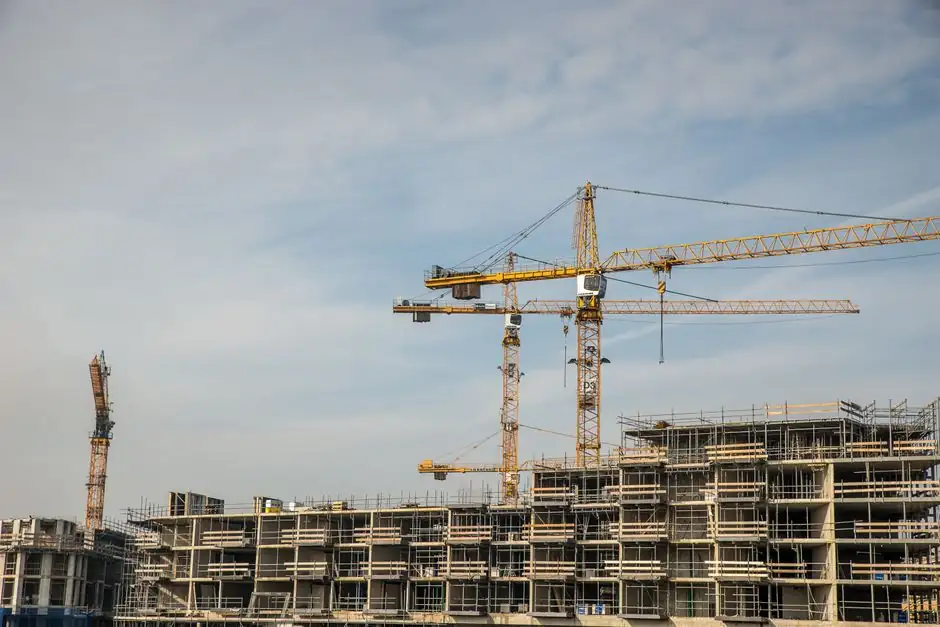
Urban infrastructure jobs in 2026 spec crawler cranes inside a 25-300 t capacity band, with telescopic units dominating the sub-100 t site-confined work and lattice booms taking over for heavy civil lifts above 150 t [S5]. A working fleet of 318 used crawler cranes, 103 mobile units, and 5 tower units is the live inventory baseline at one Shenzhen-based equipment manager, illustrating the used-equipment supply depth behind the urban rental market [S2].
The selection pressure is not headline capacity, it is the interaction of three city-site variables: footprint, ground pressure, and assembly time on a restricted street. The article below maps the 2026 spec gates for buyers, project engineers, and rental-procurement teams working on metro extensions, bridge refurbishment, and utility-tunnel jobs.
Capacity band and boom-type split for city sites
For urban infrastructure, crawler cranes cluster into a 25 t sub-100 t telescopic segment and a 70 t sub-300 t lattice segment, with almost no overlap on real sites [S5]. A 25 t telescopic crawler is the smallest unit that still fits the lifting work envelope on a tight city footprint, while a 220 t telescobic crawler handles large civil infrastructure lifts that would otherwise demand a lattice machine. The lattice band opens at 70 t for piling service-crane duty and runs to 300 t on luffing-jib combinations [S5].
Reference used-fleet examples line up with that split: the SCC1000A-6 delivers 100 t maximum lifting capacity with a 64 m maximum boom length and 396 t·m maximum lifting moment, the SCC2000A-2 hits 200 t / 85 m / 1152 t·m, and the SCC3200A-2 reaches 320 t / 86 m / 1820 t·m [S2]. For metro, bridge, and utility-tunnel work, the 100 t class is the workhorse; the 200-320 t class is reserved for pier-caps, large prefabricated bridge sections, and shaft-top placements.
Ground-bearing pressure and the urban paving problem
Crawler cranes transfer their weight through track shoes, bottom rollers, top rollers, idlers, and sprockets, and ground-bearing pressure is the single most-cited rejection reason for urban deployments [S4]. On a freshly paved city street, asphalt tolerance is typically in the 80-120 kPa range before the surface crushes; on temporary matting or concrete slab, that ceiling moves up but the crawler footprint geometry still drives the calculation. Track-shoe width and track-frame length set the contact area, so two cranes of equal capacity can have radically different ground pressures.
The undercarriage parts supply chain also runs on tight city schedules: ISO 9001 certified undercarriage parts, including track shoes, track rollers (bottom and top), front idlers, and sprockets, are quoted at 7-14 day shipment from Shandong-based OEM/ODM lines, with 40Mn2 as the typical top-roller material and 35SiMn as the typical sprocket material [S4]. If a city project cannot tolerate a 7-14 day parts lead time on a critical wear item, the crane selection itself is wrong, not the supplier.
Operator gating and rental-fleet realities

For urban work, the operator is part of the spec, not an afterthought. UK rental fleets vet and test operators through a CPCS training centre, then keep them in-house rather than subcontracting, on the logic that competency plus familiarity with a specific machine reduces lift-plan rejections on constrained sites [S5]. That operator-controlled model is increasingly the procurement default in city work where lift permits are issued to the named operator, not the bare equipment.
Fleet age also matters: the SCC1000A-6, SCC2000A-2, and SCC3200A-2 units in active resale inventory are 2020-2021 production, indicating a roughly 5-6 year economic life on the secondary market for 100-320 t crawlers [S2]. Buyers running urban infrastructure fleets should treat that 5-6 year window as the realistic residual-value horizon when sizing capex vs rental.
Comparison: telescopic vs lattice for urban lifts
Side by side, telescopic crawlers win on assembly time, partial-radius repositioning, and a 25-220 t envelope that matches most city lift plans; lattice crawlers win on absolute capacity (up to 300 t and beyond), longer main boom reach, and lower purchase/rental cost per ton of lift [S5]. For a 25-80 t metro station or utility-tunnel lift, telescopic is the default; for 150 t plus bridge-segment or pier-cap lifts, lattice is the default. The break-even on rental rate per shift usually sits between 100 t and 150 t, but the deciding factor is almost always site assembly radius, not price.
A 220 t telescopic can replace a 300 t lattice on some lifts if the radius is short and the rigging is light; conversely, a 70 t lattice will outperform a 100 t telescopic on long-reach bridge work because the lattice boom sections add reach without stacking telescopic mass into the upper structure [S5]. For more on the port-side envelope of the same machines, see the port and terminal crawler crane spec gates reference.
Undercarriage parts sourcing as a selection filter
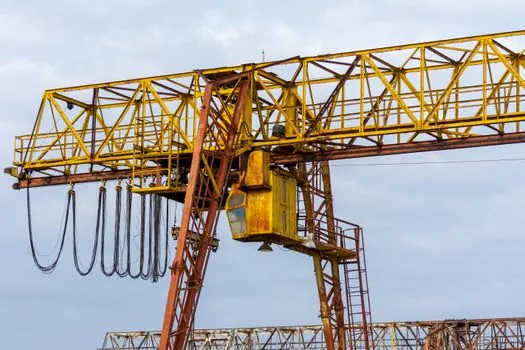
Selecting a crawler crane for urban infrastructure without confirming undercarriage parts availability is a procurement error. The five critical undercarriage wear parts, track shoe, track roller (bottom), top roller, front idler, and sprocket, must be available ex-stock or within the 7-14 day shipment window; this is the de facto lead-time ceiling for city projects where lane rentals run on the clock [S4].
Materials of construction on these parts are standardised enough to use as a bid filter: top rollers in 40Mn2 and sprockets in 35SiMn are the published OEM baseline, and the bolt-type vs spline-type sprocket split is a real engineering choice that affects track-frame serviceability [S4]. Buyers should require ISO 9001 certification on the undercarriage supplier and a documented 7-14 day shipment window before signing a rental or purchase contract.
Adjacent selection gates that bleed into crawler crane decisions
Crawler crane selection rarely sits alone. The same project team choosing a crane for a metro extension is also choosing steel pipe for casings, bearings for rigging trollies, and safety gloves for the lift crew, and the spec discipline transfers. A useful cross-check is the steel pipe spec gates for 2026 data-center builds, which applies the same capacity-band / lead-time / certification logic to a different commodity. For sites adjacent to agricultural land or soft-ground easements, the agricultural crawler crane ground-pressure reference carries the most directly transferable ground-pressure math. [S3]
A crawler crane reference page is the starting point for engineers new to the category, and the related mobile crane, tower crane, and gantry crane entries cover the adjacent equipment families that often compete for the same lift on a congested urban project.
Limits, failure modes, and what the spec does not fix
No spec sheet fixes a bad lift plan. The dominant failure modes on urban crawler lifts remain outrigger or track-frame settlement on weak sub-base, slewing interference with overhead tram or trolley cables, and rigging crew error during partial-radius lifts, and each of these is governed by site practice, not the crane spec. Operator certification through a scheme like CPCS addresses only the third item; the first two are civil-engineering and permitting problems [S5].
The used-fleet supply depth (318 crawler cranes, 1000+ cooperative channel units, 100+ second-hand units sold annually at one major Chinese equipment manager) means the market is not capacity-constrained in 2026; the constraint is ground-bearing, permit windows, and operator access [S2]. A buyer who arrives with a verified ground-pressure calculation, an in-house or contract operator with city-site experience, and a 7-14 day undercarriage-parts guarantee from an ISO 9001 supplier will not lose the bid on equipment availability.
Trackable signals for the next planning cycle: any published 2026 update to the CPCS crawler operator test scope, any change in the 7-14 day undercarriage parts shipment window, and any new 25 t or 300 t class machine launches that shift the telescopic vs lattice break-even. Monitor OEM launch notes from late 2026 and Q1 2027 for the next capacity-band revision.