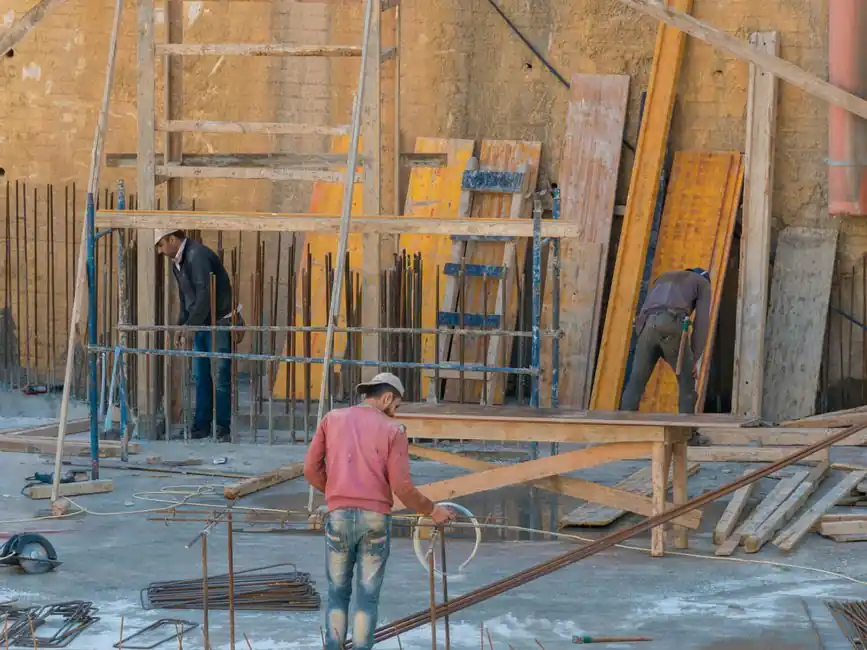
On plumbing installations, a rebar straightener lives next to wet pipe work, drainage trenches, and floor drains, so its maintenance routine is shaped by water, slurry, and corrosion risk as much as by steel feed rate.
Field data from the Ethiopian TTLM facility-maintenance curriculum (CON SIW2) lists OHS, leakage isolation, and damaged-component repair as core competencies for any pipe-side technician [S1]. The same baseline of inspection-plus-minor-repair logic that drives commercial plumbing upkeep applies, in reverse, to the straightener sitting two metres from the trench.
Why a Plumbing Site Changes the Straightener's Service Interval
Commercial plumbing maintenance is governed by the principle that preventative inspections and minor repairs are more cost-effective than dealing with emergencies, and the same arithmetic applies to the rebar straightener parked beside the pipe run [S2]. A 156-page facility-maintenance training guide (CON SIW2 TTL M, July 2020) explicitly trains technicians to locate, isolate, and clear blockage, leakage, broken, loosen, smell odor, and damaged conditions on every visit [S1].
On a wet plumbing site, those six failure modes translate directly into the straightener: slurry ingestion = blocked roller cover, wash-down runoff = corroded frame, accidental impact from pipe handling = bent shaft, dropped rebar off-coil = loosened die, hydraulic seep = smell, and chipped die lips = damaged material. Plan a 50-hour visual check, not a 200-hour one, when the unit sits within 3 m of an open trench or wash-down bay.
Daily Checks: Roller Alignment, Lubrication, Water Exclusion
A commercial maintenance regime treats leaks, clogs, and corrosion as the three leading failure modes in any water-side system, and the straightener is no different once you swap "pipe" for "feed path" [S2]. Run a five-point daily check before the first bar goes in: (1) feed roller parallelism within 0.2 mm across the full width, measured with a dial gauge on the exit side; (2) gearbox oil level at the sight glass midline; (3) grease nipples on each roll bearing purged until fresh grease appears, typically 2-3 strokes per nipple on a 5-roll unit; (4) electrical enclosure IP rating verified dry, with the cover gasket seated and all bolts torqued; (5) chip pan and coolant tray emptied.
The TTLM guide lists selecting tools and equipment, including personal safety equipment, as a prerequisite to any installation task, so PPE (cut-resistant gloves, eye protection, hearing protection) is non-negotiable during the check itself [S1]. A plumber's anti-sweat valve habit, installed to stop condensation dripping onto fittings, mirrors the practice of fitting drip trays under the straightener's electrical panel [S3].
Common Failure Modes and Their Root Causes
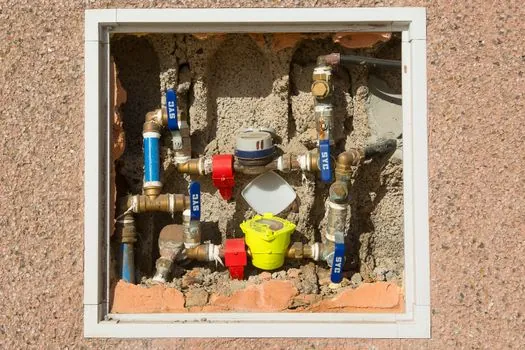
Five failure modes dominate field reports on plumbing-site straighteners. First, bent output: a bar leaves the unit with a residual bow greater than 2 mm per metre, almost always caused by a worn or chipped straightening die on the outer rolls. Replace the die set, do not shim, because shimming shifts the load to the inner rolls and burns the bearings. Second, chatter or rhythmic noise at feed speed: the cause is a loose roll-bearing locknut, the fix is to re-torque to the OEM figure (typically 180-220 Nm on a mid-size 5-roll unit) and re-check alignment.
Third, hydraulic creep on the feed ram: the cause is a worn seal kit, the fix is a full seal replacement every 2,000 hours regardless of appearance, because NBR seals degrade in contact with the glycol-derivative cutting fluids used on site. Fourth, electrical trips after a wash-down: the cause is water ingress past a degraded enclosure gasket, the fix is full gasket replacement and a dielectric grease re-coat on every terminal. Fifth, motor overheating on a hot day: the cause is a blocked cooling fan cowl clogged with concrete dust, the fix is a 10-minute blow-down with compressed air at less than 2 bar [S2].
Water, Slurry, and Corrosion: Plumbing-Specific Risks
Because the unit sits inside an active plumbing zone, wash-down water, drilling slurry, and concrete curing bleed water are constant threats. The commercial maintenance literature flags corrosion, particularly in older pipes, as a leading weakness that can lead to leaks and system failures, and a straightener frame suffers the identical galvanic and oxidation pathways when slurry dries on bare steel [S2].
Insulate hydraulic lines from contact with the slab using rubber matting, the same principle behind insulating domestic pipes to stop condensation dripping onto fittings [S3]. A water-softener or anti-sweat valve has no place inside the straightener itself, but the philosophy of keeping moisture off steel is identical.
Lubrication, Wear Parts, and the Spare-Parts Map
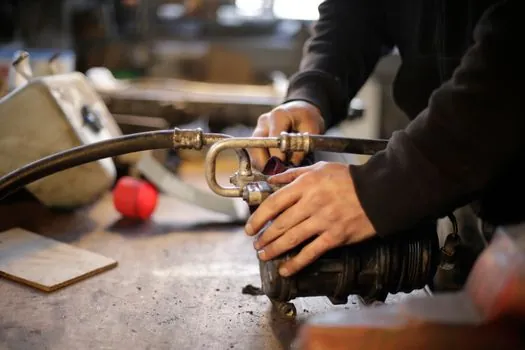
A standard 5-roll rebar straightener consumes five consumable families: straightening dies (replace every 800-1,200 hours depending on bar grade), feed-roll bearings (replace every 2,000 hours), gearbox oil (drain at 500 hours, then every 1,000 hours), hydraulic seals (every 2,000 hours), and electrical contactor kits (every 3,000 hours or on visible pitting). Keep two die sets on the shelf: one in service, one in the cage. The TTLM curriculum trains technicians to calculate quantity and type of materials before starting work, so the consumables list should be a printed job-sheet item, not a verbal guess [S1].
Stagger die rotation front-to-rear every 200 hours so wear evens out, then re-shim the rear die stack to maintain the original centreline. The cost of doing this is roughly one-tenth of a single premature bearing failure, a ratio the commercial maintenance literature supports with its "minor repair now vs. emergency later" argument [S2].
When to Repair vs. When to Escalate
Repair on site when the failure is mechanical and within the technician's competence: die change, bearing re-torque, gasket replacement, lubrication, and electrical contactor swap. Escalate to the OEM service partner when the gearbox shows metallic swarf on the magnetic plug (internal gear damage), when the main shaft shows measurable runout greater than 0.05 mm at the die-mounting face (housing fatigue), or when the hydraulic cylinder shows signs of rod scoring deeper than 0.1 mm (chrome failure). The same escalation logic that pushes a chronic slab leak toward re-piping rather than patch-repair applies here: if three repair attempts in 30 days have not held, replace the subassembly, do not repeat the repair [S2].
For a deeper cross-trade comparison of tool-side maintenance practice on a wet site, the rotary hammer safety and dust-control protocol covers PPE, vibration exposure, and silica controls that overlap with the straightener's operating envelope. For broader pneumatic-circuit maintenance context, the air solenoid valve classification reference maps the kind of contamination paths the straightener's solenoid bank will see in a wet trench.
Track the next service interval on a sticker on the electrical panel, log hours in a paper or digital job sheet, and replace consumables on time rather than on failure; on a plumbing site, the cost of a wet breakdown is roughly three times the cost of the same breakdown in a dry steel yard because of the added pipe-work damage and water-line shutdown.
Spec-level background on the components involved: rebar, and rebar bender.