
Rotary hammers and handheld chipping tools are governed by OSHA 1926.300(a), which requires that "all hand and power tools and similar equipment, whether furnished by the employer or the employee, shall be maintained in a safe condition" [S2].
Operation of a rotary hammer in concrete or masonry generates three concurrent hazards: high-energy flying debris, hand-arm vibration syndrome (HAVS) exposure, and respirable crystalline silica dust. Construction teams must engineer controls around all three vectors, not just the obvious impact risk.
PPE Baseline for Rotary Hammer and Jackhammer Operators
Baseline PPE for any operator in the work area includes hearing protection, safety glasses, and steel-toed boots, while operators themselves must add gloves and metatarsal guards [S2]. Insulating gloves are mandatory whenever the location of underground electrical power lines is unknown, because a jackhammer bit striking an energised conductor delivers a direct ground path through the operator [S2].
Eye protection is non-negotiable across every documented rotary hammer warning label: a bare-minimum specification requires ANSI Z87.1-rated safety glasses, with face shields recommended for overhead or vertical drilling where chips eject upward. The demolition hammer class adds a secondary requirement for cut-resistant gloves, because chiselling bits can bind and snap the housing suddenly.
Vibration Exposure and Task Rotation Thresholds
Prolonged rotary hammer use causes Hand-Arm Vibration Syndrome, with documented symptoms including numbness, tingling, reduced dexterity, tendonitis, carpal tunnel syndrome, and back pain from compensatory posture [S1]. A 15-minute continuous-use threshold is the published rotation trigger: "if the jackhammer is to be used for periods of greater than 15 minutes, workers should rotate the task to minimize chances of injury" [S2].
Lifting posture is specified in detail: feet shoulder-width apart, body square to the tool, lift with upper body and legs, never the back [S2]. This posture spec matters because a typical 30 kg class rotary hammer places its centre of mass well forward of the operator's spine, magnifying lumbar shear forces. The mechanical design context for these vibration profiles is covered in Rotary Hammer Working Principle: EP Piston, SDS Shank, and Bit Energy Path, which explains why anti-vibration side handles and decoupled main grips are spec-relevant.
Respirable Crystalline Silica: 1926.1153 Compliance Map
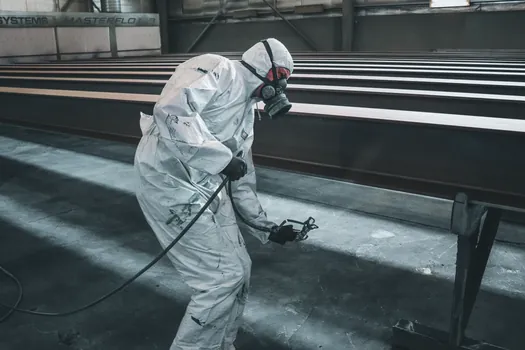
Drilling, breaking, or chipping concrete, stone, or masonry with a rotary hammer releases respirable crystalline silica, and "the small particles of silica can irreversibly damage the lungs" including causing silicosis [S2]. OSHA 1926.1153(c)(2)(ii) requires that "for tasks performed using wet methods, apply water at flow rates sufficient to minimize release of visible dust" [S2].
Two engineering controls are listed as compliant: wet methods (continuous water stream at the bit strike point) and Vacuum Dust Collection Systems (VDCS), where a shroud around the tool connects to a vacuum capturing dust at the cutting point [S2]. When controls are inadequate indoors or in enclosed areas, respiratory protection with a minimum Assigned Protection Factor (APF) of 10 is required, with the same APF 10 threshold applying outdoors whenever use exceeds 4 hours per shift [S2]. NIOSH/MSHA-approved respirators must match the specific material being drilled, per manufacturer warning labels [S3].
Electrical Safety: Cord Handling and GFCI Requirements
Power cord management is a documented failure path: cords must be properly coiled and stored to prevent tangles, kinks, or insulation damage, and operators must avoid stepping on the cord during use [S1]. Where water is used for dust suppression, the same standard requires GFCIs and watertight, sealable electrical connectors for all electric tools on the circuit [S2].
For pneumatic or hydraulic rotary hammer platforms, the air hose coupling must be verified secure before each use, and the hose stretched out away from foot traffic to eliminate the tripping hazard [S2]. When the tool is idle but still on the job, it should be laid down, not propped up, because an upright tool can fall and cause crushing injuries to feet or legs [S2].
Comparison: Wet Methods vs VDCS vs APF 10 Respirators
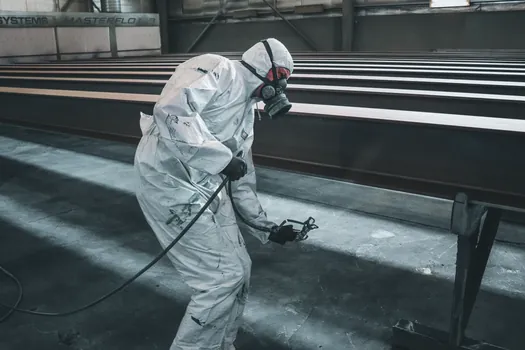
Selection between the three compliant dust controls depends on jobsite power, water availability, and shift duration. Wet methods need a pressurised water source at the bit and create slurry cleanup; VDCS needs a HEPA-rated vacuum with sufficient CFM at the shroud and creates dry waste handling; APF 10 respirators are always additive, never a substitute for engineering controls [S2].
For indoor or enclosed work, wet methods or VDCS alone "may not reliably keep exposure low" and additional ventilation, via exhaust trunks or portable fans, is required to reduce visible airborne dust [S2]. The decision matrix below maps typical scenarios to the lowest compliant control set:
Outdoor work under 4 hours/shift: VDCS or wet methods alone, no respiratory protection mandated. Outdoor work over 4 hours/shift: VDCS or wet methods plus APF 10 respirator. Indoor or enclosed work of any duration: VDCS or wet methods plus APF 10 respirator plus auxiliary ventilation. The hierarchy is engineering control first, respiratory protection as supplement, never as primary.
Equipment Inspection, Storage, and Refusal-of-Use Rights
Pre-use inspection must confirm all safety devices and warning labels are present, legible, and functional; "if any safety devices or warnings have been removed, defeated, defaced or rendered inoperable, DO NOT USE THIS EQUIPMENT" [S3]. The operator is the legally responsible party for safe operation, not the rental house or supplier [S3].
Hydraulic and pneumatic hammer platforms require dry, covered storage protected from the elements, with accessories stored together to prevent seal contamination and corrosion at hose couplings [S4]. Warning labels must be forwarded to the actual user if the receiver of the tool is not the operator, closing the chain-of-custody gap common on subcontractor-heavy job sites [S3].
Bits, Materials, and Application Matching
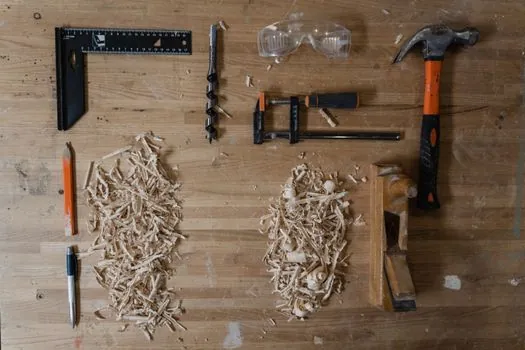
Always use the right bit for the substrate; SDS-Plus and SDS-Max shanks are not interchangeable, and a mismatched chuck or bit can detonate the piston mechanism. Masonry, concrete, metal, and other materials each generate dust compositions with different NIOSH-approved respirator requirements, and the operator must review the material safety data sheet before drilling unfamiliar substrates [S3].
California Prop 65-listed substances including crystalline silica appear on standard rotary hammer bit warning labels, and the warning explicitly states the product "contains or produces one or more chemicals known to the State of California to cause cancer, birth defects or other reproductive harm" [S3]. Operator-facing documentation on construction machinery and equipment selection should always cross-reference the bit and substrate pairing before task assignment.
For sites co-locating rotary hammer work with heavy mobile equipment, the vibration and exclusion-zone spec practices in Wheel Loader Safety Requirements and Operating Precautions provide a parallel framework for exclusion radii and spotter protocols.
The next trackable signal is OSHA's ongoing enforcement data on 1926.1153 citations in the construction segment, which has trended upward since the silica standard's effective date; site safety managers should pull the latest two quarters of citations before any concrete demolition mobilisation to confirm the local compliance officer's interpretation of "visible dust" under 1926.1153(c)(2)(ii).