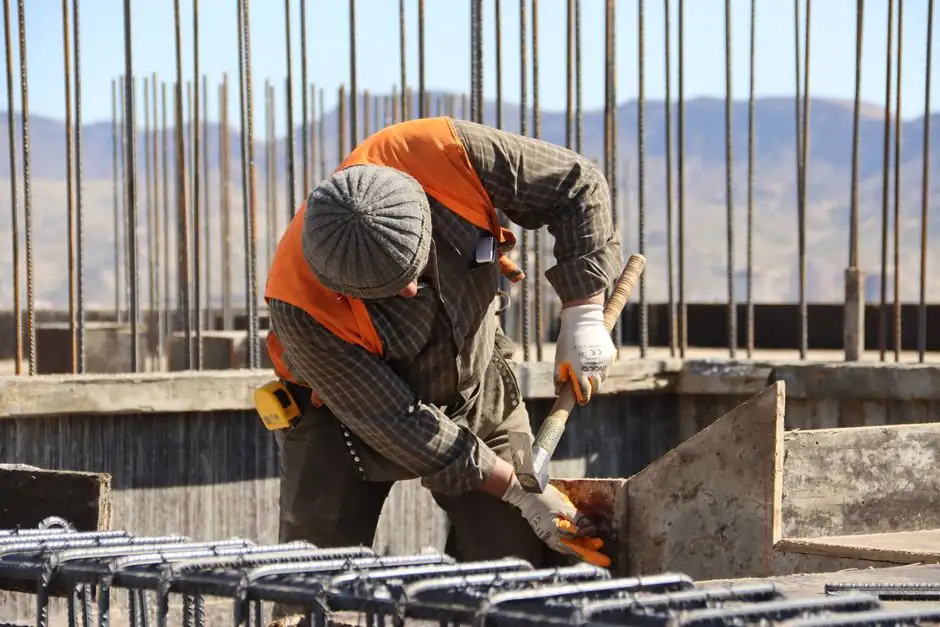
Demolition rebar arrives bent, twisted, and mixed in diameter, so the first selection question is throughput per crew hour versus mobility on slab [S2][S3].
Two tool families dominate: handheld hydro-electric units for in-place straightening of rebar still embedded in slabs or in tight access, and stationary rotor straighteners for scrap-yard processing of recovered bars [S1][S2].
Demolition Bar Diameter Range and What It Implies for the Tool
Recovered rebar from building demolition typically spans Ø6mm stirrups up to Ø20-25mm main bars, with most mixed loads landing in the Ø6-20mm band [S3]. A single-diameter machine wastes changeover time when the pile contains 6mm ties and 16mm structural bar in the same bin [S3].
The SL-GT-6-20 addresses that with eight dedicated sizing holes, 6/8/10/12/14/16/18/20mm, plus a 300mm minimum straightening length, which is short enough to process small cut-offs and bent stirrups economically [S3]. For yard operations handling Ø16-25mm round bar almost exclusively, the YC16-24 covers Ø16-25mm at 20 m/min with a 15 kW motor and a 900 kg frame, while the lighter MYH6-14 covers Ø6-14mm at a faster 35 m/min on 9.5 kW [S2].
Handheld Class: RD8-20 Hydro-Electric for Confined Slab Work
The RD8-20 is a handheld hydro-electric rebar straightener rated to maximum #6 / 3/4 inch / 20mm rebar, weighs 18.5 lb, and runs on a DeWalt 18V battery, with 90 degree head rotation and a double-acting cylinder for in-place work [S1]. It is targeted at professional demolition and construction crews that need to straighten coils or rebar still anchored in concrete in confined spaces where a bench machine cannot be set up [S1].
Use it when the rebar is still partially embedded, when the crew is on a mezzanine or in a basement doorway, and when throughput per bar is low but portability is non-negotiable. Do not use it as a substitute for a rotor straightener on bulk scrap: battery cycle, manual feed rate, and the 20mm ceiling cap volume yard work, and the head is a straightener only, not a bender-cum-straightener like the larger YC bench units [S1][S2].
Bench Rotor Class: Throughput, Motor Power, and Bar-Size Matchup
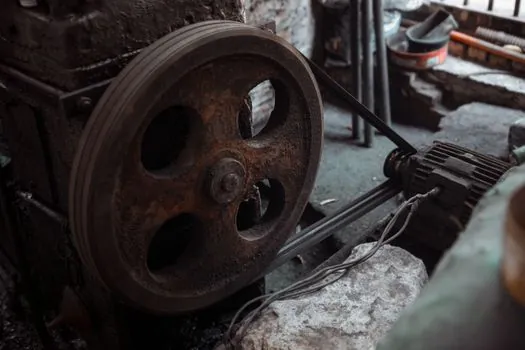
For scrap-yard demolition rebar, the rotor straightener is the workhorse. The MY2-5 handles Ø2-5mm wire coil on a 3 kW motor at 20 m/min and weighs only 100 kg, so it sits on a bench for thin tie wire and light scrap [S2]. The MY5-12 steps up to Ø5-12mm at 20 m/min on 5.5 kW, 330 kg, suited to mid-size scrap bar [S2]. The MYH6-14 covers Ø6-14mm at the line's fastest 35 m/min on 9.5 kW, 850 kg, for mixed round bar, scrap rebar, and rebar coil [S2].
For heavy structural demolition scrap, the YC6-14 (Ø6-14mm, 7.5 kW, 700 kg, 25 m/min) and the YC16-24 or MY10-25 (Ø10/16-25mm, 15 kW, 900 kg, 20 m/min) are the typical picks [S2]. Across the line, straightening speed clusters at 20 m/min except the MYH6-14 at 35 m/min, and motor power scales with diameter: 3 kW for Ø2-5mm, 5.5-7.5 kW for Ø6-14mm, and 15 kW for Ø16-25mm [S2]. The trade-off the rotor pays for that speed is heat: friction at high rotor rpm produces surface scratches that incidentally remove rust, and the system needs cooldown discipline on continuous shifts [S2].
Selection Criteria: Mobility, Diameter, Throughput, and Power Source
Match on four criteria. First, mobility: handheld battery for in-place slab work, bench rotor for yard-side processing [S1][S2]. Second, diameter window: RD8-20 caps at 20mm handheld; bench rotor spans Ø2-25mm depending on model, with a single machine typically covering a 6-12mm window [S1][S2][S3]. Third, throughput: rotor machines run 20-35 m/min continuous, handheld is bar-by-bar cycle time. Fourth, power: 18V battery versus 3-15 kW mains electric, with no hydraulic power pack needed for the handheld class because the cylinder is driven from a compact hydro-electric head [S1][S2].
For mixed demolition scrap, a single SL-GT-6-20 with eight mold holes replaces two or three single-diameter rotor machines and accepts both stirrups and main bars down to 300mm length, which is the practical case for American scrap-recycling plants handling recovered building stock [S3]. Crews that need to straighten and bend in one tool on the slab should also review a rebar bender selection guide for concrete work before committing to a single-purpose straightener.
Demolition-Specific Failure Modes and Limits

Three failure modes show up in the field. First, rotor heat: high-speed friction straightening of contaminated demolition scrap (concrete dust, rust scale) generates surface scratches and heat that can degrade cut quality on downstream shears, so rotor machines are usually derated on dirty bar [S2]. Second, diameter mis-match: feeding Ø20mm bar through a Ø6-14mm rotor stalls the motor and damages rollers; tooling changes are mandatory, not optional, on mixed demolition piles [S2][S3]. Third, handheld battery cycle: the RD8-20 runs on DeWalt 18V, so a demolition crew on a long slab day needs 3-4 charged packs per shift, and 20mm bar is the absolute ceiling regardless of battery state [S1].
For crews that also break concrete around the rebar, a demolition hammer selection map for masonry pairs naturally with the handheld rebar straightener on the same job: hammer exposes the bar, straightener brings it back to spec, shear cuts. For steel-structure demolition where rebar is replaced rather than salvaged, demolition hammer specs for steel construction is the matching reference.
Decision Map: Which Tool Class for Which Demolition Job
For slab-anchored rebar still in place, or for work on a mezzanine, basement, or tight corridor where a 700-900 kg bench machine cannot be positioned, specify a handheld hydro-electric straightener like the RD8-20 (max 20mm, 18.5 lb, 18V battery) [S1]. For yard-side processing of recovered mixed demolition bar in the Ø6-20mm band, specify a multi-hole bench rotor like the SL-GT-6-20 with eight sizing dies and a 300mm minimum length, which covers both stirrups and main bars on a single frame [S3]. For yard work specialized on Ø6-14mm, the MYH6-14 is the throughput pick at 35 m/min on 9.5 kW; for Ø16-25mm heavy structural scrap, step up to the YC16-24 or MY10-25 on 15 kW [S2]. For Ø2-12mm wire-coil and light scrap, the smaller MY2-5 (3 kW, 100 kg) and MY5-12 (5.5 kW, 330 kg) keep cost and floor space down [S2]. Pricing entry on the rotor family starts around US $450 FOB for the smallest MY2-5 [S2].
Trackable signals: a portable rebar-hook straightener for rebar still embedded in concrete bases (the after-use rebar class) is sold separately from the bench MY/YC rotor family and is worth specifying when demolition crews cut bars flush with the slab rather than pulling them out whole [S2]. For engineers sizing the bending side of a demolition-and-rebar crew, a rebar bender selection guide for concrete work and a rebar bender spec reference for HVAC installation extend the tool chain to the next operation.
For component-level specifications, see rebar straightener, demolition hammer, and aerial work platform.