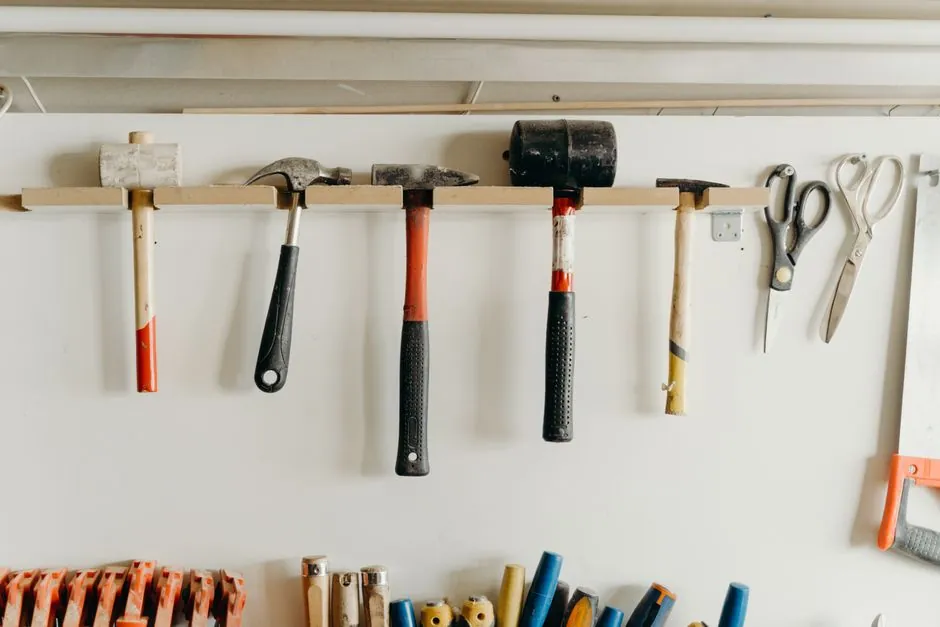
A 10-15 kg SDS-Max (TE-Y) electric demolition hammer is the workhorse pick for steel-construction site prep, chipping concrete pads, exposing rebar, and scoring slab edges before erection crews move in, with impact energies typically in the low-to-mid single-digit joule range at 1000-3000 blows per minute [S4].
For steel-construction work, the demolition hammer is rarely the star of the show, it is the prep tool: removing cured concrete from anchor locations, breaking out topping slabs, exposing embedded plates, and dressing welds or rivet heads. Hilti's 2026 catalog lists 11 demolition hammers and breakers split into 5 kg, 6 kg, 10 kg, 15 kg, and 30 kg weight classes, with TE-Y (SDS Max), TE-S (hex), and TE-H (Hilti HEX 28) chuck systems [S2]. The narrow selection logic is weight class plus chuck plus vibration control, not raw impact energy.
Weight Class and Chuck System as the First Cut
Weight class maps directly to work direction: Hilti assigns 5-6 kg bodies to overhead wall chiseling, 10-15 kg bodies to wall and floor work, and 30 kg bodies to floor-only heavy demolition, with the TE 3000-22 at 65.7 lb tool body weight as the cordless flagship [S2]. SDS-Max (TE-Y) is the universal chuck for handheld 10-15 kg units such as the TE 500-AVR at 13.9 lb and the new TE 600-AVR at 13 lb, while TE-S hex drives the heavier floor breakers and TE-H (HEX 28) handles the 30 kg attachments [S2].
For steel-construction crews the practical cut is: 5-6 kg TE-Y for vertical wall and overhead chipping near embed plates, 10-15 kg TE-Y or TE-S for floor scoring and slab removal, and 30 kg HEX 28 only when a full cordless hydraulic breaker is onsite. The demolition hammer category splits cleanly by chuck family, and mixing chucks across brands is rare because SDS-Max, TE-S, and TE-H are not cross-compatible. Rentalex's 2024 buyer guide reinforces the same split, noting that higher impact force plus wider chisels suit asphalt and slab removal, while lighter chipping hammers handle detail work around reinforcement [S3].
Impact Energy, Blow Rate, and the EPTA Weight Convention
Handheld demolition hammers deliver intermittent shocks, with efficiency set by matching blow energy and contact time to substrate stiffness so cracks propagate instead of being absorbed as elastic rebound [S4]. Pneumatic units tie crews to compressor logistics, electric mains-powered units dominate indoor steel fit-out, and hydraulic units (fed by power packs) sustain consistent blows under continuous load [S4].
The Hilti catalog quotes tool body weight per EPTA-Procedure 01/2003 without battery, a useful normalization: the TE 500 at 10.8 lb and TE 500-AVR at 13.9 lb are the same TE-Y platform with and without Active Vibration Reduction, so the 3 lb delta is the AVR mass penalty [S2]. For spec sheets, always check whether the published weight includes the side handle, the chisel, and (for cordless) the battery pack, because the same SKU can swing 2-4 lb across configurations. The rotary hammer category overlaps at the low end, but rotary hammers are designed for drilling in concrete with hammer-assist, while demolition hammers are designed for chiseling only and carry no rotation mode [S4].
Vibration, Dust, and Operator Endurance
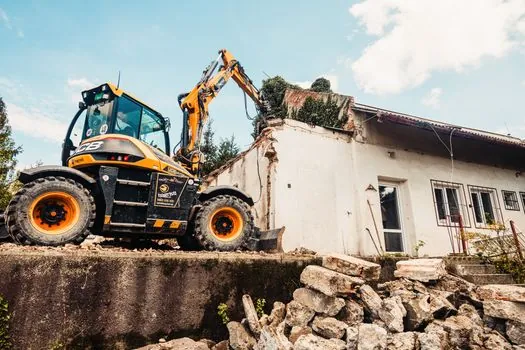
Active Vibration Reduction (AVR) appears on 6 of 11 Hilti demolition models, Dust Removal Systems (DRS) on 3, and power-reduction modes on 3, a vendor signal that vibration and silica dust are now baseline specification criteria, not premium options [S2]. For steel-construction site prep, where operators chip concrete for hours near freshly welded members, AVR-equipped 13 lb class hammers are the realistic sustained-use ceiling without triggering hand-arm vibration syndrome (HAVS) thresholds.
The CNMeineng 2024 selection guide ranks impact power, impact frequency, weight, comfort, brand, and quality as the primary filters, in that order, when buying an electric demolition hammer [S8]. For steel work the priority order shifts: vibration control and weight rise above raw joules, because the work is precise (exposing a 20 mm embed plate) rather than bulk-breaking. SDS-Max chucks remain the spec lingua franca, with Makita's HM1202C (20 lb class) and similar DeWalt, Bosch, Milwaukee, and Wacker units all sharing the same TE-Y interface and competing on AVR tuning, service intervals, and chuck retention [S5].
Corded vs Cordless, and the 22V Nuron Pivot
Hilti's 2026 demolition line is 7 corded and 4 cordless, with all 4 cordless models on the 22V Nuron battery platform, covering 5 kg, 10 kg, 15 kg, and 30 kg weight classes from the TE 500-22 to the TE 3000-22 [S2]. The cordless TE 1000-22 at 24.9 lb and TE 3000-22 at 65.7 lb both use TE-S chucks and target floor demolition, where trailing hoses and generator logistics dominate cost [S2].
For steel-construction sites with shared Nuron batteries across drills, impacts, and grinders, the cordless TE 500-22 SDS-Max at 13.2 lb replaces the corded TE 500-AVR for chipping duty and removes the tripping hazard that plagues rebar-heavy decks. For floor slabs and foundation breakout, the corded TE-S class still wins on cost per joule, because a 65 lb cordless breaker will drain a Nuron pack in minutes. The construction tools ecosystem is moving toward battery unification, but heavy demolition remains the last corded holdout, and steel-construction crews typically run both.
Selection Criteria and Use-Case Comparison
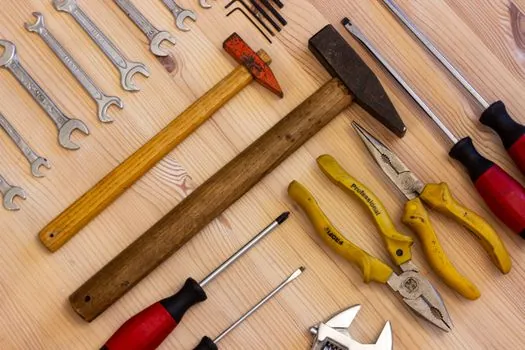
For a steel-construction site, the four-way filter is: (1) weight class, (2) chuck system, (3) vibration control, (4) power source. The 5-6 kg TE-Y unit with AVR is correct for overhead wall chipping near embeds; the 10-15 kg TE-Y AVR unit is correct for floor scoring, slab removal, and anchor exposure; the 15-30 kg TE-S or HEX 28 unit is correct for foundation and thick-slab breakout; and the 30 kg cordless TE-H is correct only when compressor or generator access is blocked [S2][S4].
Use-case map for steel-construction site prep:
- Exposing embed plates and anchor bolts: 10-15 kg SDS-Max, pointed chisel, AVR required, corded preferred for sustained duty.
- Removing concrete topping before composite deck pour: 15-30 kg TE-S hex, wide flat chisel, corded or hydraulic.
- Chipping fireproofing off structural steel for inspection: 5-6 kg SDS-Max or lighter, flat chisel, DRS dust extraction strongly recommended.
- Trenching for base plates in cured foundations: 30 kg HEX 28, pointed or bushing tool, corded or hydraulic power pack.
The Mister Worker 2026 best-of list and the Hilti 2026 catalog converge on the same handful of platforms: Makita HM-series, Bosch GSH, Hilti TE 500-700-1000, DeWalt DCH-series, and Milwaukee K-series, with Home Depot's breaker-hammer category pricing the field from $100 for light-duty chippers to $5,000 for heavy pneumatic and hydraulic rigs [S6][S7]. The construction machinery and equipment class above handheld demolition includes carrier-mounted breakers and hydraulic attachment hammers, which are the right tool for foundation mass work but are typically rented, not owned, by steel erectors.
Limits, Failure Modes, and Standards Anchors
Demolition hammers lose to concrete shears and hydraulic splitters when controlled separation, low vibration, or low dust and noise is the priority, especially in interior demolition, rock excavation, and vibration-limited zones [S4]. Darda's process-chain framing is the cleanest mental model: the hammer scores, loosens, or exposes, then shears or splitters separate in a controlled, low-vibration, material-conserving pass [S4]. Using a hammer where a splitter belongs is the most common steel-construction misuse, and it shows up as spalled parent concrete around the cut line.
For sustained operator use, EU Directive 2002/44/EC on vibration (the standard anchor for HAVS limits in European steelwork) and the parallel ANSI/ISO 5349 limits cap daily trigger time on AVR-equipped tools in the 10-15 kg class to roughly 2-4 hours; the CNMeineng 2024 guide explicitly lists brand, quality, and ergonomic design alongside impact power, a signal that warranty terms and service-network density are now part of the spec sheet, not separate from it [S8]. For a deeper spec contrast between rotary and demolition modes, the spec-based selector at Rotary Hammer vs Demolition Hammer maps chuck compatibility, blow energy, and rotation behavior across both categories. Where steel-construction work also requires drilling anchor holes, the related Impact Drill Picks for Steel Construction guide covers RPM caps, chuck systems, and clutch failure modes for the drilling side of the same tool crib.
Trackable next signals: the TE 600-AVR SDS-Max launch as TE 700-AVR replacement with lower vibration and higher output, and the spread of 22V Nuron cordless into 30 kg-class HEX 28 breakers, both flagged on Hilti's 2026 catalog page [S2]. Watch for vendor spec sheets to publish EPTA 01/2003 weight with and without battery side by side, and for OSHA silica-rule (29 CFR 1926.1153) compliance documentation to bundle DRS-equipped demolition hammers as a standard rental option on U.S. steel-construction sites.