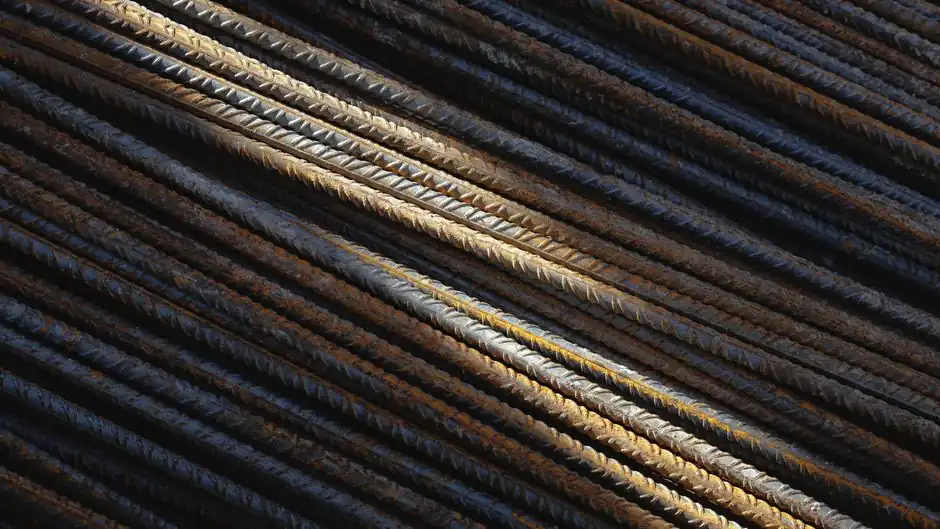
On plumbing-installation jobs that need rebar continuity inside thrust blocks, equipment pads, and pump-base plinths, an automatic rebar threading machine at 380 V, 3–6 kW, with CE certification and 100–1000 kg frame weight, is the prevailing factory-package spec across Indian and Chinese OEM catalogues as of 2026-08-11 [S1].
Two processes dominate the spec sheet for plumbing-support concrete: cut-threading (chip-forming, using a tangential chaser or die head) and roll-threading (cold-formation, no swarf). Both are valid for the same 100–300 mm thread length, but they demand different upstream rebar preparation and different rebar couplers on the mating end [S2].
Spec envelope: 380 V, 3–6 kW, CE-marked, 100–1000 kg
National Cutting Tools (NCT), an Indian OEM, lists its automatic rebar threading machine at 380 V, 3–6 kW, CE certified, 100–1000 kg, in the same product card used for hydraulic pipe threading machines on the public site [S1]. That envelope aligns with the prevailing 415 V three-phase Indian industrial supply stepped down through a 380 V motor, which is why cross-border plumbing contractors buying from Indian or Chinese OEMs typically request the same kW band for a single rebar size.
The 3–6 kW spread is not arbitrary: 3 kW covers up to ~25 mm bar (commonly T16–T25 in plumbing thrust-block cages), while 5–6 kW is the safe working point for 32–40 mm bar, which is the upper end used in larger pump-station and cistern reinforcement. C-frame power presses listed by the same OEM for coupler-pressing duty sit in the same frame-mass band, so one floor plate can host both machines without re-levelling [S1].
Cut-threading vs roll-threading for plumbing support concrete
Cut-threading (chip-forming, via a tangential chaser head) and roll-threading (cold-form, no swarf) both fit the 100–300 mm thread length window that BARTECH publishes for its rebar thread rolling line [S2]. The decision is downstream-driven: if the project specifies upsetting-end couplers, you need a rebar upsetting machine upstream so the bar end is forged before threading, and a roll-threading head that can form over that upset without skipping die teeth.
Plain-rolling-end couplers (no upset) accept either process, but the cut-threading path leaves a clear visual chamfer and gives an inspector a quick way to confirm full thread engagement with a thread gauge. On plumbing pads and thrust blocks, where rebar cages are buried and inspection happens only before the pour, that visual check has real value and is one of the reasons cut-threading persists in this segment even though roll-threading is faster [S2].
Coupler material pairing: 40CR and 45# carbon steel
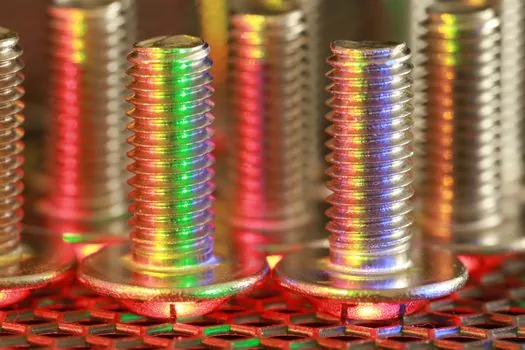
BARTECH publishes its standard, positional, and transition rebar couplers in 40CR and 45# carbon steel, with a separate pressing-sleeve line in 20# or 16Mn cold-pressed stock [S2]. For plumbing-install environments, that material choice is the first filter: 40CR gives the higher fatigue margin called out in heavy-pump-base cages, while 45# is the cost-default for standard thrust blocks.
For buried or moist-service locations (soakaways, valve chambers, below-grade pump stations), the same OEM sells a plastic thread cover that fits over the finished threaded end before the coupler is mated, which keeps concrete slurry and groundwater off the threads during the pour [S2]. It is a low-cost add-on, but on plumbing projects it is often the difference between a clean torque-up six months later and a seized joint that has to be cut out and re-bar-reared.
Thread-length window: 100–300 mm and why plumbing needs the long end
BARTECH's strongest rebar thread rolling machine is rated for 100–300 mm thread length, which is the band that covers both standard and full-strength positional couplers [S2]. For plumbing-installation cages, where bars are often T25–T32 and the splice falls in a congested area around pipe penetrations, the long end of that window (200–300 mm) is what gives the splice the same tensile capacity as the parent bar.
Short threads (under ~100 mm) are adequate for non-critical ties but will not develop bar capacity in a T32 splice. The cost of running the long-thread programme is a slower cycle time per bar, not a different machine, so on plumbing jobs where bar count is moderate, the throughput penalty is acceptable. A related selection decision is the upstream rebar straightener gate: any ovality above the OEM's published tolerance at the threading bay will reflect as skipped chaser teeth on cut-threading, or as a die slip on roll-threading, which is one of the more common plumbing-site returns for threaded bar.
Coupler-pressing and rebar upsetting: the supporting two-machine set

A plumbing-installation rebar yard that wants to run threaded splices end-to-end needs three machines, not one: threading, upsetting (for upset-end couplers), and coupler-pressing for cold-pressed sleeves. BARTECH sells all three off the same product tree, and the manual coupler press is described as usable in construction repair with no special operator training, which makes it the unit a plumbing contractor typically sends to site rather than buying outright [S2].
For project work, the auto upsetter is the higher-throughput pick, with BARTECH describing it as quick, stable, and safer than the manual variant [S2]. On plumbing-installation scopes, the pressing-sleeve coupler (20# or 16Mn) is the right product when the bar is already in place and the splice has to be made from one side only, which is a common situation in retrofit work on existing pump bases and valve chambers.
Selection checklist for a plumbing-installation thread line
For a plumbing-only rebar yard, the minimum spec to put on an RFQ in 2026 is: automatic rebar threading machine at 380 V, 3 kW (for T16–T25) or 5–6 kW (for T32–T40), CE certified, with a tangential chaser head capable of 100–300 mm thread length, paired with 40CR couplers for pump-base work and 45# couplers for standard thrust blocks, plus a plastic thread cover for any splice below the water table [S1][S2]. The rebar bender and cutter upstream of this line should match the same diameter window so that the threading machine is never the bottleneck.
Trackable next signals: OEM-published cycle-time numbers per bar diameter at the 3 kW and 6 kW points, and any third-party certification of the plastic thread cover for prolonged submerged service. These two data points will sharpen the buy-vs-rent decision for plumbing contractors that currently default to renting the threading machine and buying the couplers.
For related coverage, see Nylon (PA) Selection for Energy Equipment: 2026 Spec Map.