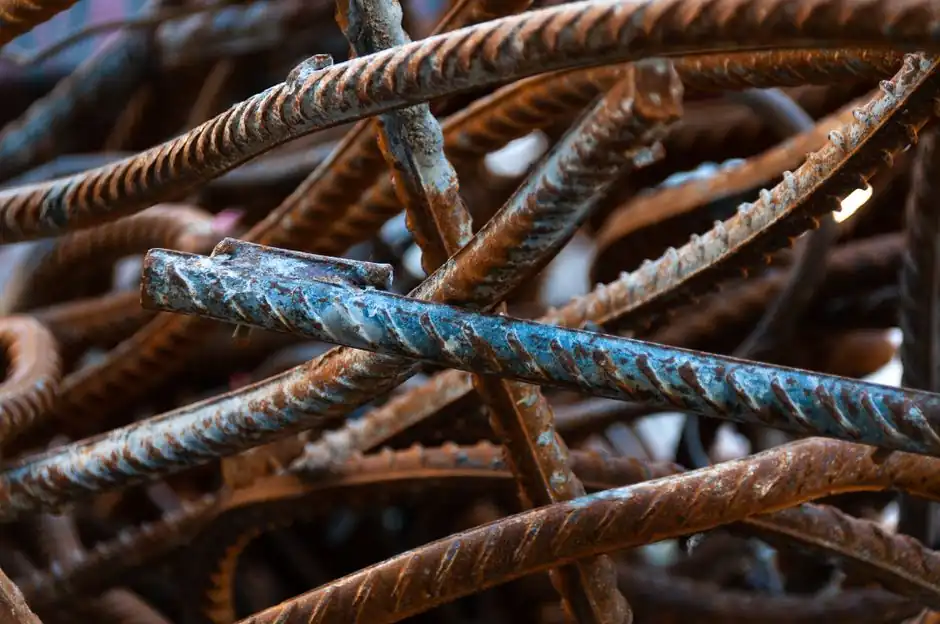
Rebar threading machines for TMT bars in 2025-2026 split into three practical working classes: chaser/cutting die-head machines, thread-rolling machines, and combined rib-strip-and-roll machines, with bar capacity typically 12-40 mm and motor power 3-7.5 kW [S1][S2][S3].
The most cited sub-types in current OEM catalogs are taper-thread machines, portable on-site threading units, and semi-automatic die-head machines, all feeding the same end-product: a rebar end that mates with a mechanical rebar coupler instead of being lap-spliced [S1][S2][S5].
Three Working Classes, Not Just Two
Chaser-type rebar threading machines use a die head with cutting chasers that remove material to form the thread, and are commonly specified in semi-automatic builds with 4-5 HP (3-3.7 kW) motors, 1440 rpm spindles, 415 V three-phase supply, and D2 tool-steel chasers, with a typical thread pitch of 3 mm on bars up to 40 mm [S2][S6].
Thread-rolling (rebar thread rolling) machines deform the bar surface cold between flat dies to displace material into the thread profile; GHM's spec sheet shows 4.5 kW (or 7.5 kW / 10 HP on the higher model), a 1:17 reduction ratio, 85 rpm spindle, 90 mm rolling length, selectable 60 or 75 degree thread angle, and 2.5 or 3.0 mm pitch on 16-32 mm (or 16-40 mm) bars [S3].
Combined rib-strip-and-roll machines integrate upstream rib peeling and downstream thread rolling in one automatic cycle, producing a clean cylindrical section before rolling, with the same 90 mm rolling length and 1:17 gear ratio as standalone rollers, and one-button automation that removes manual clamping steps [S3].
Thread Geometry: Straight UNC vs Tapered
Straight Unified National Coarse (UNC) threads are the most common geometry for rebar couplers in mainstream construction; #8 rebar at 1 inch diameter runs 8 threads per inch and needs at least 8 full rotations to bottom out inside a standard coupler, which is the reference geometry most chaser and rolling dies are cut to [S5].
Tapered threads cut install rotations dramatically, delivering roughly 70% faster engagement than straight UNC because the sharply angled flanks self-seat in fewer turns, while keeping full-strength load transfer because contact is maintained across all engaged threads [S5].
The trade-off is supplier-specific thread angles, sizes, and pitches: tapered-thread machines are usually paired with the same vendor's couplers, and field mismatches between rebar contractor and steel fabricator are the most cited field problem, while straight UNC threads remain interchangeable across manufacturers [S5].
Selection Criteria: Bar Diameter, Motor Class, Output
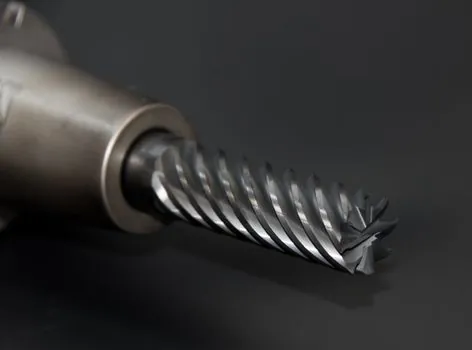
Bar diameter range is the first gate: portable chaser units commonly cover 12-40 mm (Surya CDRG portable, model SE40, 4 HP, 1440 rpm, 400 kg, 3 mm pitch), while stationary semi-automatic die-head machines (Surya SE55, 5 HP, 1440 rpm, 750 kg) push to 50 mm max capacity with 150 mm threading length [S2].
Motor power and spindle speed separate shop from field: 5 HP (3.7 kW) at 1440 rpm is the workhorse spec for both die-head and portable chaser machines, while thread rollers run slower (85 rpm spindle) but with higher torque thanks to 1:17 gear reduction and 7.5 kW (10 HP) on the upper build [S2][S3].
Throughput benchmark from a current OEM datasheet: 70 finished rebar ends per hour on a 5 HP portable chaser line with Siemens control panel, sized against the 90 mm rolling length and 85 rpm rolling head on a thread-roller, where each cycle is the time to feed, strip ribs (if combined), and roll 90 mm of thread [S2][S3].
Comparison Table: Chaser vs Thread-Rolling vs Combined
Three rebar threading machine classes compared on the four selection criteria that drive most purchase decisions: [S3]
Chaser / die-head: capacity 12-40 mm (some to 50 mm), motor 4-5 HP (3-3.7 kW), 1440 rpm, D2 chasers, cutting action, lower tool cost, slower on hard TMT grades, suited to taper and parallel threads via dedicated chaser sets [S2][S6].
Thread-rolling: capacity 16-32 mm (some 16-40 mm), motor 4.5-7.5 kW (6-10 HP), 85 rpm after 1:17 reduction, no material removed (cold forming), stronger thread root due to grain-flow continuity, requires rib-stripping on ribbed TMT bars before rolling [S3].
Combined rib-strip-and-roll: capacity 16-40 mm, motor 7.5 kW (10 HP) on top build, 1:17 reduction, 85 rpm, 90 mm rolling and 90 mm rib-strip length, one-button cycle, suited to high-volume precast and rebar service centres, higher capex than a plain chaser [S3].
Use Cases and Where Each Class Fits
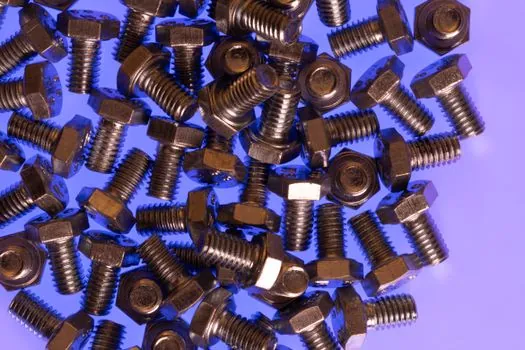
High-rise vertical column splices and bridge pier cages typically use parallel straight-thread chaser machines paired with standard parallel-thread couplers, because the geometry is interchangeable across suppliers and the chaser can re-cut on-site if a thread is damaged [S1][S5].
High-speed infrastructure pours (metro tunnels, highway piers, large industrial facilities) lean toward tapered-thread machines because the 70% faster engagement cuts crane time on the splice, at the cost of locking the project to a single coupler supplier [S1][S5].
Prefab and rebar service centres running continuous production runs prefer combined rib-strip-and-rollers because the one-button cycle removes manual clamping and gives uniform thread length and pitch, which is critical when output feeds an assembly line of rebar processing equipment downstream [S3].
Failure Modes, Standards, and Limits to Track
Thread quality failure modes documented in OEM guidance include exposed rib sections when rib-strip length is shorter than the rolling length, inconsistent pitch from worn chasers, and overheating during continuous runs without the recommended cutting or rolling fluid, all of which are flagged as routine maintenance points in current product literature [S1][S3].
Rolling machines do not remove material; the thread root is formed by plastic deformation, so thread strength is governed by the parent bar's surface and the die geometry, which is why ribbed TMT bars must be rib-stripped first if a clean parallel section is required for the rebar coupler to seat [S3][S5].
Tapered-thread interchangeability is the practical ceiling on site: each OEM's taper angle and pitch is proprietary, so the field rule is to thread and couple with the same vendor's matched machine and coupler set, while straight UNC threads remain the only geometry that crosses supplier lines [S5].
Adjacent to the threading line, the same jobsites typically run a matching rebar bender and a rebar threading machine pair, so selection should be checked against the bender's bar-diameter range to avoid a bottleneck at the threading station.
Background reading: Pneumatic Nail Guns: Power, Cost, and Trade-Offs on the Jobsite.